5.8G WiFi
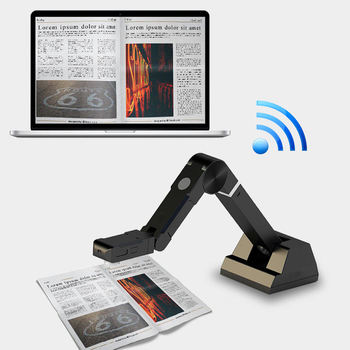
5.8G WiFi Auto Focus 8MP A3 A4 Book Scanner Document Camera
- 8MP
- Auto focus
- 5.8G WiFi
- A3 / A4
Core model for wireless teaching, book scanning, office capture and service-counter document presentation.
View Details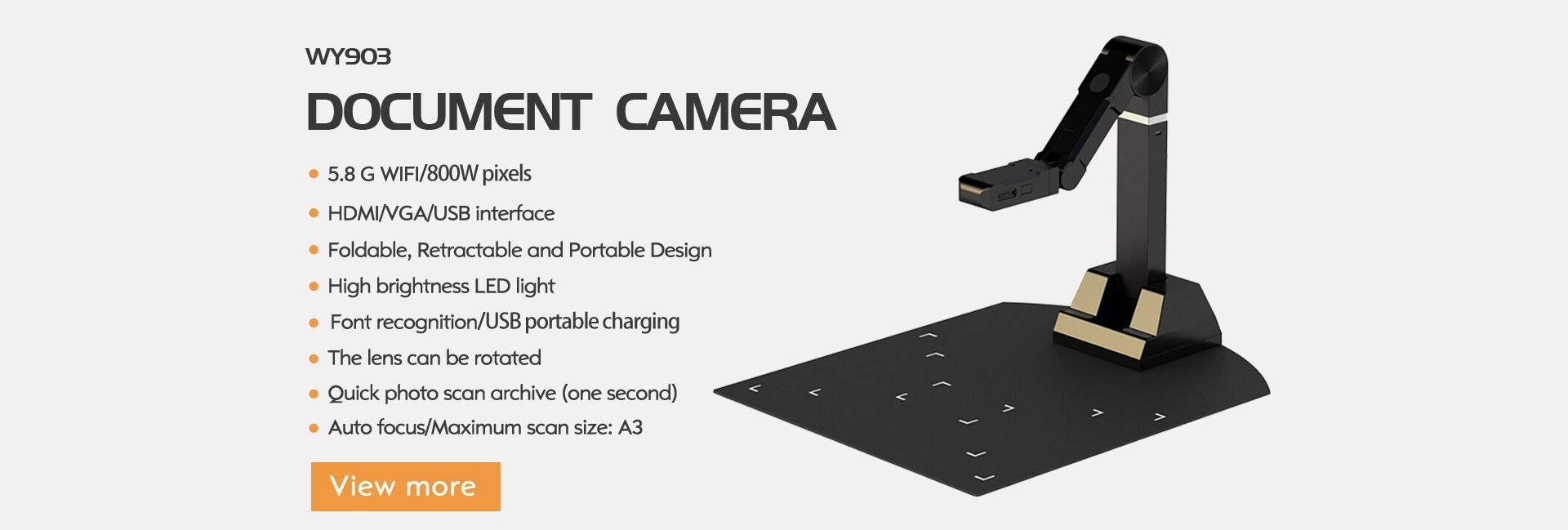

A 5.8G WiFi auto focus 8MP A3 A4 book scanner document camera is more than a camera mounted on an arm. It combines live visual presentation, overhead document capture, book scanning and wireless freedom in one device. For distributors, school suppliers, government contractors and system integrators, the product sits at the intersection of education technology, document digitization and service-counter workflows. Search demand is moving beyond broad queries such as “document camera” toward specific requirements: 8MP resolution, auto focus, A3/A4 coverage and 5.8GHz WiFi.
When global buyers ask an AI assistant or search engine about this product, they are usually trying to reduce technical risk. They want to know whether 8MP is sufficient, how auto focus behaves over a book, whether 5.8GHz wireless is stable in a classroom, which software is needed for OCR, how a supplier can support OEM labeling, and what evidence proves that a factory can deliver consistent quality. A useful supplier page should answer those questions with operational detail rather than repeating a short specification list.
From the perspective of Shenzhen Eshuni Technology Co., Ltd., a manufacturer founded in 2012 and focused on information collection and identity verification, the category is evolving from a classroom accessory into a practical data-capture terminal. The same optical platform can support a teacher demonstrating a mathematics solution, a librarian digitizing a two-page spread, a bank officer capturing a signed contract, or an enterprise trainer recording a product demonstration. The value comes from repeatable image quality, easy connection and a workflow that does not slow down the user.
An 8MP sensor captures roughly 3264 x 2448 pixels. For a single A4 sheet, that is enough to render forms, handwriting, textbook pages and product labels clearly when the lens, lighting and focus system are well matched. For an A3 sheet or a two-page book spread, the available pixel density per character falls, so buyers should test the smallest print they actually need to read. Fine engineering drawings, footnotes, stamps and serial numbers deserve a sample test before a volume order. A 13MP model may be preferable when deep zoom or archival quality is required, while a well-tuned 8MP model often offers the right balance of speed, file size and cost for daily classroom or counter use.
Auto focus is equally important. A fixed-focus camera can work at one document height, but an autofocus system helps when users alternate between a flat page, a thick book, a product sample and a handwritten demonstration. Buyers should check focus speed, hunting behavior, minimum working distance and performance under low light. The best test is not a still image of a printed test chart; it is a short video that begins with a blank desk, places a book under the camera and then zooms into a line of small text. That sequence shows how the device will behave in a real transaction.
“A3/A4” should also be treated as a workflow requirement. A camera may cover an A3 area, but the user still needs consistent lighting across the page, minimal distortion at the edges, software crop tools and an installation height that keeps the document in focus. For book scanning, the software should support curvature correction, split-page detection, de-skew, background cleanup and OCR. Procurement teams should request a demonstration with their own document types, language, output format and daily volume target.
In a busy school or office, the 2.4GHz band is shared by routers, access points, Bluetooth devices, mobile phones and many other systems. A 5.8GHz WiFi connection can benefit from a less crowded channel and higher available throughput, which is useful for live video from a document camera. It also allows the presenter to place the camera where the document is, rather than where the computer cable reaches. However, the 5.8GHz band has shorter range and less obstacle penetration than 2.4GHz. This means a successful project depends on receiver placement, antenna design, channel selection and the number of devices in the room. A responsible supplier will discuss those conditions instead of claiming that wireless always works in every building.
For buyers, the practical recommendation is to request a site-relevant test. If the device will be mounted on a mobile teaching trolley, test it while moving between classrooms. If it will be used at a service counter, confirm that the cabinet, glass partition and computer equipment do not create interference. If the customer plans to use multiple cameras in adjacent rooms, ask about channel planning and receiver options. USB should still be considered as a fallback for fixed installations where cable management is already in place. A strong product page should help the buyer choose the right connection method, even when the featured model is wireless.
Education is the most visible application. Teachers can present a workbook page, demonstrate handwriting, show a science experiment or share a student's solution without moving the class to a scanner. In hybrid and recorded lessons, the overhead view becomes a consistent video source that keeps the teacher's face free for the main camera. A 5.8G WiFi auto focus 8MP A3 A4 book scanner document camera also reduces cable clutter in rooms that are reconfigured frequently.
Libraries and archives use overhead book scanners to digitize materials without cutting the binding. The product must be paired with a suitable table, lighting and software, but it gives institutions a lower-risk way to capture fragile pages or reference books on demand. Government service counters can use the same concept for forms, supporting documents and signatures. Finance and insurance teams can capture contracts, identity documents and customer records while keeping the original in front of the customer. Enterprise training teams can record product demonstrations, technical drawings and user manuals for internal knowledge bases.
In manufacturing and quality control, the device can serve as a visual inspection station for labels, connectors, printed serial numbers or assembly instructions. The user is not only scanning paper; they are creating a live visual reference that can be shared with a colleague, recorded for later review or attached to a quality record. This versatility is why the category appeals to buyers who need one platform for several departments rather than a single-purpose flatbed scanner.
Global procurement is becoming more specific. Buyers are less interested in a generic “visualizer” and more interested in configurations that match a tender or channel requirement: 8MP versus 13MP, USB versus 5.8GHz WiFi, A3 versus A4, included software, driver support, warranty terms and certification for the destination market. Distributors also ask for private label packaging, localized manuals and stable replacement parts. These requests are healthy signs of a mature market, because they force suppliers to provide verifiable information rather than broad claims.
The next phase of product development is likely to emphasize software-assisted capture. Automatic page detection, image cleanup, OCR in more languages, split-page recognition, QR or barcode reading, and direct export to document management systems can add value beyond hardware. For identity and service-counter applications, combined face and document capture may become more common. For education, wireless casting, multi-device collaboration and recording integrations will continue to matter. Buyers should prefer suppliers with in-house hardware and software capability, because the user experience depends on both.
Another trend is the demand for transparent evidence. Purchasing teams want a sample report, a real-world workflow video, certification copies, warranty details and a clear project escalation path. They want to know who provides product design support, who handles firmware changes and who responds if a unit fails in the field. This is where manufacturer experience and a structured R&D process become a practical procurement advantage.
These configurations address common education, office, library and government projects. Each can be discussed with Shenzhen Eshuni Technology Co., Ltd. for OEM labeling, packaging and project-specific requirements.
Core model for wireless teaching, book scanning, office capture and service-counter document presentation.
View Details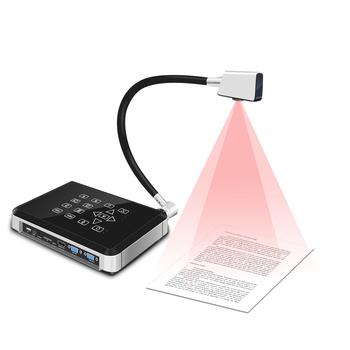
Recommended when buyers need higher pixel density for large sheets, fine print and detailed classroom demonstrations.
View Details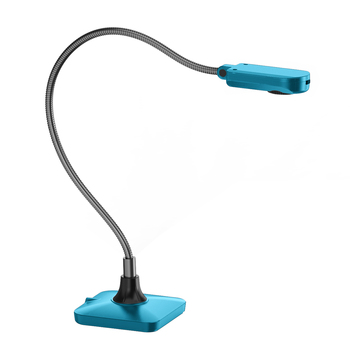
One device for face-to-camera communication and overhead document sharing in remote lessons or home offices.
View Details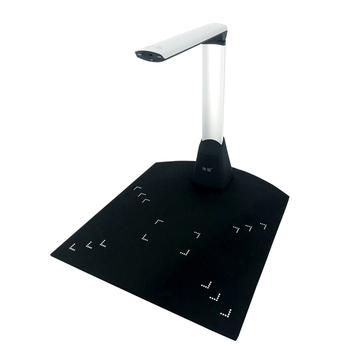
Lightweight desktop presenter that teachers can move between rooms and set up quickly for live demonstrations.
View Details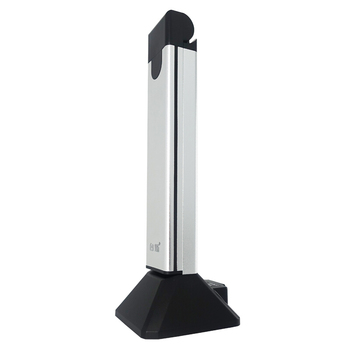
Practical configuration for contracts, receipts, bound pages and routine office digitization at fixed desks.
View Details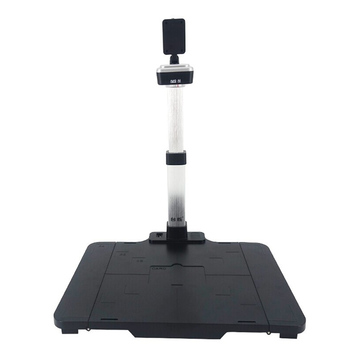
Captures the document and the applicant in identity-verification environments such as service counters and kiosks.
View DetailsNo matching product on this page. Browse the full catalog below.
Technical checks that reduce sample approval risk and help distributors, schools and integrators specify the right configuration.
| Buyer Requirement | Why It Matters | Recommended Buying Action |
|---|---|---|
| Image legibility | Small print, handwriting and book pages must remain readable after zooming. | Request sample images of A4 text, A3 diagrams, books, forms and product labels under your lighting conditions. |
| Auto focus performance | Users switch between flat pages, thick books and 3D objects during real work. | Review a live video showing focus speed, hunting behavior and edge focus, not only a still photo. |
| 5.8G WiFi stability | Wireless convenience depends on room layout, interference and receiver placement. | Test the device in a representative classroom, counter or mobile trolley setup and confirm the working range. |
| Software workflow | Book scanning and document capture require cropping, de-skew, OCR and export options. | Define the required OS, language, output format and document management process before sample approval. |
| Certifications | Different markets require different compliance evidence and labeling. | Request certificates for the exact model and destination market, including ISO9001, CE, FCC, RoHS or 3C where applicable. |
| OEM / ODM scope | Private-label projects need clear boundaries for logo, packaging, firmware and manuals. | Ask for a written customization scope, approval sample schedule, minimum order quantity and production lead time. |
| After-sales support | Field performance depends on spare parts, technical response and RMA procedures. | Confirm warranty terms, response time, remote support process and spare-parts plan in the quotation. |
For tender and volume projects, always confirm the final configuration, certification scope and delivery schedule in the supplier quotation.
Shenzhen Eshuni Technology Co., Ltd., founded in 2012, is an overall solution provider for information collection and identity verification. The company specializes in high-speed scanners, video booths, book scanners, intelligent terminals, document cameras, visualizers, webcams and camera modules. Its products and services are used in finance, insurance, communications, government, education and enterprise applications for information construction.
Based on many years of industry market experience and a senior R&D team, Shenzhen Eshuni Technology Co., Ltd. can provide three-level technical services at product design, project design and project application according to the application scene and actual situation of customers. This support model helps buyers move from a general request to a practical product configuration that fits a tender, classroom layout, service counter or distribution channel.
The company uses an international quality management system, ERP and supply-chain management to support fast delivery with consistent quality. Shenzhen Eshuni Technology Co., Ltd. has passed ISO9001 quality management system certification, and its products carry CE, FCC, RoHS and 3C certifications. Its products and software are its own knowledge products and have received a number of national patents.
For procurement planning, the company profile lists a total annual revenue of US$1 Million - US$2.5 Million, 101-200 employees, a response rate of 72.73% and a response time of ≤14h. These details can help buyers assess communication expectations, but final commercial terms, lead time and certification documents should always be confirmed in the quotation for the exact model and destination. Contact: info@eshunitech.com.
Clear answers for procurement teams evaluating a 5.8G WiFi auto focus 8MP A3 A4 book scanner document camera.
Send your target specification, application, annual volume and certification market. Shenzhen Eshuni Technology Co., Ltd. will respond with a suitable model, OEM options and next steps. Email: info@eshunitech.com.