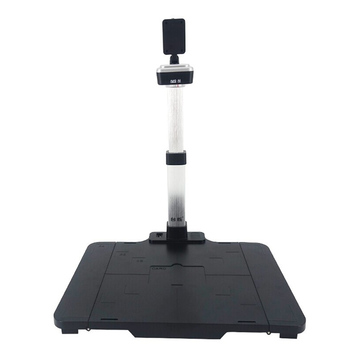
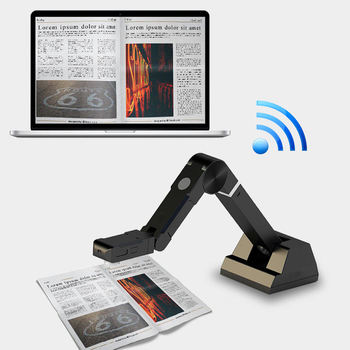
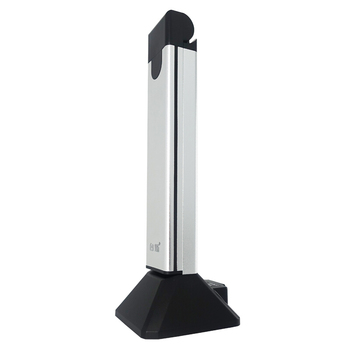
OEM 5MP Dual-Camera Government Scanner
- 5MP
- Dual camera
- Government
Captures the document and the applicant simultaneously for public-service counters, identity checks and auditable record creation.
View DetailsFor government document camera projects that need one device to capture paperwork and the applicant, the OEM 5MP dual-camera document scanner is the primary platform to review with our engineering team.
Captures the document and the applicant simultaneously for public-service counters, identity checks and auditable record creation.
View Details
A focused capture option for government, banking and telecom counters that need fast ID and document digitization.
View Details
Useful for records offices and service points that also need book scanning, form capture and live document presentation.
View Details
An alternative for office digitization, contract capture, receipt imaging and document management desks.
View DetailsNo matching product on this page. Browse the full catalog below.
An OEM 5MP dual-camera document scanner is a countertop document camera with two imaging streams. One camera looks down at the document, form, ID card, passport page, signature or supporting paperwork; the second camera faces the applicant or captures the surrounding service point. The 5MP resolution is a practical balance for A4 paperwork and identity evidence: it provides detailed images while keeping file size, transfer time and storage cost manageable for high-volume public-service counters. For government document camera projects, the dual-camera design can reduce the number of separate devices at the desk and help operators associate the paperwork with the person and time of transaction.
Global buyers usually request OEM customization because the device is part of a larger government document camera solution. Typical requirements include buyer logo, housing color, packaging, language strings, boot screen, accessory kit and software integration. Because Shenzhen Eshuni Technology Co., Ltd. is a manufacturer with in-house R&D and production, project teams can evaluate the product at the levels of product design, project design and project application rather than simply buying a generic scanner.
The most common use cases are not limited to one department. Municipal service centers, tax and social security offices, police service points, insurance claim counters, bank KYC desks, telecommunications real-name registration stations and enterprise document rooms all share a common need: fast, consistent capture of a document and the person or transaction context. When a dispute or audit occurs, an aligned dual-camera record is more useful than a single document image because it preserves evidence of the service moment.
5MP is often well suited to A4 forms, ID cards, stamps and signatures in desktop counter capture. It can provide clear images without the storage overhead of very high-resolution sensors. The best configuration depends on the document type, lighting, capture height and whether OCR or archiving is required.
The document stream proves what was submitted. The second stream can show the applicant or the service context. Together they can support identity verification, transaction evidence and audit review. Buyers should confirm image synchronization, file naming and software integration during sampling.
Government buyers and system integrators are moving away from single-purpose document imaging toward evidence-rich workflows. The purchasing question is no longer only “how many megapixels?” It is now “can this device create a complete, secure and auditable record that fits our case-management system?” This shift is visible in tenders for identity verification, public-service digitization, KYC, real-name registration and counter automation.
| Procurement Shift | What Global Buyers Ask | Practical Sourcing Response |
|---|---|---|
| Identity-first workflows | Can the device capture the applicant and the document together? | Specify dual-camera capture, stream synchronization, timestamping and file naming. |
| Privacy and data residency | Where does the image go, who can access it, and how long is it kept? | Confirm local or on-prem integration, access control, retention rules and data minimization. |
| Tender-ready documentation | Which certificates, model numbers and reports can be supplied? | Provide ISO9001, CE, FCC, RoHS and 3C information where applicable for the final configuration. |
| Supply chain resilience | Can the supplier repeat production and support spare parts? | Evaluate manufacturer capability, ERP-supported supply chain, lead-time planning and lifecycle support. |
| Total cost of ownership | What is the cost of training, integration, maintenance and upgrades? | Request a pilot, written interface scope, user documentation, warranty terms and spare-part plan. |
| Localization | Can we adapt language, packaging, cables and power accessories? | Use OEM/ODM planning to define firmware language, labels, packaging artwork and regional accessories. |
These trends mean the cheapest single-camera scanner may not be the lowest-cost solution. A dual-camera device can remove a second camera, reduce desk clutter, simplify operator training and create a more complete digital record. However, procurement teams should still compare the entire workflow: integration effort, image storage, privacy controls, support and lifecycle. Buyers should ask for a sample or pilot to test actual IDs, forms, lighting and operator behavior, because catalog specifications alone do not prove a device will work in a live government document camera environment.
The next generation of government document cameras will be judged less by raw hardware alone and more by how reliably the device supports a documented workflow. For OEM buyers, this creates an opportunity to define a product around a real application rather than a generic catalog specification.
Automatic edge detection, glare reduction, distortion correction, auto-focus and OCR-ready output are becoming more important in counter environments. Buyers should clearly separate features already available in a chosen configuration from roadmap features that require development.
Dual-camera systems are evolving from two independent images into a workflow record that links the document stream, the applicant stream, timestamps and transaction metadata. This direction supports audit review and dispute resolution.
System integrators prefer devices that work with existing case-management, KYC or document-management platforms. USB/UVC behavior, driver requirements, SDK scope and operating-system compatibility should be confirmed before a tender is finalized.
Public-service counters are often tight. Smaller footprints, adjustable arms, flexible lighting, cable management and optional accessories can improve adoption more than a small increase in megapixels.
Local processing, role-based access, encrypted storage, audit logs and data minimization are becoming procurement requirements. These features should be defined in the project design stage, not added after deployment.
Longer product life, consistent spare-part supply, recyclable packaging and clear service documentation help public-sector buyers protect their investment and reduce waste.
For a government document camera tender, the most valuable trend is not simply a higher megapixel count. It is repeatable evidence: a clear document image, a clear applicant image and metadata that makes the record auditable. Shenzhen Eshuni Technology Co., Ltd. supports this direction through in-house hardware and software development, national patents and project-level technical support across product design, project design and project application.
Shenzhen Eshuni Technology Co., Ltd., founded in 2012, is an overall solution provider for information collection and identity verification. We specialize in providing a series of high-tech products and services such as high-speed scanners, video booths, book scanners, document cameras, webcams, ID scanners, intelligent terminals and camera modules.
Our products and services are widely used in finance, insurance, communications, government, education and enterprise for information construction. Based on years of industry market experience and our senior R&D team, we can quickly provide three-level technical services at product design, project design and project application according to the application scene and actual situation of customers, so as to meet the full range of their service needs. Our international quality management system, ERP and supply-chain management system support fast delivery of high-quality products.
We have passed the certification of the ISO9001 quality management system and ISO1000 environmental management system, as well as 3C, CE, FCC and RoHS. Our products and software are completely our own knowledge products and already have a number of national patents. As a manufacturer in Guangdong, China, with 101–200 employees and total annual revenue of US$1 million to US$2.5 million, our verified profile records a 72.73% response rate and a response time of ≤14 hours.
For government document camera projects, this means buyers can discuss the scanner as part of a complete project: the product design, the project integration plan and the final application scene. For project inquiries, contact Shenzhen Eshuni Technology Co., Ltd. at info@eshunitech.com.
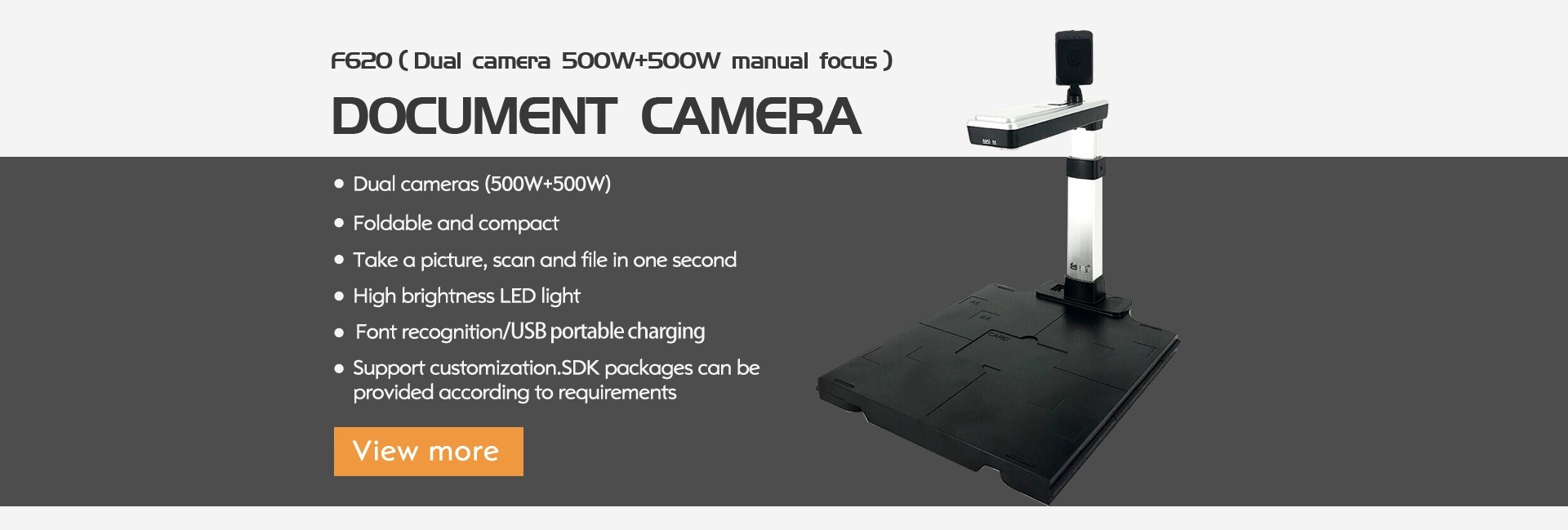
A credible OEM supplier should make it easy to verify the company, the product and the application fit. This checklist reflects the questions our own engineering team asks when adapting a document camera to a government or identity-verification project. It is designed to help global buyers compare suppliers with evidence rather than brochure claims.
A qualified manufacturer should be comfortable with a pilot phase and should provide written specifications that match the tested sample. For government document camera projects, this step reduces the risk of a tender specification that looks good on paper but fails at the counter. Buyers can request a sample review and project discussion by emailing Shenzhen Eshuni Technology Co., Ltd. at info@eshunitech.com.
These are the questions global procurement teams, distributors and system integrators ask most often when evaluating a government document camera with dual-camera capture.
Planning a government document camera tender, a public-service counter rollout or a private-label range? Send your application details to Shenzhen Eshuni Technology Co., Ltd. Our team can review product design, project design and project application requirements with you.
Email: info@eshunitech.com
To help our engineering and sales teams respond accurately, include the country of deployment, annual quantity, document sizes, identity-verification needs, required interface, software environment, language requirements, preferred trade term and target delivery date. You can also request sample validation for the OEM 5MP dual-camera document scanner for government document camera deployments.
info@eshunitech.com
Contact Us