F620 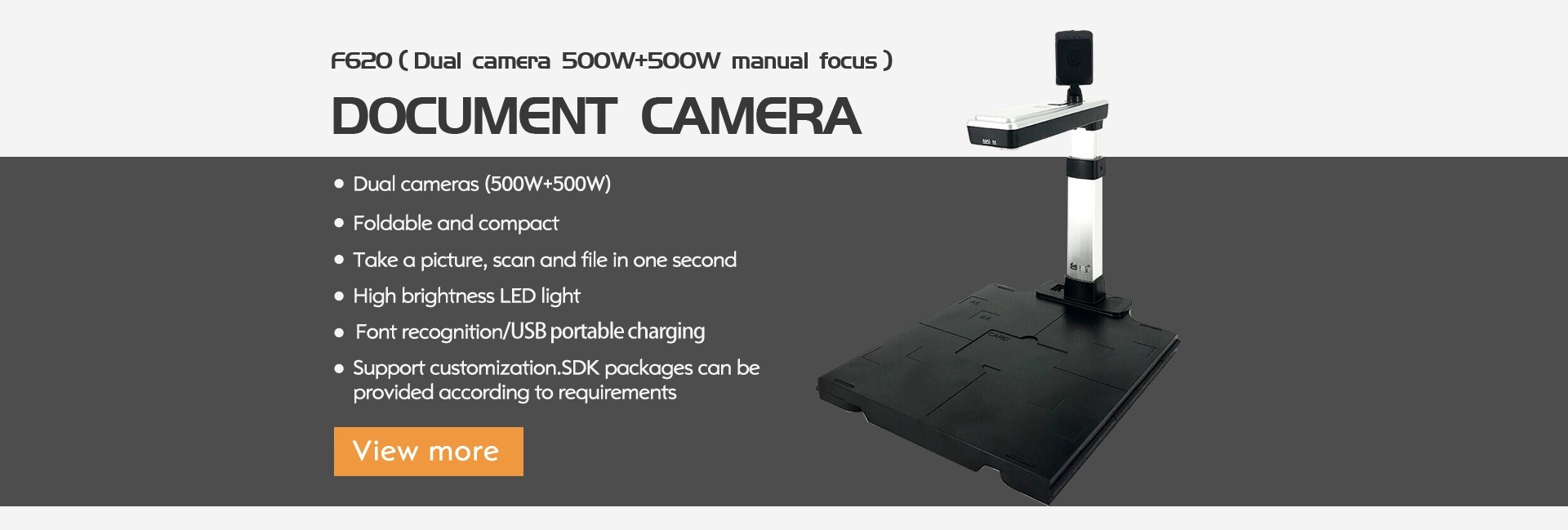
ID Card Identification Document Scanner F620
- Government ID capture
- Document workflow
- OEM support
Counter-ready ID and document scanner concept for public-service identity verification and document intake.
View Details 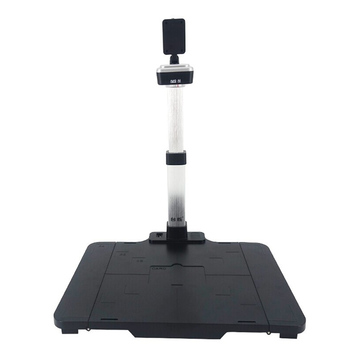

Government document capture is not simply a camera task. It is an evidence and identity workflow that must be fast for citizens, clear for reviewers and manageable for IT teams.
The ID card identification document scanner F620 for government documents is positioned for agencies that need to capture identity cards, passports, application forms, proof-of-address documents and other supporting paperwork at a service counter. Instead of using separate devices for an ID card and an A4 document, procurement teams can standardize on a single capture workflow that reduces operator movement, improves image consistency and simplifies training.
For public-sector projects, the real value of the F620 is not only the camera hardware. It is the ability to align the device with the broader identity process: document placement, auto-crop, glare control, image review, OCR hand-off, case management integration and audit logging. Shenzhen Eshuni Technology Co., Ltd. supports buyers during specification so that the selected configuration matches the tender requirement rather than leaving critical items to post-order change requests.
Typical deployments include municipal service halls, tax and land registration counters, passport and residency document checking stations, social-service intake desks, banking and insurance KYC counters, and enterprise identity registration. Each environment has different lighting, desk space, document mix and software requirements. Our engineers therefore recommend confirming sensor resolution, illumination, capture area, interface type, SDK support and certification scope before the order is finalized.
For buyers building a request for quotation, the most useful starting point is a short workflow map: what document is captured, who reviews the image, where the data goes, how long it is kept and which system consumes the result. A scanner that is correctly specified around those questions will deliver better long-term value than a device selected only by headline resolution.
Use the F620 as the ID and government document capture platform, then add companion devices for higher-volume A4 scanning, dual-camera verification or office digitization.
Counter-ready ID and document scanner concept for public-service identity verification and document intake.
View DetailsUseful when the workflow needs the document image and the applicant image captured in one operation.
View DetailsA companion scanner for application forms, contracts, books and paper case files that need A4 digitization.
View Details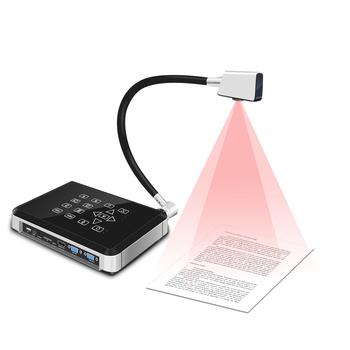
For larger forms, maps, drawings and detailed documents that need extra capture area and image resolution.
View Details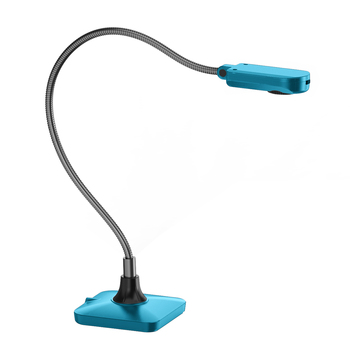
Useful for remote verification interviews and assisted online applications where the operator must see both face and paper.
View Details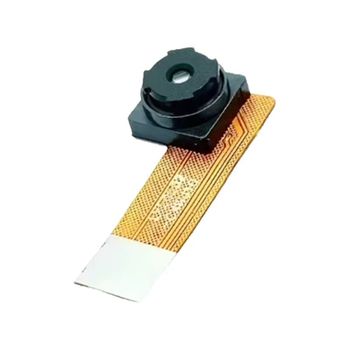
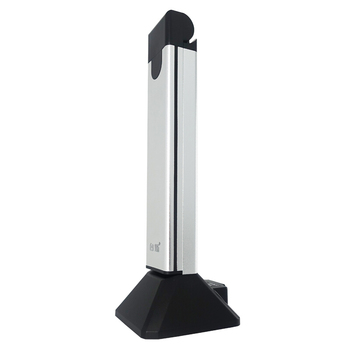
For system integrators that need a camera module embedded into a dedicated government terminal or kiosk.
View DetailsNo matching model on this page. Please contact our team for the full product list.
Public-sector procurement is shifting from isolated hardware purchasing toward long-life identity infrastructure with software, privacy and service requirements built into the tender.
Government agencies rarely buy a scanner as a stand-alone item. The device must work with registration systems, case-management software, document-management platforms, identity-checking engines and reporting dashboards. For that reason, procurement teams increasingly ask for SDK documentation, supported operating systems, image output standards, driver stability and integration test support before awarding a contract. A supplier that can explain how the F620 fits into the application stack is more valuable than one that only lists hardware parameters.
ID card images and passports contain high-risk personal data. Future tenders will place greater emphasis on local processing, controlled data export, encryption, access logging and minimization of retained images. The scanner should not be treated as a privacy solution by itself, but it must support the agency's privacy architecture. Buyers should ask whether the device can operate in a controlled local environment, whether raw images are stored on the device, how the SDK handles temporary files and how audit trails can be generated by the integrating application.
Manual image review slows down service counters and creates inconsistent records. AI-assisted quality checks can detect blur, glare, edge cut-off, document skew, missing corners and low contrast before the citizen leaves the counter. This is an important information gain for procurement teams: the goal is not simply a sharper image, but fewer rejected applications and fewer repeat visits. When evaluating the F620 for government documents, include image-quality validation and exception handling in the software demonstration, not only the camera resolution.
Government technology programs often run for five years or longer. Procurement officers are therefore asking more detailed questions about product lifecycle, spare parts, firmware maintenance, repair turnaround and model-change notification. A low unit price can become expensive if the device is discontinued after a short period or if replacement accessories are unavailable. Shenzhen Eshuni Technology Co., Ltd. supports OEM and project-based sourcing, allowing buyers to discuss documentation, production continuity and service expectations during the quotation stage.
One agency may need a compact USB scanner for a small municipal desk, while another may require a dual-camera unit for applicant and document capture, or a larger A3 visualizer for maps and drawings. Modular product families reduce procurement complexity because the buyer can standardize software and support while selecting the right capture form factor for each site. The F620 can therefore be evaluated as part of a broader identity capture portfolio rather than as a single universal device.
Government counters serve citizens with different document types, languages and accessibility needs. Scanner placement, capture feedback, voice or screen prompts, automatic language selection and operator ergonomics all affect service quality. Procurement requirements are beginning to include accessibility and usability criteria alongside technical performance. A device that is easy to position, easy to clean and easy to operate under pressure is more likely to be accepted by frontline staff.
To discuss these procurement requirements for your project, contact Shenzhen Eshuni Technology Co., Ltd. at info@eshunitech.com.
Government identity hardware is increasingly planned as multi-year infrastructure, not a one-off purchase.
Specify controlled local processing, clear data-retention rules and application-level audit logging.
Request sample code, driver documentation, output formats and test support before the tender closes.
The next generation of scanners will be judged by image intelligence, software fit, security discipline and lifecycle support.
More capture logic will move close to the device so that blur, glare and missing fields can be corrected before data enters the case file.
Future devices will be documented around data minimization, secure boot, local processing and clean integration with agency identity systems.
Housing, lighting, lenses, interfaces and mounting options will be adapted to counter, kiosk, mobile and back-office use.
Buyers will expect clean JSON, XML or database-ready output rather than image files that require manual re-keying.
Government counters handle different card sizes, passport pages, A4 forms and supporting evidence in one citizen visit.
Long-life public projects will favor replaceable components, clear maintenance procedures and stable supply instead of closed unserviceable designs.
Shenzhen Eshuni Technology Co., Ltd. can review target specifications with your technical team and propose an F620 configuration suitable for the intended government workflow.
This checklist is written for government procurement officers, system integrators and distributors who need to compare offers on more than price.
| Evaluation Area | Question to Ask | Why It Matters | Evidence to Request |
|---|---|---|---|
| Identity document mix | Which ID cards, passports and supporting documents must be captured? | Defines capture area, illumination, OCR and document guides. | Sample images or test protocol with representative documents. |
| Image quality | How are glare, skew, shadow, blur and edge cut-off controlled? | Poor images increase manual review and citizen repeat visits. | Before-and-after samples under real counter lighting. |
| Software integration | Does the SDK support your operating system, framework and data format? | Integration risk can outweigh hardware cost. | API documentation, sample code and test build. |
| Privacy and audit | Where is the image processed? What is retained and logged? | Public-sector identity data requires clear control and governance. | Data-flow diagram and integration checklist. |
| Certification scope | Which certificates apply to the exact model and market? | Certification for another model does not automatically cover the tender model. | Certificate numbers, reports and model references. |
| OEM fit | Can housing, branding, firmware defaults or packaging be adapted? | Distributors and agencies often need project-specific identification. | Customization statement, MOQ and lead-time confirmation. |
| Lifecycle support | What is the spare-part and firmware support plan? | Government assets must remain serviceable through the contract period. | Recommended spare list, warranty terms and change policy. |
| Total cost of ownership | What is included in the quote: SDK, cables, support, testing and delivery terms? | Low unit price can hide integration and support costs. | Line-item quotation with delivery terms and exclusions. |
For project-specific confirmation, email info@eshunitech.com. Please include document types, operating system, software environment, target volume, delivery country and tender timeline.
Experience in information collection and identity verification, supported by in-house design, manufacturing and project application know-how.
Shenzhen Eshuni Technology Co., Ltd. was founded in 2012 and specializes in information collection and identity verification solutions. Our product portfolio includes high-speed scanners, video booths, book scanners, document cameras, visualizers, intelligent terminals, webcams, face recognition gate controllers and camera modules. This breadth is useful for government projects because one supplier can support different capture points across a service workflow.
Our products and services are used in finance, insurance, communications, government, education and enterprise information construction. For identity capture projects, this cross-industry experience helps us understand practical requirements such as counter ergonomics, image consistency, document handling, software hand-off and long-term service. Our R&D team can provide three levels of technical service: product design, project design and project application support based on the customer's scene and actual situation.
Quality management is supported by an ERP and supply-chain management system, helping keep production consistent and delivery predictable. The company has passed ISO9001 quality management system certification and maintains CE, FCC, RoHS and 3C certifications for applicable products. Our products and software are developed as our own knowledge products and have obtained a number of national patents. Buyers evaluating the ID card identification document scanner F620 for government documents can request documentation and project confirmation before ordering.
Commercial transparency is also important. Company information includes a response rate of 72.73%, response time of 14 hours or less, 101–200 employees, annual revenue in the US$1 million to US$2.5 million range, a manufacturer business type and a location in Guangdong, China. For tender support, contact info@eshunitech.com with your technical requirements and target delivery schedule.
Direct answers to the questions global procurement teams commonly ask during supplier and technical evaluation.
Share your government document workflow, target volume and software environment. Our team will confirm the suitable F620 configuration, OEM options and documentation requirements for your tender.