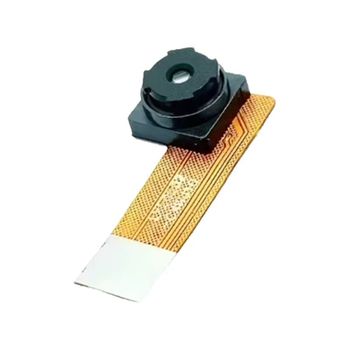

Custom AI Smart Glasses FPC Camera Module for AR Wearable Devices: Sourcing, Trends and OEM Checklist
A practical guide for global procurement teams evaluating custom camera modules for AI smart glasses, AR wearable devices and next-generation wearable imaging products.
Why the FPC camera module is critical in AR wearable design
The camera module in AI smart glasses is not simply a component selected from a catalogue. It sits inside a demanding mechanical, optical and electrical environment. The module must fit into the frame or temple, maintain stable focus, route a flexible printed circuit through a narrow hinge area, manage heat and consume very little power. For AR wearable devices, a small change in FPC length, connector height or lens position can affect assembly yield and product reliability. That is why custom AI smart glasses FPC camera module projects should start with the mechanical envelope and the user scenario, not only with a sensor datasheet.
From an imaging perspective, buyers need to define the target field of view, working distance, minimum illumination, motion requirement and acceptable image latency. A module intended for visual AI assistance may prioritise low power and consistent exposure, while a module used for detailed documentation may need higher resolution and accurate colour. A compact FPC camera module for AR wearable devices should therefore be specified as a complete system: CMOS sensor, lens, IR filter, FPC, connector, firmware settings and mechanical mounting. This is the foundation of reliable procurement and a smoother OEM/ODM development process.
Procurement trends global buyers should plan for
Based on the questions we see from B2B buyers, procurement for AI smart glasses camera modules is moving away from simple off-the-shelf purchasing and toward application-specific sourcing. Buyers increasingly want early engineering involvement, custom FPC drawings, connector choice, lens tuning and a pilot route before committing to mass production. The lowest unit price alone is no longer the main decision factor; supply continuity, documentation, test criteria and communication speed are equally important. For a custom AI smart glasses FPC camera module for AR wearable devices, procurement teams should plan for a staged process: specification review, sample evaluation, mechanical fit check, image validation, pilot build and volume production.
Another trend is dual-source planning. Even when one supplier is selected for the camera module, buyers often want a clear understanding of critical materials, sensor availability and change-control procedures. This reduces risk when a product moves from prototype to market launch. Compliance is also becoming more visible in procurement discussions. CE, FCC, RoHS, 3C and ISO9001 are frequently requested before a supplier is shortlisted, and buyers now ask how test records, labels, packaging and traceability will be managed for each shipment. Finally, AI wearable products often require close coordination between the camera module supplier and the software, ISP and mechanical teams. A supplier that can communicate engineering details clearly is more valuable than one that only provides a price list.
Product development trends in AR camera modules
The next generation of AI smart glasses is pushing camera modules toward smaller size, lower power and better image quality in mixed lighting. Rigid-flex and flexible FPC designs are being refined to fit curved temples and narrow hinge areas. Sensor packages are becoming more compact, while lenses are being tuned for wide-angle scene capture, low distortion and improved low-light performance. For AR wearable devices, the module must also support an acceptable thermal profile because heat close to the wearer's head can affect comfort and reliability. Design teams should validate power sequencing, sensor sleep modes and firmware behaviour together with the hardware.
Miniaturisation and mechanical fit
- Shorter module height and lower connector profile.
- FPC bend radius, stiffener and mounting hole planning.
- Lens position control for stable focus during wear.
Efficiency and edge AI
- Low-power sensor modes and event-driven capture.
- Firmware tuning for exposure, colour and latency.
- Coordination with AI processing and system power budget.
Image quality for real scenes
- HDR and wide dynamic range evaluation.
- Low-light sensitivity and noise control.
- Wide-angle lens options with distortion review.
Compliance and documentation
- Export-market certification planning.
- RoHS material documentation and labelling.
- Change control and traceability records.
Sourcing checklist for custom AI smart glasses camera modules
Before asking for a quotation, prepare a clear technical brief. This helps a manufacturer respond with a realistic configuration instead of a generic estimate. The checklist below is based on the information our engineers typically need before evaluating a custom FPC camera module for AR wearable devices.