Why overhead document scanners are moving from classroom accessories to compliance infrastructure
For more than a decade, the overhead document scanner — also called a document camera, visualizer or book scanner — was purchased mainly as a teaching aid. In 2025 and beyond, the buying committee has changed. School districts, government service counters, banks, insurers, telecom operators and enterprise IT teams now evaluate these devices as information capture infrastructure. They are used for remote lessons, identity checks, contract digitization, telemedicine, live product support, archive projects and hybrid meetings. That shift raises the importance of CE certification, technical documentation, firmware control, supply continuity and after-sales responsiveness.
As a Shenzhen manufacturer and exporter founded in 2012, Eshuni has watched procurement requirements become more formal. Buyers no longer ask only for resolution and price. They ask for a Declaration of Conformity, RoHS material declarations, label artwork, packaging consistency, model-list coverage, sample validation reports, firmware version control and a clear route for spare parts. The strongest suppliers are those that can connect product engineering to the buyer’s tender file — not simply quote a camera module and a housing.
- Compliance evidence must match the exact model, power adapter, wireless module and label sold.
- Image quality must be validated against the real workflow: A3 drawings, bound books, ID cards, lab samples or live demonstrations.
- OEM/ODM programs need a factory that controls hardware, firmware, packaging and documentation under one quality system.
What sophisticated buyers should request before shortlisting a supplier
A CE-ready overhead document scanner program is easier to audit when the supplier can provide a model-to-document map. Ask for the exact product name, model number, rated input, adapter specification, firmware release, optional wireless module, label file and packaging artwork to appear in the technical file. This prevents a common procurement problem: the sample passes, but the mass-production label or adapter changes without the buyer’s knowledge.
Use a pilot to test auto-focus speed, low-light noise, colour accuracy, A3 edge sharpness, wireless stability in a congested school network and software compatibility with the buyer’s existing display, LMS or document-management system. A strong supplier will support this validation with engineering feedback rather than treating it as a simple sales step.
Get CatalogEight overhead document scanner and visualizer models for tender, retail and OEM programs
The range below covers classroom visualizers, A3 wireless models, portable book scanners, USB document cameras and embedded camera modules. Each product URL is preserved for direct evaluation, and all models can be discussed for OEM, private-label or project-specific configuration.

OEM USB 5MP 8MP 13MP Document Camera Visualizer for Education Camera Scanner or Office Document Scanner
A flexible USB visualizer platform for buyers who need to match resolution to budget, from everyday A4 document sharing to sharper A3 demonstration capture.
View product
China Document Camera A3 Portable Wireless 13mp Visualizer Document Camera
Portable 13MP wireless A3 document camera for classrooms, training rooms and mobile presentation teams that need cable-free live capture.
View product
CMOS Sensor 1080P 30fps USB2.0 Camera Module Monocular Wide Dynamic Range Camera Module with Ultra-Low Light Performance
An embedded USB camera module for OEM designs that need 1080P output, wide dynamic range and improved performance in difficult lighting.
View product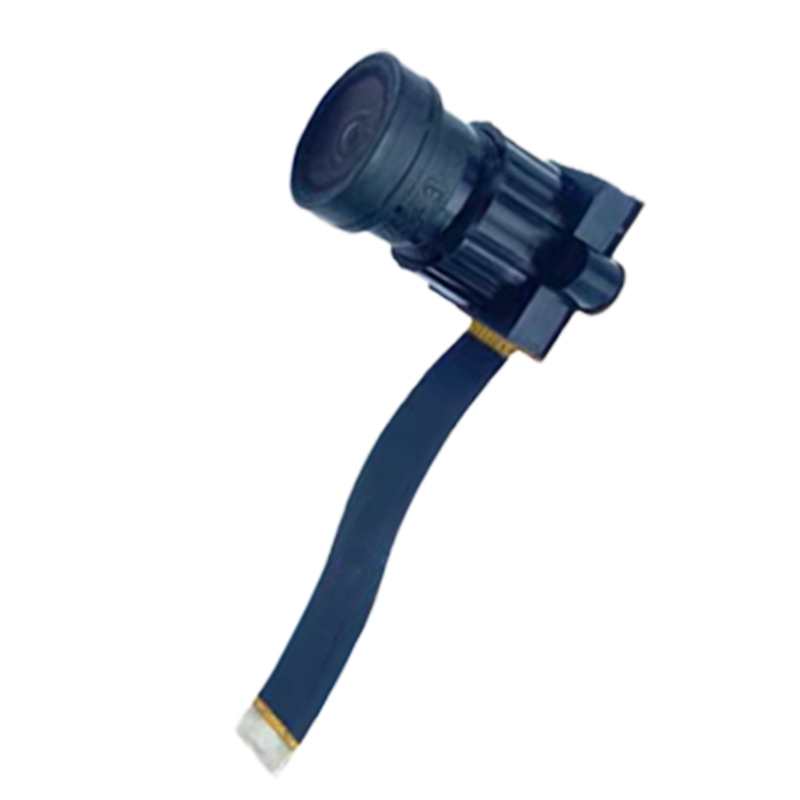
Professional Manufacturer's CMOS Sensor MIPI Camera Module 1080P 2K 4K Drone Wireless Video Transmission Camera Module
MIPI camera modules for drone, wireless video transmission and embedded vision programs, with 1080P, 2K and 4K options for product roadmaps.
View product
HD Camera Portable Visualizer Presenter Document Camera for Presentation Equipment Book Camera
A foldable visualizer presenter for live demonstration, book scanning and classroom presentation, designed for buyers who value portability.
View product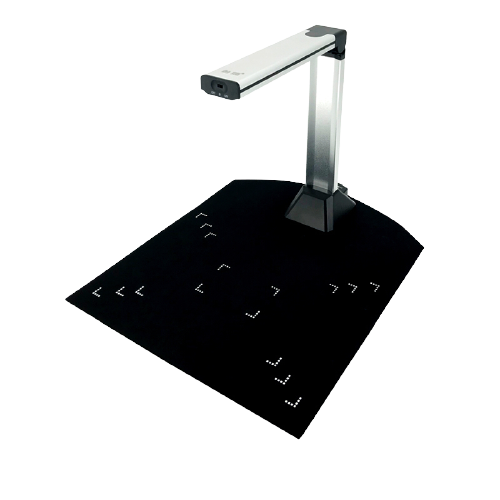
Portable OEM 8MP Document Camera Visual Presenter for Education Equipment Camera Scanner
OEM 8MP visual presenter for education-equipment buyers who need a private-label document camera scanner with repeatable production.
View product
Wireless Robotic Frame Book Scanner Document Camera A3 A4 Size Management Document Scanner for Online Class
Wireless robotic frame book scanner with A3/A4 support for online classes, library projects, records offices and document-management workflows.
View product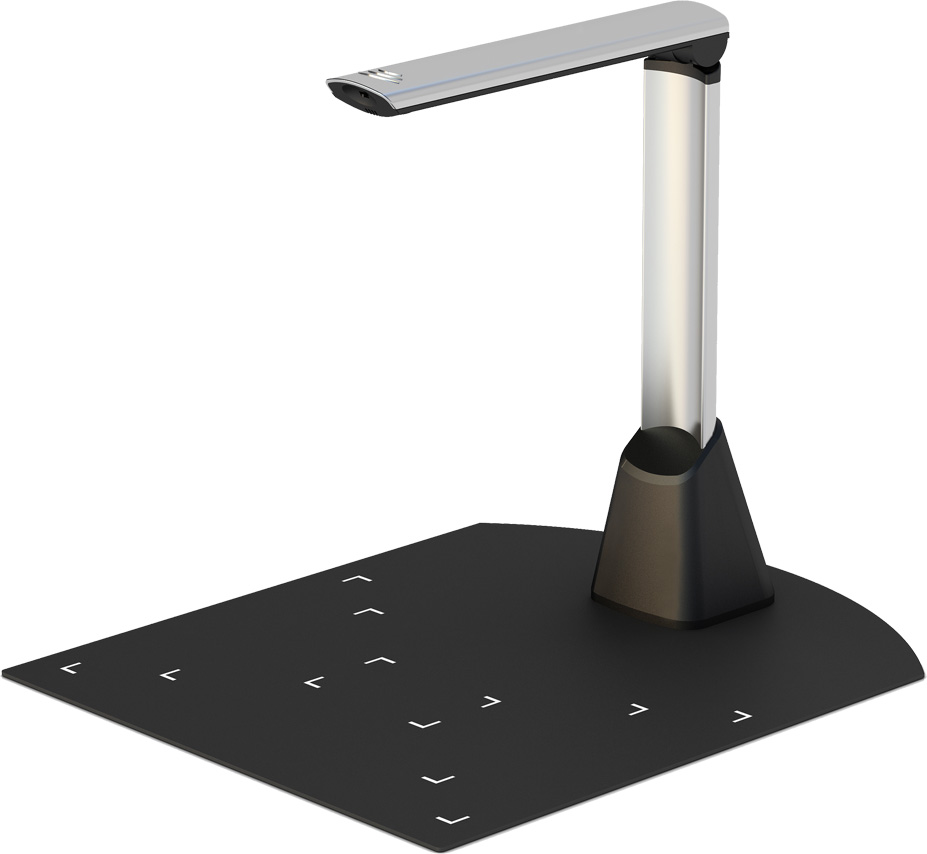
USB OEM A4 Fixed Focus Portable Desktop Document Scanner 13MP for Office Document Scanning
A fixed-focus USB desktop document scanner with 13MP capture for office digitization, service counters and space-limited workstations.
View productWhat CE certification really means for overhead document scanner buyers
CE marking is a compliance process, not a decorative label. For document cameras and visualizers, the buyer should understand which product version, power supply, wireless module and packaging are covered.
Technical file and DoC discipline
A credible supplier should map the Declaration of Conformity to the exact model, adapter, label and optional module being exported. Ask for the controlled document list before mass production.
EMC, power and wireless consistency
USB power, external adapters and 5.8GHz wireless modules can change the compliance profile. Lock the bill of materials and test the configuration that will actually ship.
RoHS and material declarations
Education and government tenders increasingly request RoHS evidence and supplier declarations. A factory with ERP-supported BOM control can keep material data aligned with production.
Label, packaging and traceability
Serial numbers, firmware versions, user manuals and packaging labels should be traceable. This reduces risk when a buyer audits a shipment or receives a compliance inquiry.
Product procurement trends shaping 2025–2030
Overhead document scanner procurement is becoming less transactional and more program-based. Buyers are consolidating suppliers, asking for documentation and planning multi-year deployments.
Compliance-led sourcing
Public tenders and enterprise procurement now ask for CE, RoHS, FCC, model lists, test evidence and traceability before samples are approved. Suppliers that treat compliance as an afterthought lose speed.
Hybrid classroom and workplace refresh
Schools and enterprises are standardizing capture devices across rooms, not buying one unit at a time. They want consistent drivers, mounting options and spare-part availability.
Software-defined capture
Buyers increasingly compare auto-crop, OCR, recording and LMS compatibility, not just megapixels. Devices that behave consistently across Windows, macOS, ChromeOS and Android environments have an advantage.
Total cost of ownership and delivery
FOB and EXW remain common, but DDP and regional inventory planning are growing. Buyers want fewer surprises in freight, spare parts, warranty handling and repeat-order lead time.
Illustrative tender scoring model
Use this as a workshop template. The weights should change with the application, but the principle is consistent: a document camera is now evaluated as a system, not a camera alone.
Weights are illustrative guidance for procurement workshops, not a published industry standard.
Buyer action list for the next RFQ
Before you compare quotations, define the capture task in measurable terms. A scanner that looks identical in a catalogue can behave very differently on an A3 engineering drawing, a glossy textbook or an ID card under counter lighting.
- State the largest capture area: A4, A3, book spread or ID card.
- Name the connection: USB, 5.8GHz wireless, HDMI or embedded MIPI.
- List the software environment: Windows, macOS, ChromeOS, Android or custom.
- Ask for sample validation on your own content and lighting.
- Require a model-to-certificate map before purchase order.
- Confirm spare parts, packaging and private-label artwork control.
How overhead document scanner technology is evolving
The next generation of visualizers will be judged by how well they capture, process and integrate information — not only by sensor megapixels.
Higher-resolution, low-light sensors
13MP and larger sensors are becoming practical for full A3 capture, fine print, engineering drawings and archival scans. At the same time, WDR and low-light CMOS development matters because real rooms are rarely studio-lit.
Wireless and USB-C convergence
USB remains the default for fixed desks and counters, while 5.8GHz wireless is valued in classrooms where teachers move around. Future models will blend wireless freedom with simpler USB-C power and display ecosystems.
Edge AI, auto-crop and OCR
Auto-focus, auto-exposure, document edge detection, de-skew and OCR are moving closer to the device. Buyers will increasingly expect the camera to deliver a usable document image without manual correction.
Modular OEM and wearable modules
Document camera know-how is feeding into adjacent products: AI smart glasses, identity terminals, drone modules and kiosk cameras. Modular CMOS and FPC designs let OEM buyers reuse engineering across product lines.
Match the right overhead document scanner to the real application
Use this comparison as an early-stage specification aid, then confirm the final configuration with samples, software tests and compliance documents.
| Use case | Recommended resolution | Capture area | Connectivity | Why it matters |
|---|---|---|---|---|
| Classroom live teaching | 8MP to 13MP | A4 / A3 | USB or 5.8GHz wireless | Teachers need smooth focus, low latency and enough detail for handwriting, diagrams and book pages. |
| Government service counter | 5MP to 13MP | A4 plus ID card | USB | Stable plug-and-play capture, clear ID details and fixed installation reduce counter downtime. |
| Library and archive digitization | 13MP and above | A3 or book spread | USB / high-stability wireless | Edge sharpness, colour consistency and repeatable positioning matter more than portability. |
| Portable sales presentation | 8MP | A4 | USB | A compact visualizer that folds into a bag helps field teams demonstrate products and documents. |
| OEM embedded vision | 1080P / 2K / 4K module | Lens dependent | MIPI / USB | Buyers need sensor, lens, FPC, firmware and mechanical integration support rather than a finished housing. |
| Remote tutoring and hybrid training | 8MP to 13MP | A4 / desk area | USB or wireless | Users switch between face camera and document view; software compatibility and auto-exposure are critical. |

Factory & R&D center · Shenzhen, Guangdong
Factory capability behind a CE certified overhead document scanner supply program
Shenzhen Eshuni Technology Co., Ltd. has been a manufacturer and solution provider for information collection and identity verification since 2012. Our product scope includes high-speed document scanners, video booths, book scanners, identity verification terminals, webcams and camera modules. This breadth matters to B2B buyers because a single supplier can support multiple capture categories without losing consistency.
Our factory operates an ISO9001 quality management system and our product range is offered with CE, FCC, RoHS and China 3C certification according to configuration. Hardware and software are developed in-house and protected by national patents. ERP-driven production and supply-chain management help keep quality records, material planning and repeat orders aligned.
For OEM and ODM programs, we support product design, project design and on-site project application support. Whether the request is a private-label 8MP visualizer, a 13MP A3 wireless document camera or a custom camera module, the goal is the same: turn the buyer’s application into a manufacturable, documented and repeatable product.
- In-house R&D for hardware, firmware and application support.
- ERP-supported production and supply-chain control.
- FOB, EXW and DDP trade terms for major export regions.
- Private-label packaging, label control and project-specific configuration.
Quality system
ISO9001 workflow supports incoming material control, assembly checks, testing records and final inspection.
Imaging hardware depth
From complete visualizers to CMOS modules and FPC camera designs, engineering knowledge can be reused across projects.
OEM / ODM execution
Support for buyer labels, packaging, firmware settings, product design and project-specific application requirements.
Export experience
Regular shipments to North America, South America, Western Europe, South Asia and Africa, with flexible trade terms.
Questions importers ask before ordering an overhead document scanner
These are the practical questions that usually arise during supplier evaluation, sample approval and mass-production planning.
Does Eshuni offer OEM and ODM document cameras and visualizers?
Yes. We offer OEM manufacturing, product design services and buyer-label production. Our in-house R&D team supports product design, project design and on-site project application. For buyers, this means the discussion can move beyond a simple logo on an existing model to packaging, firmware defaults, accessory sets and project-specific requirements.
Which certifications do your products and factory hold?
Our factory operates an ISO9001 quality management system, and our product range is offered with CE, FCC, RoHS and China 3C certification according to configuration. Hardware and software are developed in-house and protected by national patents. Always request the certificate and technical-document list for the exact model and adapter you plan to import.
Should I choose an 8MP or 13MP document camera?
An 8MP sensor is generally sufficient for A4 pages, textbooks and live classroom demonstrations. A 13MP sensor is recommended when capturing full A3 sheets, fine print, engineering drawings, archives or any content where detail must remain legible after zooming or cropping. The right answer depends on the smallest feature the user must read, not only the page size.
What is the difference between USB and 5.8GHz wireless document cameras?
USB models are plug-and-play and draw power from the computer, making them ideal for fixed desks, service counters and simple deployments. 5.8GHz wireless models let teachers move freely around a room, and the 5.8GHz band is often less congested than 2.4GHz in busy school networks. A wireless model should still be tested in the buyer’s actual Wi-Fi environment, because building materials and network congestion vary.
Which trade terms and markets do you support?
We accept FOB, EXW and DDP delivery terms and regularly ship to North America, South America, Western Europe, South Asia and Africa. For first orders, we recommend confirming the shipping term, packaging method, spare-part plan and inspection scope together with the product specification so that the landed-cost comparison is realistic.
What should be included in a CE technical file request?
Ask for the Declaration of Conformity, applicable test reports, the covered model list, power adapter specification, label artwork, user manual, firmware version and any optional wireless module details. A supplier that can explain how these documents map to production is usually better prepared for tender or customs inquiries.
Can we test a sample before placing a volume order?
Sample validation is strongly recommended. Test the device with your own documents, lighting, software and display setup. Check auto-focus speed, A3 edge sharpness, colour consistency, low-light noise, wireless stability and compatibility with existing classroom or office software. Use the sample result to approve the production configuration in writing.
How do we manage lead time, MOQ and repeat orders?
Lead time and MOQ are quoted after the specification, packaging, certification scope and order volume are reviewed. To reduce risk, share a forecast with a clear model mix, confirm whether custom labels or firmware are required, and ask how key components and spare parts are planned for repeat orders.
Build a CE-ready overhead document scanner range with a factory that understands the technical file
Share your application, target resolution, capture area, connectivity and certification requirements. Our team can help match the right document camera, visualizer or camera module and prepare a catalog for your buying committee.