OEM / ODM · Shenzhen, China · Since 2012

China Best Desktop Document Scanner Factories & Supplier

A procurement-grade briefing on desktop document scanners, book scanners and visual presenters — engineered, certified and exported by a Shenzhen factory with in-house R&D since 2012.

Contact Us
Product Recommendations

8 Desktop Document Scanner Models Built on the Factory Floor

Every model below is an active production line — available for private label, custom firmware, regional packaging and tender-ready documentation.

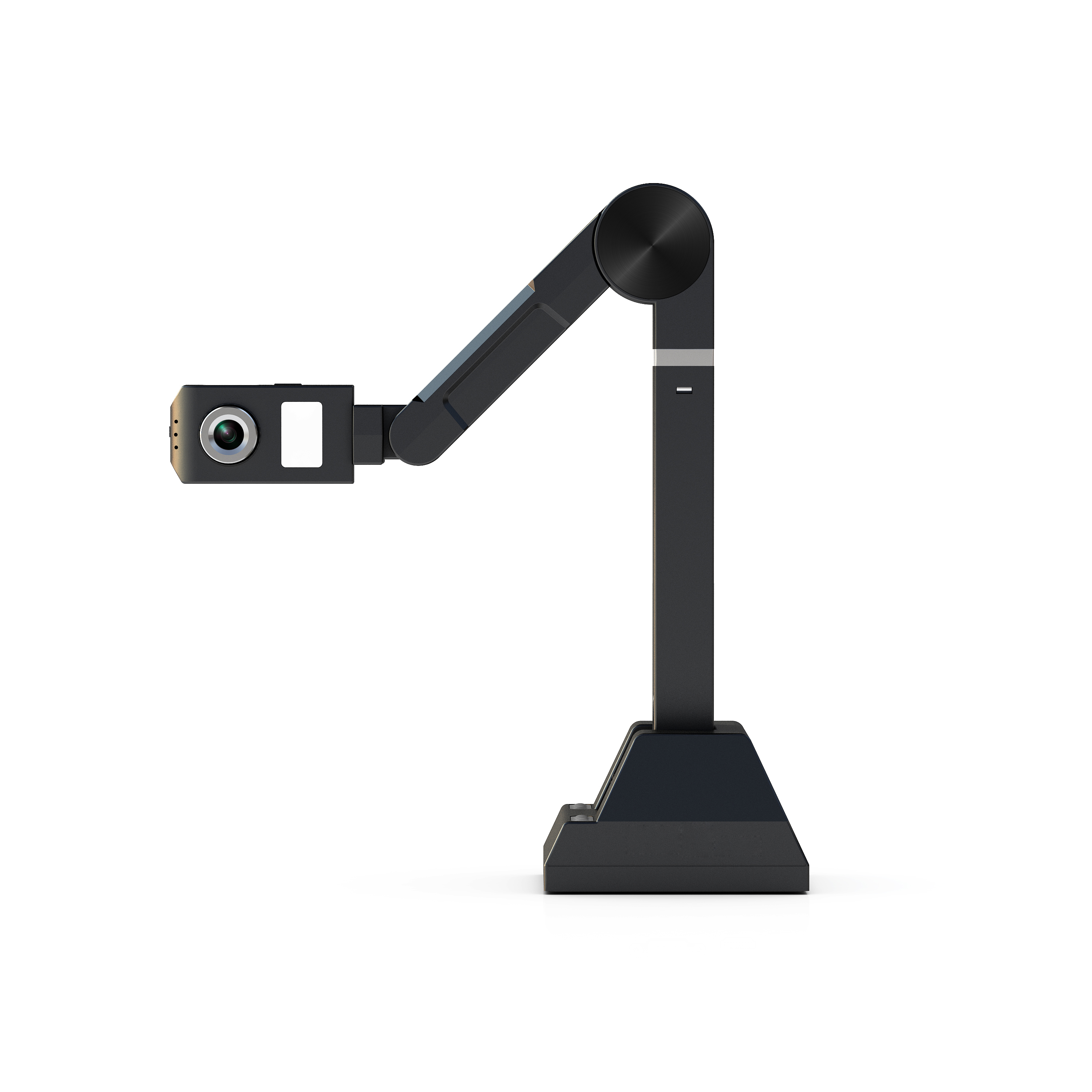
A3 · 13MP China document camera A3 portable wireless 13MP visualizer document camera

A3 Portable Wireless 13MP Visualizer Document Camera

  • 13MP CMOS
  • A3 capture
  • Wireless

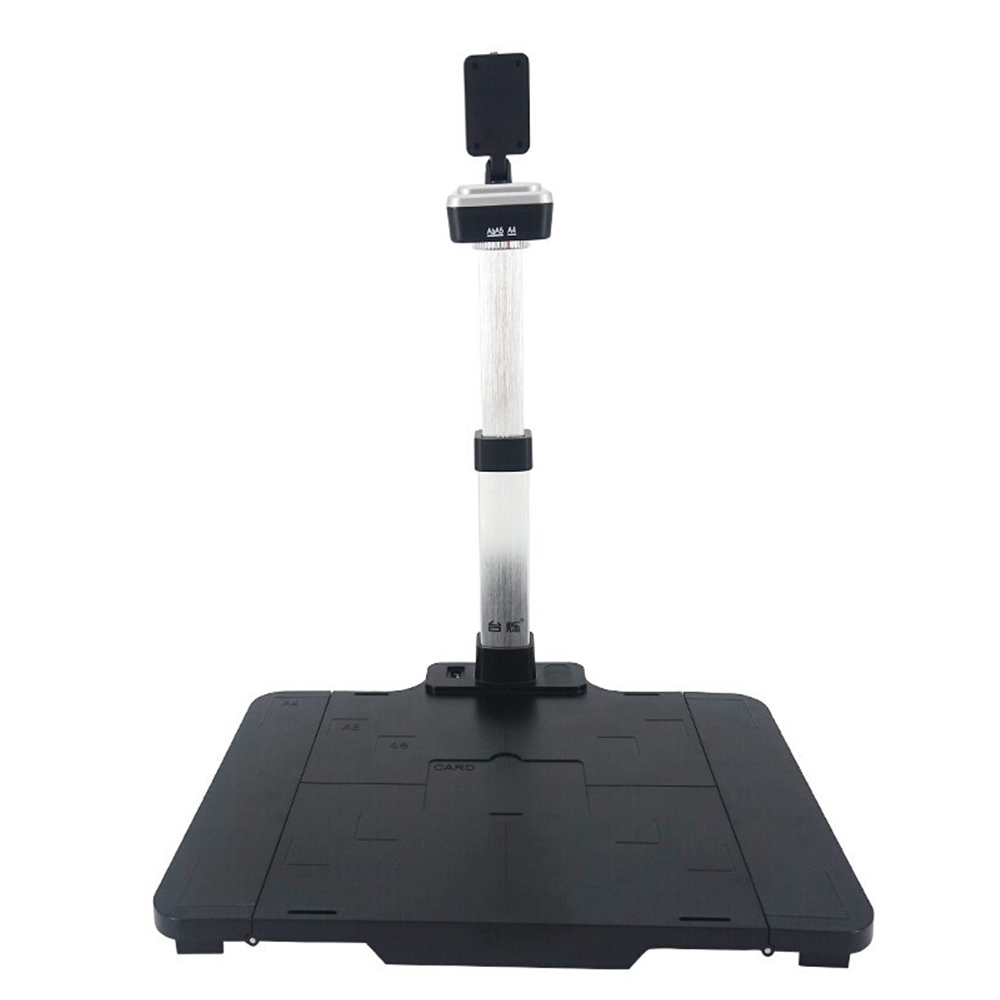
A 13MP sensor paired with a folding arm keeps a full A3 sheet legible after zoom. Built for large classrooms, engineering drawing review and mobile training rooms.

View details
Dual Lens OEM HD 5MP double camera document camera scanner for government document capture

OEM HD 5MP Dual-Lens Document Camera Scanner

  • Dual camera
  • 5MP
  • KYC

Two cameras in one housing: one frames the document, the other frames the applicant. Designed for government service counters, bank KYC desks and telecom real-name registration.

View details
48MP 48MP USB 3.0 autofocus document camera scanner for office and classroom

48MP USB 3.0 Autofocus Document Camera Scanner

  • 48MP
  • USB 3.0
  • Autofocus

The highest-resolution model in the range. USB 3.0 bandwidth moves 48MP frames to the host without dropping, for office digitisation and classroom capture where detail is the deliverable.

View details
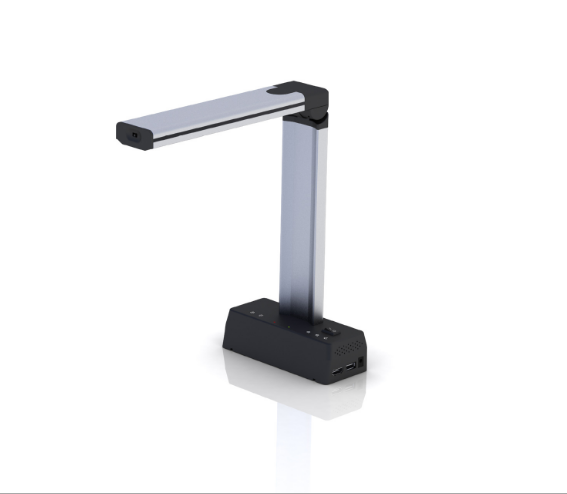
Portable HD camera portable visualizer presenter document camera for presentation and book capture

HD Portable Visualizer Presenter Document Camera

  • Foldable
  • Plug & play
  • Presentation

A lightweight presenter body with driver-free USB output. Teachers and trainers can carry it between rooms and connect without reinstalling software on each host machine.

View details
8MP / 13MP New design HD 8MP 13MP autofocus document camera scanner for online education

HD 8MP / 13MP Autofocus Document Camera Scanner

  • Autofocus
  • Online education
  • USB

A dual-resolution platform aimed at education equipment projects. Autofocus absorbs page turns and hand movement; the sensor tier is selected per configuration and per budget band.

View details
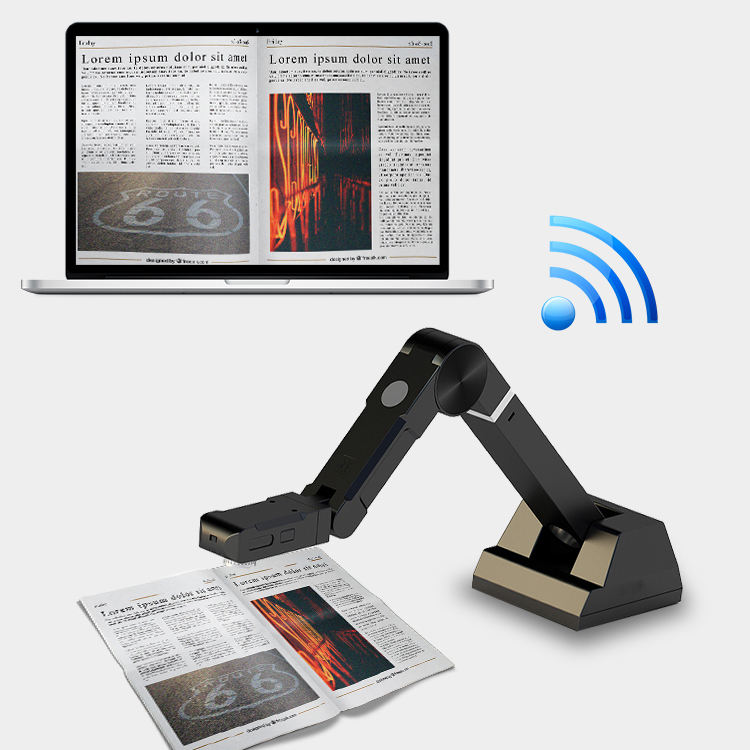
5.8G WiFi 5.8G WiFi wireless document camera visualizer OEM ODM for education and office

5.8G WiFi Wireless Document Camera Visualizer

  • 5.8GHz
  • Wireless
  • OEM / ODM

The 5.8GHz band is materially less congested than 2.4GHz inside schools. Supplied with full OEM/ODM scope: housing tooling, firmware strings, packaging and buyer branding.

View details
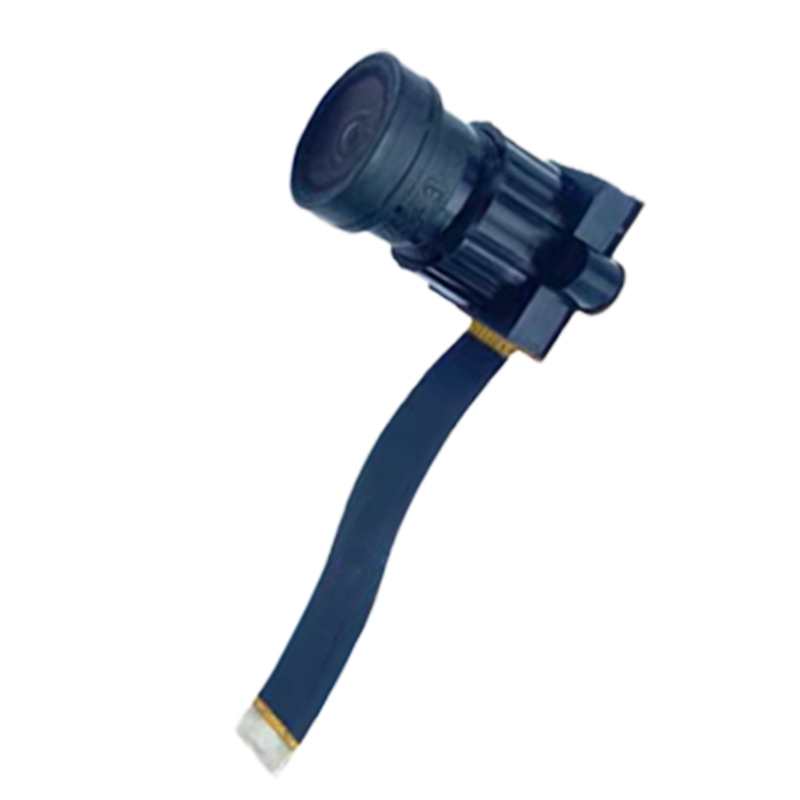
Camera Module Professional manufacturer CMOS sensor MIPI camera module 1080P 2K 4K for drone and AR devices

CMOS Sensor MIPI Camera Module — 1080P / 2K / 4K

  • MIPI
  • 1080P–4K
  • Custom

Bare modules for drones, AR glasses and wearables. MIPI interface, tiered resolution, and customisable lens and FPC length for integrators building their own enclosure.

View details
Book Scanner Visualized handheld HD USB A4 A3 book scanner document camera for archives

Handheld HD USB A4 / A3 Book Scanner

  • A4 / A3
  • USB
  • Book scan

Engineered for bound books and materials that cannot be pressed flat. The handheld geometry clears the spine, while capture software performs the flattening and cropping downstream.

View details
Supplier Snapshot

A Manufacturing Base You Can Actually Audit

Numbers a sourcing team can verify on site — not marketing claims.

14+

Years of document camera and visualizer R&D

3,000+ m²

Factory floor area under one roof

100+

Production, engineering and QC staff on site

5

Export regions served on a recurring basis

Market Context

Why China's Desktop Document Scanner Supply Chain Still Leads

Desktop document scanners are almost never bought as standalone hardware. They arrive attached to a programme: a classroom presentation system, a bank branch KYC desk, a telecom real-name registration counter, a government service window or a library scanning station. That context is what determines the tender language — and it is the reason the cheapest quotation frequently loses.

The specification that wins is rarely the one printed on a datasheet. It is the alignment between sensor, lens geometry, autofocus response, illumination control, firmware behaviour, driver compatibility, certification package and the after-sales logistics the factory can genuinely sustain for five years. A 13MP sensor behind a weak lens and a slow autofocus motor produces a worse buying outcome than an 8MP sensor behind a good one.

Shenzhen concentrates every link of that chain inside a short radius: CMOS sensor distribution, lens grinding, FPC fabrication, injection tooling, cable assembly and — critically — an engineering talent pool that has spent more than a decade shipping imaging hardware to North America, South America, Western Europe, South Asia and Africa. The competitive advantage is not cheap labour; it is component density and iteration speed.

Shenzhen Eshuni Technology Co., Ltd. sits directly inside that ecosystem. Founded in 2012 and operating an ISO9001 quality management system, the company designs, manufactures and exports desktop document scanners, visualizers, webcams, ID document scanners, identity verification terminals and camera modules from a 3,000² metre facility with more than 100 staff. Hardware and software are developed in-house and protected by national patents, which means customisation requests reach the engineers who actually wrote the firmware rather than a trading desk.

What follows is not a sales brochure. It is a working brief for sourcing managers: recommended models, the procurement trends reshaping 2025–2030 tenders, the hardware directions buyers should price into future budgets, a specification matrix for range planning, and the questions serious buyers ask before placing a first order.

Shenzhen Eshuni Technology document camera factory and R and D centre in Guangdong China
Factory & R&D centre · Shenzhen, Guangdong
Enterprise Advantages

What Survives a Supplier Audit

An auditor does not inspect whether a brochure says ISO9001. They inspect incoming inspection records, calibration status, ESD control, traceability labelling, ageing-test routines and whether anybody owns customer complaints. Those are process questions, and they decide whether a purchase order becomes a supply relationship.

Eshuni answers them structurally. In-house R&D keeps bug fixes, firmware strings and housing changes inside the building. ERP-driven production and supply-chain management keeps bills of material, batch traceability and delivery pacing on data instead of memory. Three levels of technical support — product design, project design and on-site project application — mean a distributor asking whether a camera survives a 40°C, 85% humidity classroom receives an engineering answer, not a sales one.

  • ISO9001
  • CE
  • FCC
  • RoHS
  • 3C
  • National patents
Contact Us
Future Procurement Trends

Desktop Document Scanner Procurement Trends, 2025–2030

Six shifts already visible in live tenders and repeat order patterns — each one changes how a supplier should be scored.

Wireless becomes the default ask

Tenders once asked whether a port existed. They now ask whether a teacher can carry the unit to the back of the room. That means 5.8GHz rather than 2.4GHz, because campus spectrum is crowded. Factories with stable 5.8G links will displace cable-only suppliers.

AI and auto-framing as perceived quality

Autofocus is now baseline. Auto-framing, OCR pre-processing, edge detection and page flattening are moving into the specification as perceived quality — buyers cannot always write the requirement, but once they have seen it they refuse to lose it.

Compliance moves from paper to gate

CE, FCC, RoHS and 3C are entry tickets. Public-sector buyers increasingly add data-security review, hospitals and banks add firmware update policy, and European channels add repairability and packaging requirements. Suppliers with a change-notification habit keep contracts.

Solution buying replaces part buying

Buyers increasingly want scanner, stand, software, SDK and installation documentation delivered as one package. Pure hardware factories must partner or extend upward. Factories with in-house software capability take the order directly.

Multi-sourcing and supply resilience

Post-2020 purchasing playbooks routinely demand a second source. Pure trading intermediaries weaken in that context. A factory that can demonstrate its own line, its own test stations and its own engineers can become the second source without losing order control.

Total cost of ownership over unit price

Over five years, a single batch failure, a spare-parts gap or one firmware rework cycle can erase the entire advantage of a 5% lower quote. Procurement teams now ask about failure returns, spare-part availability horizons and firmware update commitments.

Product Development Trends

Where Document Capture Hardware Is Heading Next

Six engineering directions that should be priced into a multi-year product roadmap, not just this season's order.

Resolution tiers, not a resolution race

8MP covers A4 textbooks and live classroom demonstration. 13MP covers full A3 sheets, engineering drawings and archival scans. 48MP sits at the top where fine detail must remain readable after heavy zoom. Sharp buyers stop buying the top tier for every SKU.

Connectivity settles into two lanes

USB 3.0 handles bandwidth-heavy capture and driver-free compatibility. 5.8GHz wireless handles mobility and cable-free room layouts. Dual-mode devices are becoming the preferred classroom tender configuration because they de-risk the installation.

Auto everything becomes table stakes

Autofocus, auto exposure and auto white balance are no longer differentiators. The next step is auto-framing and auto-crop, where the camera or host software crops to the document boundary and removes background before the image ever reaches the videoconference.

Modular architecture lowers cost

CMOS sensor plus MIPI interface modules let a brand change sensor, lens or housing without redesigning the whole product. For importers building a private-label ladder, modularity is the cheapest route to covering several price points from one platform.

Form factors fragment

Folding portables for hybrid teaching, fixed desktop units for counters and government windows, handheld book scanners for archives and libraries. A single universal form factor is no longer defensible across all four deployment contexts.

Software ecosystems become the moat

UVC driver-free compatibility across Windows, macOS, ChromeOS and Android is the floor. SDK availability, TWAIN and WIA drivers, and OCR integration are the real reason an integrator chooses one factory over another with an identical sensor.

Selection Matrix

Specification Matrix for Tender and Range Planning

The reference table our engineers use when an importer or integrator needs to match a deployment scenario to a specific production model.

Deployment scenario Recommended model Resolution Interface Why it wins
Large classroom demonstration A3 Portable Wireless 13MP 13MP Wireless Full A3 clarity plus cable-free movement
Government / bank counter KYC OEM HD 5MP Dual-Lens 5MP USB Captures document and applicant in one action
Office digitisation and archiving 48MP USB 3.0 Autofocus 48MP USB 3.0 Highest detail retention for contractual documents
Online tutoring and remote teaching HD 8MP / 13MP Autofocus 8MP / 13MP USB Autofocus tolerates page turns and hand motion
Mobile teaching and library scanning 5.8G WiFi Visualizer 8MP / 13MP 5.8GHz Less congested spectrum, stable live image
Bound books and fragile material Handheld HD USB A4 / A3 HD USB Geometry clears the spine without pressing pages
Portable presenter for trainers HD Portable Visualizer HD USB Folds flat, connects without driver installation
Embedded device integration MIPI CMOS Camera Module 1080P–4K MIPI Bare module with custom lens and FPC options
Deployment

Where Desktop Document Scanners Are Actually Installed

Each product line is validated against a real workflow — not against a specification sheet alone.

Education

Live demonstration, homework review and hybrid lessons. Autofocus and A3 coverage matter more than raw megapixels because classroom content changes constantly.

Government

Identity capture, document filing and counter-side archiving. Dual-camera capture solves the long-standing problem of linking an applicant to the document they submitted.

Finance & Insurance

KYC verification and contract digitisation at branch level. UVC compatibility keeps deployment on existing teller machines without a software project.

Telecom

Real-name SIM registration and in-store verification. The workflow demands fast capture under variable lighting — auto exposure performance decides whether staff accept the device.

Enterprise & Healthcare

Video conferencing, contract capture and records scanning. Sterile environments favour foldable portables that can be wiped down and stored between rooms.

System Integrators

Camera modules for AR glasses, drones, kiosks and self-service terminals. MIPI modules with custom lens and FPC length let integrators own the enclosure and the user experience.

FAQ

Frequently Asked Questions from B2B Buyers

Should I choose an 8MP or a 13MP desktop document scanner?

An 8MP sensor is sufficient for A4 pages, textbooks and live classroom demonstration. Choose 13MP when you must capture full A3 sheets, fine print, engineering drawings or archival scans where every detail has to remain legible after zooming. Matching resolution to the actual capture area usually saves 15–25% of unit cost across a product range.

What is the difference between a USB and a 5.8G wireless document camera?

USB models are plug-and-play and draw power from the host, which makes them ideal for fixed desks, counters and kiosks where the capture position never moves. 5.8GHz wireless models let a teacher or presenter move around the room; the 5.8GHz band is typically far less congested than 2.4GHz, which gives a more stable live image in busy school and office networks.

Do you offer OEM, ODM and private-label production?

Yes. OEM manufacturing, product design services and buyer-label production are all supported. The in-house R&D team handles product design, project design and on-site project application, so customisation requests reach the engineers who own the firmware and the housing rather than an intermediary.

Which certifications does the factory and product range hold?

The factory operates an ISO9001 quality management system. Products carry CE, FCC, RoHS and China 3C certification as applicable to the model and destination market. Core hardware and software are developed in-house and protected by national patents. Buyers with additional regional requirements should raise them during the enquiry so the certification scope can be confirmed per model.

Which trade terms and export markets are supported?

FOB, EXW and DDP delivery terms are accepted. Regular shipments go to North America, South America, Western Europe, South Asia and Africa. Documentation packages for customs clearance and tender submission can be prepared on request.

How long does production take for a document scanner order?

Lead time depends on the model, configuration, order quantity and whether custom firmware, tooling or packaging is involved. Standard configurations move into the schedule fastest. Custom projects require an engineering review before a date can be committed, so share the intended application, quantity band and deadline during the enquiry.

Is 5.8GHz wireless reliable inside a school building?

In most deployments it performs better than 2.4GHz because far fewer devices compete for that spectrum. That said, reliability depends on building materials, the number of simultaneous units in one room and the receiver placement. For large rollouts, request a site-test unit before committing to a full purchase order.

How can I evaluate samples before placing a bulk order?

Request a sample of the exact model and configuration you intend to buy, then test it against your own workflow: your documents, your lighting, your host computers and your software stack. Testing a specification sheet is not the same as testing a device. Share your application and target specification with the team and a matching sample configuration can be arranged.

Planning a Tender, a Private Label or a Multi-Year Range?

Send the deployment scenario, target specification and volume band. Our engineers will return a model recommendation, a sensor and connectivity configuration, and a compliance package aligned to your destination market.