Factory-Direct Document Imaging Cameras for Wholesale Programs
These eight platforms cover classroom presentation, remote teaching, book digitization, government counters, portable visualizers and embedded camera modules. Each one can be adapted with your preferred sensor, lens, housing, firmware, label and packaging.

OEM USB 5MP 8MP 13MP Document Camera Visualizer for Education Camera Scanner or Office Document Scanner
A proven USB visualizer platform for tender-ready classroom and office deployments, available with multiple sensor options for different image-detail requirements.
View Product
Visual Presenter HD Camera 8MP 13MP auto focus Document Camera Scanner online educational equipment book camera
Designed for live teaching and book demonstration, with fast focus recovery when teachers move materials, turn pages or shift lighting conditions.
View Product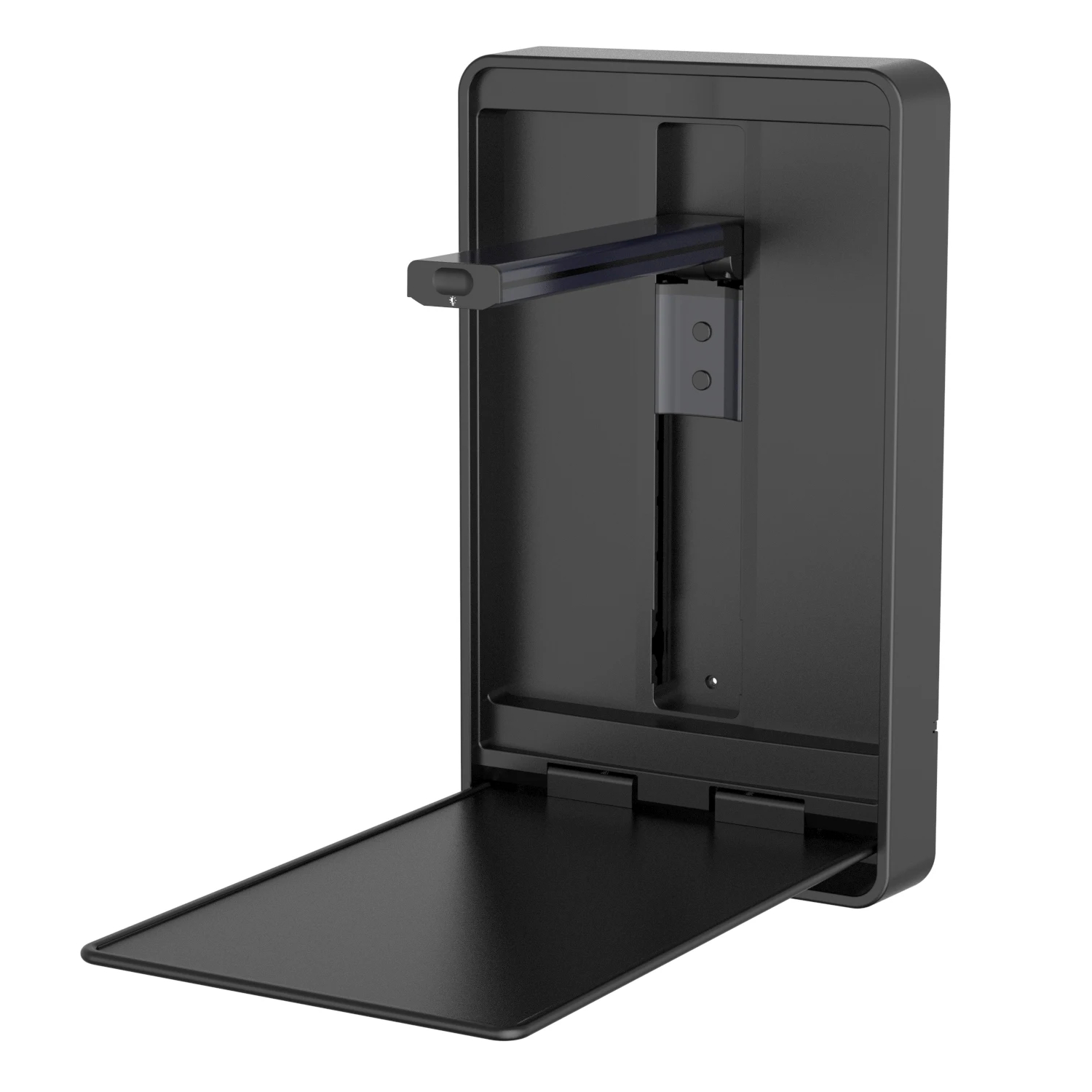
Document Camera OEM Factory 8M Education Display Stand for Wireless Document Camera Scanner, Wall Mounted Video Display Stand
A space-saving fixed-position platform for classrooms, training rooms and demonstration counters where repeatable overhead capture is required.
View Product
OEM USB A3 13mp 2 in 1 Education Visualizer Document Camera and Webcam for Education Scanning Book Camera
Combines face-to-camera communication with overhead document capture, reducing hardware count for hybrid classrooms and tutoring environments.
View Product
Wireless Robotic Frame Book Scanner Document Camera A3 A4 Size Management Document Scanner for Online Class
A higher-throughput book and document capture platform for libraries, records rooms and online teaching workflows that require consistent page framing.
View Product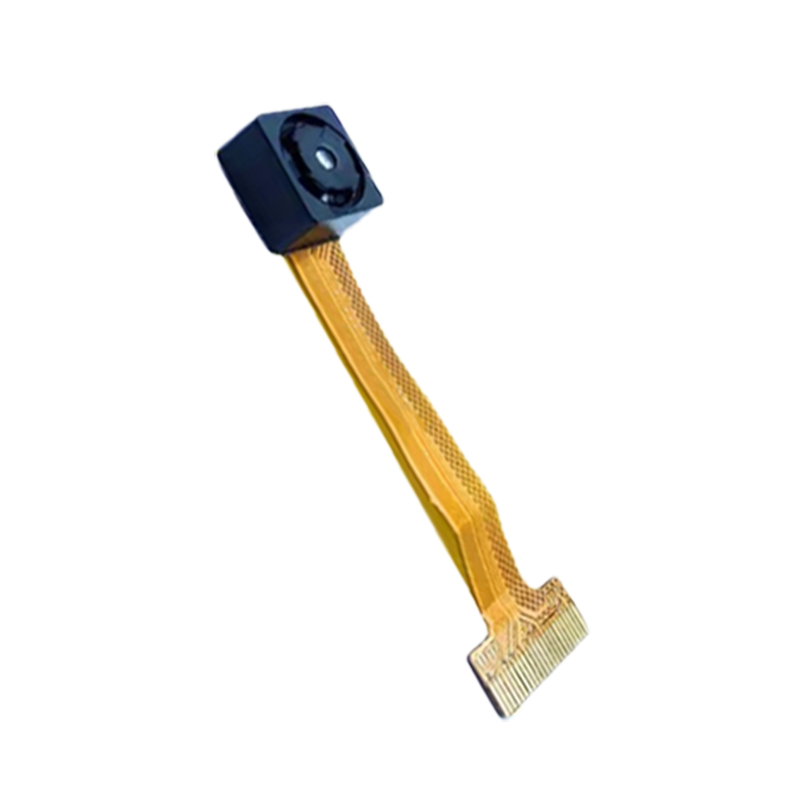
supports 1080P, 2K, 4K pixel camera modules, drone wireless image transmission with night vision and face recognition functions
An embedded imaging module for drone, smart terminal and vision-based products where wireless transmission, night vision and face recognition are required.
View Product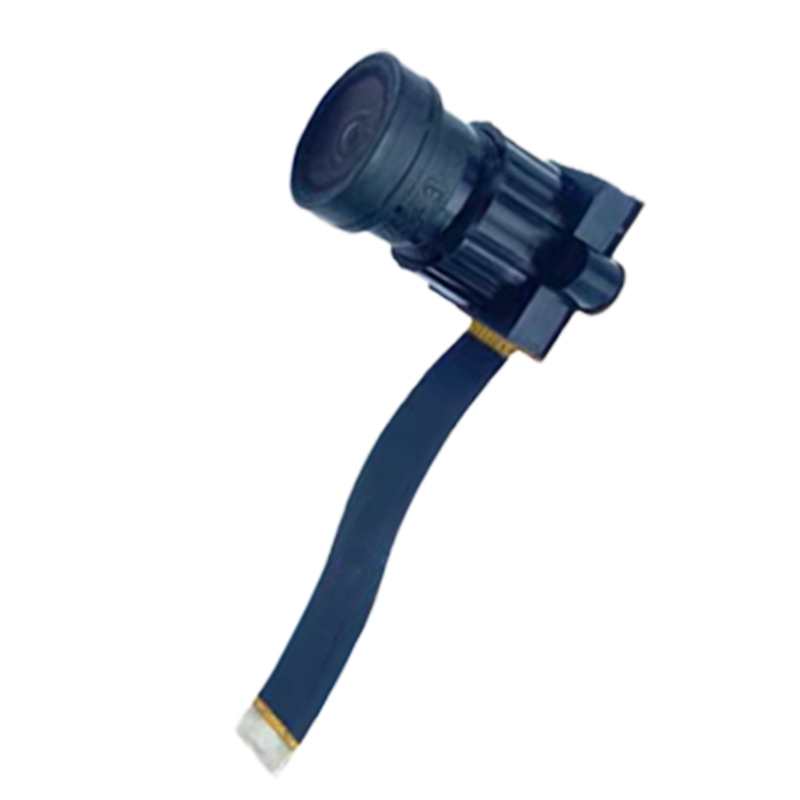
Professional manufacturer's CMOS sensor MIPI camera module 1080P 2K 4K drone wireless video transmission camera module
A customizable MIPI/CMOS camera module platform for OEM product teams that need compact size, stable video transmission and flexible board integration.
View Product
HD Camera Portable Visualizer Presenter Document Camera for Presentation Equipment Book Camera
A lightweight presentation accessory for sales teams, traveling trainers and multi-room schools that need quick setup without permanent installation.
View ProductWhy Eshuni Is a Low-Risk OEM/ODM Document Imaging Camera Partner
Professional buyers are not only purchasing a camera. They are buying image reliability, deployment speed, compliance evidence, spare-part planning and lifecycle support. Those are the areas where a manufacturer with direct engineering control creates measurable value.

Information Capture and Identity Verification Solutions Since 2012
Shenzhen Eshuni Technology Co., Ltd. is a manufacturer and solution provider for information collection and identity verification. The product portfolio includes high-speed document scanners, video booths, book scanners, identity verification terminals, webcams and camera modules. These devices support digital transformation in education, finance, insurance, telecommunications, government and enterprise environments.
Our engineering team provides three levels of technical support: product design, project design and on-site project application. For distributors, tender suppliers and private-label brands, this means a specification can be reviewed against the real workflow — not only against a catalogue page. ERP-driven production and supply-chain management help keep quality consistent and lead times visible, while core hardware and software are developed in-house and protected by national patents.
In-House R&D
Sensor selection, image tuning, firmware, housing, packaging and application testing are coordinated by one technical team with more than a decade of document-imaging experience.
Certified Quality
Production runs under an ISO9001 quality management system. Products can be supplied with CE, FCC, RoHS and China 3C documentation according to the target market.
OEM / ODM Flexibility
Buyer-label production, private-label packaging, UI customization, firmware options and model adaptation are available for distributors, brands and system integrators.
Export Execution
FOB, EXW and DDP terms are supported for regular shipments to North America, South America, Western Europe, South Asia and Africa.
Match the Camera Platform to the Real Procurement Scenario
A document camera that performs well in a catalogue demonstration may still fail in a live classroom, a records office or a public-service counter. Use the matrix below as a starting point for specification review and sample testing.
| Application | Recommended Platform | Why It Fits | RFQ Point to Verify |
|---|---|---|---|
| K–12 and higher-education A3 teaching | OEM USB 5MP / 8MP / 13MP Document Camera | Reliable USB visualizer for overhead demonstration, textbook display and live annotation workflows. | Check UVC compatibility, focus speed, A3 capture area and image stability under classroom lighting. |
| Remote and hybrid teaching | OEM USB A3 13MP 2-in-1 Document Camera and Webcam | Combines face and desk views, reducing the number of devices on a teacher’s desk. | Confirm driver-free operation, microphone requirements, mounting method and platform compatibility. |
| Library, archive and book digitization | Wireless Robotic Frame Book Scanner | A3/A4 page capture with a structure suited to books, registers, bound records and online class materials. | Test page curvature, framing repeatability, software workflow and OCR handoff requirements. |
| Wall-mounted classroom or training room display | 8MP Wireless Wall-Mount Document Camera Stand | Fixed-position overhead capture saves desk space and keeps the camera angle consistent. | Review mounting surface, cable routing, wireless environment and service access. |
| Portable sales and traveling presentation | HD Portable Visualizer Presenter | Foldable presentation tool for teams that move between rooms, venues and customer sites. | Check carry weight, setup time, hinge durability and protective packaging. |
| Embedded vision and custom camera modules | 4K Camera Module with Wireless Transmission and AI | Flexible platform for drone imaging, smart terminals and vision-based products. | Define interface, latency budget, power consumption, SDK needs and environmental tolerance. |
| CMOS/MIPI product integration | CMOS Sensor MIPI Camera Module | Compact module format for OEM teams integrating 1080P, 2K or 4K video into their own housing. | Request pinout, lens options, FPC length, firmware support and production test criteria. |
2025–2030 Buying Trends Reshaping Document Camera Wholesale
Procurement teams are shifting from isolated hardware purchases to repeatable imaging infrastructure. The strongest tenders now ask for evidence of interoperability, cybersecurity discipline, service continuity and measurable classroom or counter outcomes.
Outcome-Based Tenders
Buyers increasingly specify teaching visibility, document legibility, capture time and service response instead of only sensor megapixels. Suppliers need sample evidence and application notes to win these evaluations.
Hybrid Classroom Infrastructure
Schools are standardizing on UVC-compatible devices that work across Windows, macOS, Chrome and conferencing platforms. Multi-camera classrooms also require stable mounting and predictable field of view.
Security and Firmware Transparency
Public-sector and financial buyers are asking about firmware update control, local data retention, network behavior and interface lockdown. Document camera suppliers must be able to document those answers clearly.
Total Cost of Ownership
Wholesalers are comparing spare-part availability, packaging durability, installation time and support documentation. The lowest unit price is rarely the lowest lifecycle cost for a multi-site deployment.
Eshuni Solution-Evaluation Index
Based on recurring B2B inquiry questions and tender evaluation criteria observed in 2024–2025. The index is directional and intended to help buyers structure sample-test priorities.
From Visualizer to Edge Imaging Platform: What Changes Next
The document camera category is moving from a simple overhead camera toward an application-aware imaging platform. For OEM/ODM buyers, the opportunity is to define software, connectivity and service layers that differentiate a product beyond its sensor specification.
Higher Resolution and Computational Imaging
4K capture, improved low-light behavior, lens correction and multi-frame processing are becoming practical differentiators. Real resolving power, focus latency and frame-rate consistency matter more than a headline megapixel number.
AI-Assisted Capture at the Edge
Auto-framing, document dewarping, OCR handoff, focus assistance and privacy masking are becoming embedded features. Buyers should ask where processing happens and whether captured data leaves the local device.
Wireless-First and USB-C Convergence
5.8GHz wireless remains attractive where 2.4GHz congestion disrupts teaching. At the same time, USB-C and single-cable installation are simplifying fixed counters and mobile carts. The product roadmap must support both.
Modular Hardware and Sustainable Design
Replaceable camera heads, standard mounting interfaces, serviceable hinges and recyclable packaging help distributors support multi-year installations. Modularity also reduces SKU complexity for private-label ranges.
RFQ Checklist for Document Camera Wholesalers and Tender Suppliers
Use this checklist to turn a generic inquiry into an evidence-based specification. It helps reduce sample cycles, avoid compatibility surprises and protect the delivery schedule.
Application Proof
Define capture distance, document size, room lighting, mounting position and user workflow. Request sample images under the same conditions rather than studio-only demonstrations.
Driver-Free Compatibility
Confirm UVC behavior across Windows, macOS, Chrome and conferencing platforms. Test video switching, focus recovery and long-duration stability on the actual buyer hardware.
Sensor, Lens and Focus
Compare real resolving power, auto-focus speed, frame rate, low-light noise and field of view. A 13MP sensor with a weak lens may deliver less usable detail than a well-tuned 8MP system.
Wireless and Security
Review 5.8GHz versus 2.4GHz performance, interference behavior, pairing method, firmware update path and whether local data retention is required by the project.
Compliance Evidence
Request ISO9001 scope, CE/FCC/RoHS/3C documentation as applicable, patent evidence, labelling requirements and packaging compliance for the destination market.
Commercial Lifecycle
Clarify private-label minimums, spare-part planning, warranty terms, inspection method, packaging drop-test requirements and lead-time assumptions before tender submission.
OEM/ODM Document Imaging Camera Purchasing FAQ
These are the questions most frequently raised by education suppliers, government tender contractors, system integrators and private-label brands evaluating document camera manufacturing partners.
Does Eshuni offer OEM and ODM document cameras and webcams?
+
Yes. Eshuni supports OEM manufacturing, product design services and buyer-label production. The in-house R&D team can work on product design, project design and on-site project application support. For private-label programs, customization can cover logo, packaging, housing details, firmware options and user documentation, subject to project review.
Which certifications and quality systems apply to your factory and products?
+
The factory operates an ISO9001 quality management system. Products can carry CE, FCC, RoHS and China 3C certifications according to the target market and model. Core hardware and software are developed in-house and protected by national patents. For tender submissions, buyers should request the specific certificate scope and model-level documentation required by the project.
Should a wholesale buyer choose an 8MP or 13MP document camera?
+
An 8MP sensor is usually sufficient for A4 pages, standard textbooks, live classroom demonstration and routine office scanning. A 13MP sensor is more appropriate when the project requires full A3 capture, fine print, engineering drawings, archival records or digital zoom without losing legibility. The final decision should be based on sample images, focus performance, lens quality and the actual viewing or OCR workflow.
What is the difference between USB and 5.8GHz wireless document cameras?
+
USB models are plug-and-play and draw power from the connected computer, making them suitable for fixed desks, counters and straightforward classroom installations. 5.8GHz wireless models give teachers and presenters more freedom to move around the room. The 5.8GHz band is often less congested than 2.4GHz in busy school networks, but wireless performance still depends on the site survey, receiver placement and local interference.
Which export markets and trade terms do you support?
+
Eshuni regularly supports buyers in North America, South America, Western Europe, South Asia and Africa. FOB, EXW and DDP delivery terms are available. The appropriate term depends on the buyer’s freight forwarder, destination customs requirements, volume and project schedule.
How should a buyer evaluate quality before placing a mass production order?
+
Start with application-specific samples and test the exact workflow: document size, lighting, focus speed, software compatibility, wireless stability and long-duration operation. Request the inspection standard, packaging test plan and firmware version control process. For larger projects, agree on pre-production golden samples and final inspection criteria before production begins.
Can camera modules be customized for embedded or drone applications?
+
Yes. The product range includes CMOS sensor MIPI camera modules and 1080P, 2K and 4K module platforms with wireless transmission, night vision and face recognition functions. Custom projects can be reviewed around interface, lens, FPC length, power consumption, mechanical dimensions, SDK requirements and production test criteria.
How does Eshuni support distributors with documentation and after-sales planning?
+
Support can include product specifications, packing information, certification documents, user manuals, private-label artwork coordination and production inspection records. Distributors should discuss spare-part expectations, warranty terms and service workflow during the quotation stage so that the commercial proposal matches the real deployment lifecycle.
Planning an OEM/ODM Document Camera Program or Wholesale Tender?
Share your application, target market, capture size, connectivity requirement, estimated volume and certification needs. Our team will recommend the right platform and prepare the next technical step.
Send an Inquiry