OEM/ODM Wireless Document Camera Manufacturer & Exporter
Factory-direct visualizers, document cameras, book scanners, webcams and camera modules engineered for education, government, finance and enterprise buyers since 2012. Select a proven model, then ask our Shenzhen engineering team for a sample, private-label or tender-ready configuration.
Wireless Document Camera & Visualizer Product Portfolio
These eight commercially proven products cover classroom visualizers, portable A3/A4 book scanners, multi-interface teaching cameras, embedded camera modules and drone or face-recognition imaging hardware. Every link below preserves the original product destination. For tenders and private-label ranges, Eshuni can adapt the sensor, lens, interface, firmware, housing, packaging and manual without changing the core image pipeline.

Document Camera Scanner 48MP USB 3.0 Autofocus A3 A4
High-resolution A3/A4 capture for offices and classrooms where fine print, diagrams and book edges must remain readable after zooming.
View Product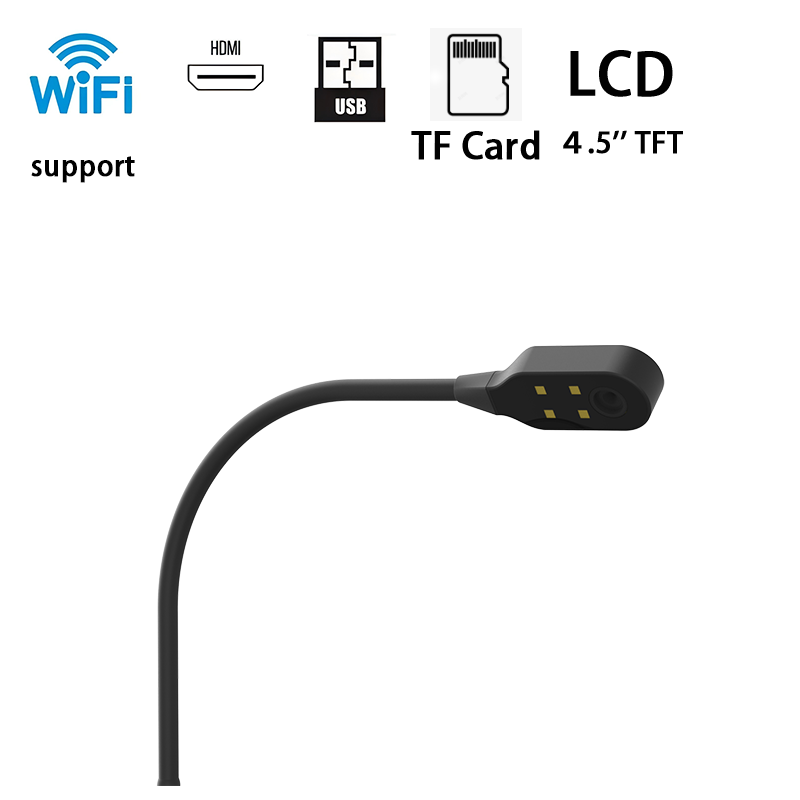
Support VGA WIFI Interface for Teacher Teaching Files, Camera and High Camera
Multi-interface teaching capture for classrooms that need wired projector output plus WiFi convenience for lesson files and live camera views.
View Product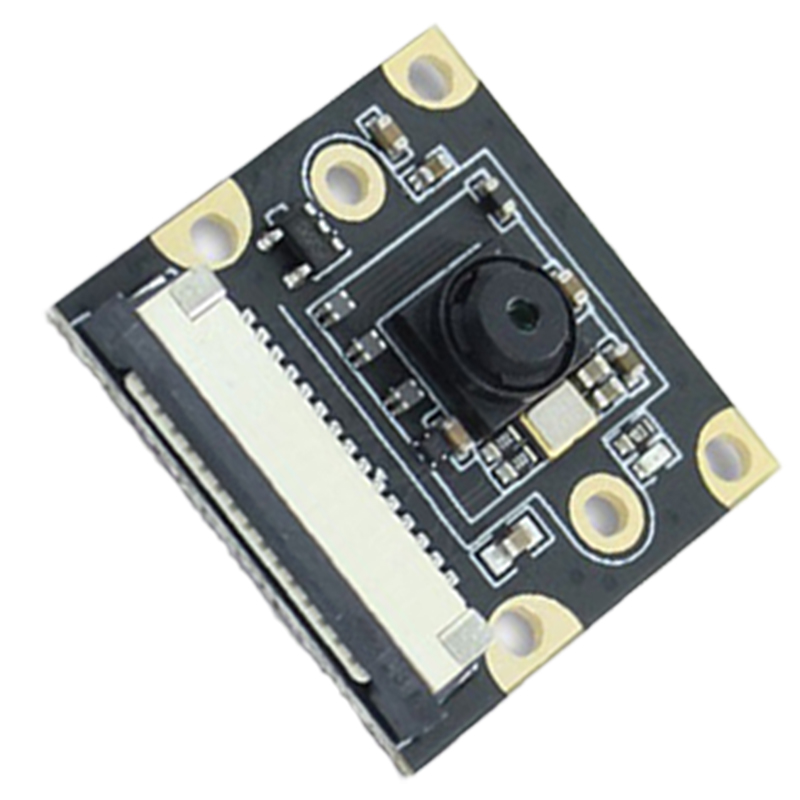
1080p/2K/4K Camera Module for Nvidia Development Board
Adjustable focal length camera module for AI vision, edge computing, robotics and embedded systems that require flexible sensor integration.
View Product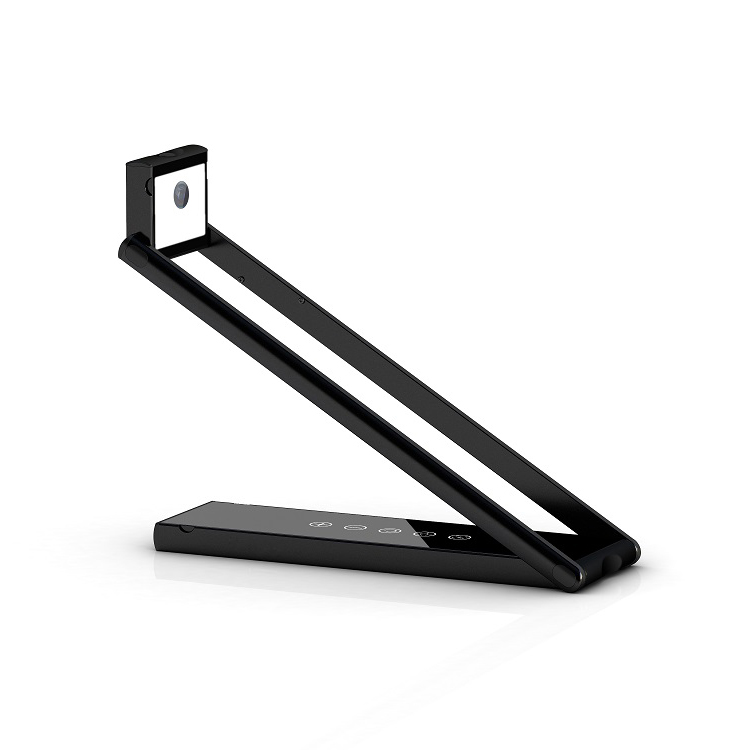
Education Equipment Visual Presenter A3 Book and Paper Scanner
Classroom-ready visual presenter for scanning textbooks, worksheets and A3 teaching materials during live lessons and remote sessions.
View Product
China Document Camera A3 Portable Wireless 13MP Visualizer
Portable wireless A3 visualizer for teachers and trainers who move between rooms and need quick setup without fixed cabling.
View Product
WG133AF-HV V508 VGA/HDMI/USB Three Mode 13MP Document Camera
Three-mode teaching camera for classrooms, labs and training rooms that use mixed projector, display and computer workflows.
View Product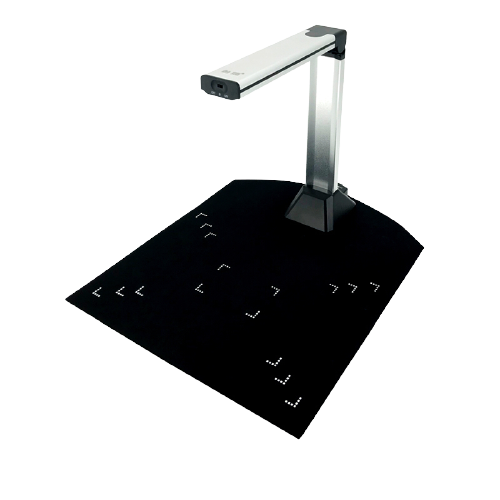
Portable OEM 8MP Document Camera Visual Presenter
Lightweight education visualizer for schools and distributors that need a cost-effective, private-label desktop capture device.
View Product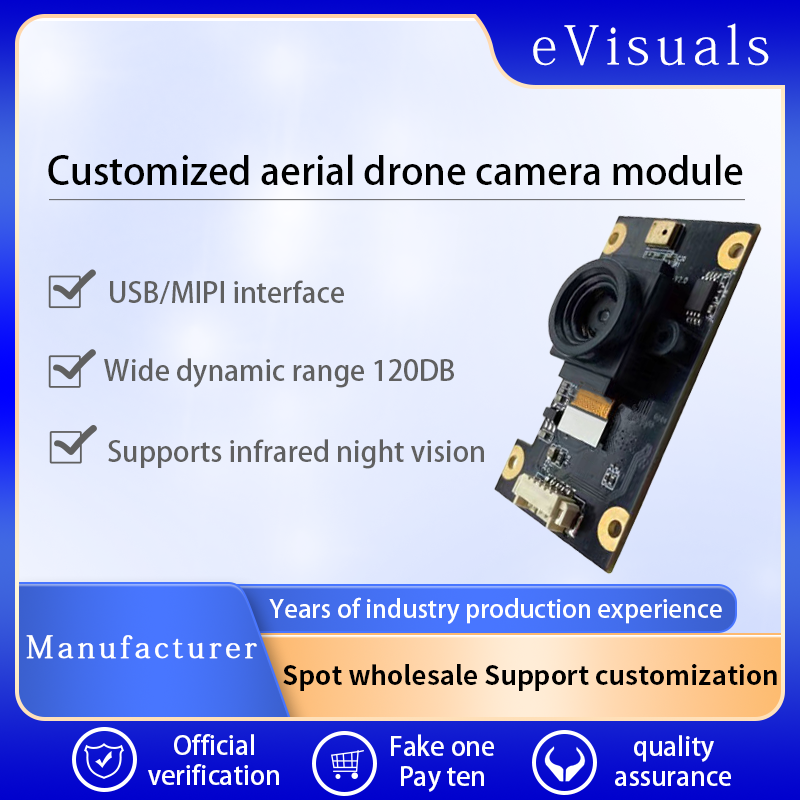
Factory Customized 1080p 4K Drone Wireless Video Camera Module
Custom imaging module for drone transmission, aerial photography, face recognition and embedded vision projects with tight mechanical limits.
View ProductMatch the Device to the Buyer, Workflow and Tender Language
A document camera is not a single commodity category. Education, government identity checks, office digitization and embedded vision each require different optics, interfaces, firmware behavior and compliance evidence. Use the four recommendation paths below as an RFQ starting point rather than comparing raw megapixels alone.
For STEM classrooms and lecture capture
Specify the 48MP USB 3.0 autofocus A3/A4 model when teachers need to zoom into small equations, circuit diagrams or textbook notes without visible pixel break-up. Ask for frame-rate, focus speed and low-light tests on your sample lesson content.
For campus-wide wireless teaching
Choose a 5.8G WiFi auto-focus 8MP A3/A4 or portable 13MP wireless visualizer when teachers move between rooms. The 5.8GHz band is usually less congested than 2.4GHz in busy school networks, while USB remains the fallback for fixed desks and exams.
For office, bank and government counters
Use a VGA/HDMI/USB three-mode 13MP camera or a dual-camera scanner when staff must show documents, ID cards and applicant presence simultaneously. Procurement should request output-port maps, driver behavior and a privacy note describing whether images stay local.
For OEM camera modules and embedded vision
Start with the 1080p/2K/4K Nvidia development board module or the customized 4K drone wireless video module when your team needs adjustable focal length, compact FPC integration, MIPI/USB options or face-recognition support.
What B2B Buyers Will Ask for in the Next Document Camera Cycle
Purchasing teams are moving from a simple resolution checklist to a total-workflow evaluation. The strongest suppliers will be those that can prove image clarity, deployment stability, compliance evidence and long-term software support in one package.
Illustrative RFQ signal pattern from recent B2B sample requests
This is not a market forecast. It is a practical pattern from buyer questions during specification review: importers increasingly ask for dual-mode connectivity, SDK or firmware access, local data processing and tender documentation before they compare price. Suppliers should answer those questions with test evidence, not adjectives.
From megapixels to proof of legibility
Buyers now ask suppliers to demonstrate small-text clarity, autofocus recovery speed, document edge stability and color fidelity on real A3 pages. A 13MP camera with mature image tuning can outperform a poorly tuned higher-resolution unit.
Wireless-first classrooms with wired fallback
Procurement documents increasingly request 5.8GHz wireless freedom plus USB or HDMI fallback. Stability, pairing policy and interference behavior matter more than the theoretical wireless range claimed on a box.
Privacy and local data processing
Education and government buyers ask whether document images leave the device, which cloud dependencies exist and how firmware updates are controlled. Suppliers with local capture, clear data paths and documented interfaces win trust faster.
Total cost of ownership over unit price
Spare parts, replaceable lens or sensor boards, stable firmware, accessory availability and warranty response are becoming formal scoring items. A low unit price loses its advantage when a single accessory blocks a classroom rollout.
Private label plus regional compliance
Distributors want CE, FCC, RoHS, 3C and tender-ready documentation together with multilingual manuals, custom packaging and boot logos. OEM/ODM capability is now a procurement requirement, not a bonus.
Consolidated imaging partners
Importers are reducing supplier count by sourcing visualizers, book scanners, webcams and custom camera modules from one engineering team. Shared image tuning, common accessories and one compliance file lower integration risk.
How Wireless Document Cameras Are Evolving Beyond Simple Capture
The next product cycle will reward manufacturers that combine optical engineering, firmware stability, thermal control and software integration. For buyers, the practical question is whether a supplier can carry those improvements into a reliable volume product without raising field failure risk.
Higher-resolution sensors with better tuning
48MP, 13MP and 4K options are expanding, but the real gain comes from autofocus algorithms, noise reduction and text-enhancement pipelines. Buyers should test downscaled output, not only full-resolution still images.
On-device AI and OCR-ready capture
Automatic page detection, deskew, split-screen teaching, motion emphasis and OCR-ready output are moving from software add-ons into the camera pipeline. This shortens teacher setup time and improves document archiving quality.
5.8GHz wireless and low-latency links
Wireless visualizers are being optimized for crowded school environments. Expect better coexistence, faster pairing, lower latency and clearer status indicators, with USB-C or USB 3.0 fallback on higher-end models.
Modular camera modules for embedded systems
Adjustable-focus MIPI and USB modules are supporting Nvidia development boards, smart glasses, drones, face recognition terminals and industrial vision. FPC layout, lens mount and thermal design become project-specific value.
Repairability and sustainability
Modular boards, replaceable lenses, recyclable packaging and long firmware support reduce e-waste and protect the buyer’s installed base. These details are becoming differentiators in public-sector tenders.
Driverless UVC plus SDK flexibility
USB Video Class and USB Audio Class support simplify Windows, macOS, Linux and Chrome deployment. For OEM buyers, documented SDK access, firmware change logs and stable interface definitions are increasingly important.
 Factory & R&D center · Shenzhen, Guangdong
Shenzhen Eshuni Technology: Manufacturer and Solution Provider Since 2012
Shenzhen Eshuni Technology Co., Ltd. is a manufacturer and solution provider for information collection and identity verification. We design and build high-speed document scanners, video booths, book scanners, identity verification terminals, webcams and camera modules. Our products support digital transformation in education, finance, insurance, telecommunications, government and enterprise.
Our senior R&D team delivers three levels of technical support: product design, project design and on-site project application. ERP-driven production and supply-chain management keep quality consistent and lead times short, while core hardware and software are developed in-house and protected by national patents. For OEM/ODM buyers, this means a more direct route from specification to sample to repeat production.
- OEM manufacturing, ODM design, private label, packaging and firmware adaptation
- FOB, EXW and DDP delivery terms for North America, South America, Western Europe, South Asia and Africa
- Public trade profile, factory verification and a 4.8/5 buyer rating for transparent supplier checks
- In-house hardware, software and mechanical engineering for project-specific integration
Compare Interfaces, Capture Area and Best-Fit Applications
Use this matrix to shortlist a sample before a formal RFQ. Final configuration should be confirmed against your lesson workflow, software stack, power environment, tender compliance list and annual volume.
| Product path | Sensor or output | Capture area | Connection | Best-fit buyer |
|---|---|---|---|---|
| 48MP USB 3.0 Autofocus Scanner | 48MP | A3 / A4 | USB 3.0 | Schools and offices needing fine detail and fast document capture |
| VGA / WiFi Teaching Visualizer | Teaching camera | Documents and objects | VGA + WiFi | Classrooms with projector-based display and wireless lesson sharing |
| 1080p/2K/4K Development Module | 1080p / 2K / 4K | Project-dependent | MIPI / module interface | AI vision, Nvidia development boards, robotics and embedded imaging |
| A3 Education Visual Presenter | Visual presenter | A3 books and paper | Classroom display interface | K-12 schools, training rooms and remote teaching |
| A3 Portable 13MP Wireless Visualizer | 13MP | A3 | Wireless | Mobile teachers, multi-room campuses and distributors |
| VGA/HDMI/USB Three-Mode 13MP Camera | 13MP | A3 / A4 | VGA + HDMI + USB | Labs, training centers and mixed Mac/Windows environments |
| Portable OEM 8MP Visual Presenter | 8MP | A4 / A3 support | USB | Cost-sensitive education projects and private-label ranges |
| Customized 4K Drone / Face Recognition Module | 1080p / 4K | Project-dependent | Wireless video / module interface | Drone, aerial photography, face recognition and embedded OEM |
Need a different sensor, lens, housing, firmware, logo or packaging? Share the target specification and our engineers will recommend a sample path.
Questions B2B Buyers Ask Before Ordering a Document Camera
These answers reflect the questions we handle during OEM/ODM review, tender preparation and private-label onboarding. For a project-specific answer, send your target use case, interface requirement and annual volume.
Are you a manufacturer or a trading company?
+
Shenzhen Eshuni Technology Co., Ltd. is a manufacturer and solution provider for information collection and identity verification. We design and build document cameras, visualizers, book scanners, webcams, identity verification devices and camera modules. Our factory operates an ISO9001 quality management system, and our engineering team supports product design, project design and on-site application support.
What does OEM/ODM include for a wireless document camera?
+
Depending on the project, OEM/ODM can cover buyer-label housing, packaging, manual, boot logo, language pack, cable set, interface configuration, firmware behavior, accessory selection and project-specific labeling. For deeper projects, our R&D team can review sensor choice, lens, wireless module, PCB layout and mechanical requirements before sampling.
How do I choose between 8MP, 13MP and 48MP?
+
8MP is usually sufficient for A4 pages, textbook demonstrations and general classroom use. 13MP is preferred for full A3 sheets, finer print and buyers who need more cropping headroom. 48MP is best for applications where small characters, engineering drawings or archival detail must remain legible after zooming. Always compare downscaled live output and autofocus behavior, not only the sensor number.
Should I choose USB, VGA/HDMI or 5.8G wireless?
+
USB models are plug-and-play and practical for fixed desks, computer labs and countertops. VGA/HDMI models fit projector-based classrooms and mixed AV environments. 5.8GHz wireless models give teachers freedom to move, and the 5.8GHz band is typically less congested than 2.4GHz in busy school networks. Many buyers now request dual-mode products so a wireless lesson can fall back to USB when needed.
Can you customize firmware, SDK or interface behavior?
+
Yes, customization is reviewed against the project scope. Common requests include boot logo, language strings, default resolution, button behavior, UVC settings, wireless pairing policy, output switching and integration notes for software partners. Our engineering team will confirm which changes are configuration-level and which require tooling, validation or a new firmware branch.
Which certifications support public-sector tenders?
+
Our factory operates an ISO9001 quality management system, and our products carry CE, FCC, RoHS and China 3C certifications. Hardware and software developed in-house are protected by national patents. For a specific tender, share the required standards and destination market so we can prepare the correct compliance file and documentation checklist.
How do sample orders, MOQ and lead time work?
+
MOQ and lead time depend on the model, customization level and annual forecast. Standard models can usually be sampled faster than private-label or firmware-modified versions. To quote accurately, send the target model, interface, logo or packaging requirements, destination country and expected first-order quantity so our team can confirm tooling, sample and production slots.
Which trade terms and export regions do you support?
+
We accept FOB, EXW and DDP delivery terms and regularly ship to North America, South America, Western Europe, South Asia and Africa. For tender projects, include the destination port or door address, required Incoterm, packaging language and document requirements in the inquiry.
How do you protect quality across repeat orders?
+
ERP-driven production and supply-chain management keep materials, assembly and testing records consistent. Core hardware and software are developed in-house, which helps control firmware versions and component changes. For OEM programs, we agree on inspection criteria, packaging standards, sample approval and change-notification expectations before mass production.
What information should I send with an inquiry?
+
Send the application, target resolution, capture area, required interface, operating system, whether wireless is required, housing or logo needs, certification market, estimated annual volume and delivery term. If you have a tender specification or competitor sample photo, include it. Clear inputs let our engineers respond with a suitable model, configuration sheet and sample plan instead of a generic quotation.
Planning a Wireless Document Camera Tender or Private-Label Range?
Share your target resolution, capture area, interface, operating system, enclosure preference, certification market and annual volume. Eshuni will return a model recommendation, compliance check and sample plan from our Shenzhen engineering team.