8 Foldable Visualizer & Imaging Products for Louisville Wholesale Buyers
These eight catalog models cover the practical range requested by Louisville education, library, healthcare, government, and logistics buyers: portable A3 visualizers, 5.8G wireless document cameras, book scanners, USB camera modules, and OEM vision hardware. Each link below is the original product URL; configurations, branding, packaging, and firmware can be discussed without changing the core platform.
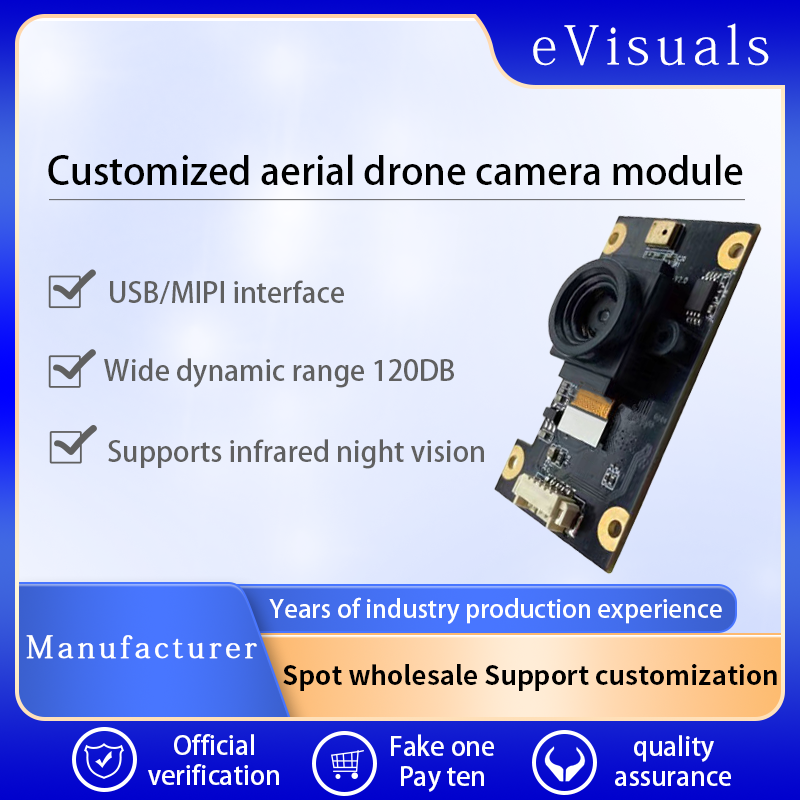
Factory customized 1080p 4K drone wireless video transmission HD aerial photography face recognition camera module
Built for integrators that need a compact wireless video module rather than a complete desktop visualizer. Louisville use cases include inspection drones, remote warehouse monitoring, robotics, and face-recognition terminals.
View product
CMOS sensor 1080P 30fps USB2.0 camera module monocular wide dynamic range camera module with ultra-low light performance
A compact board camera for kiosks, telehealth carts, access-control panels, and embedded vision prototypes. Wide dynamic range and low-light performance help when lighting is uneven or counter space is limited.
View product
OEM Document Camera A3 Portable Wireless 13mp Visualizer Document Camera
The core foldable visualizer format for Louisville classrooms and library reading rooms. The arm folds flat for storage, then extends over a full A3 page for live demonstration, annotation, and capture.
View product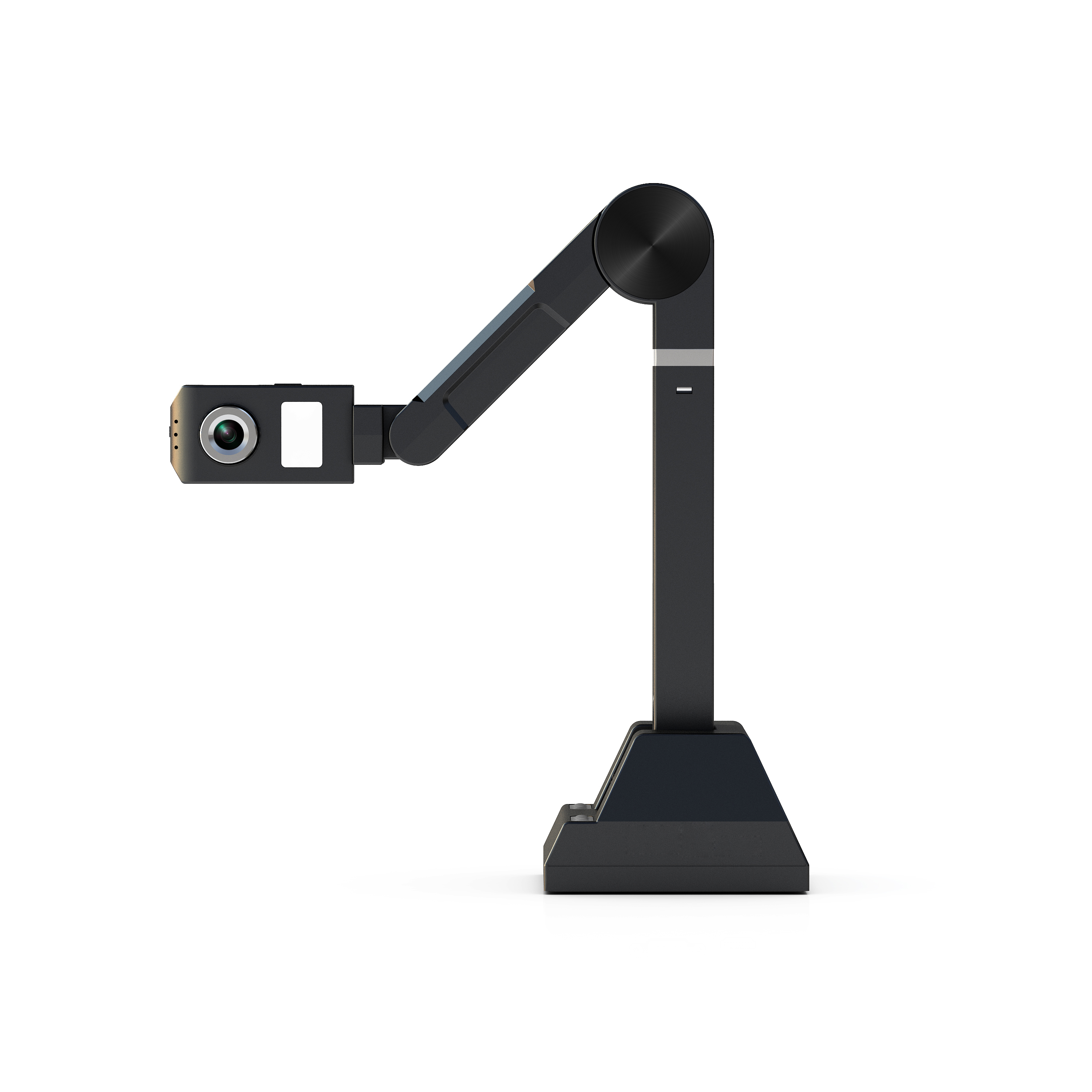
New design HD Camera 8MP 13MP auto focus Document Camera Scanner online educational equipment
Designed for online education and hybrid instruction. The auto-focus camera captures worksheets, textbooks, science demonstrations, and handwritten worked examples in a format that is easy to project or stream.
View product
Visual Presenter HD Camera 8MP 13MP auto focus Document Camera Scanner online educational equipment book camera
A visual presenter for bound books, training materials, and annotation-led lessons. The overhead geometry helps keep pages flat and reduces the distortion that appears when a camera is placed at a low angle.
View product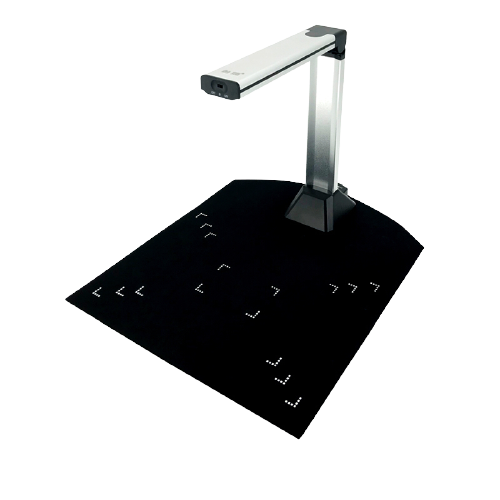
Portable OEM 8MP document camera Visual presenter for education equipment camera scanner
A portable OEM presenter for mobile teaching carts, substitute-teacher kits, and shared-building resource pools. The compact housing helps Louisville districts standardize capture across rooms without installing fixed hardware.
View product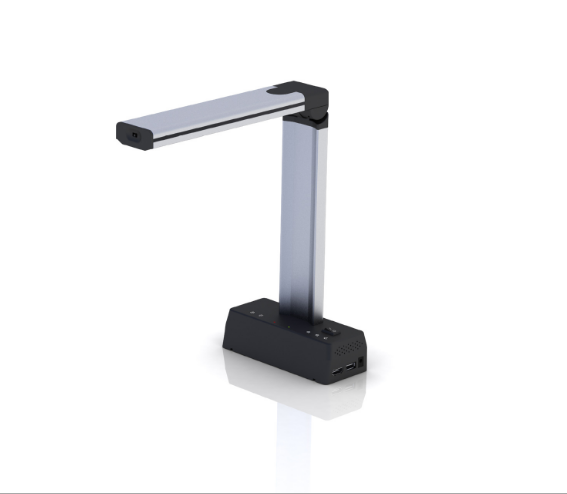
WIFI document camera visualizer wireless 5.8G WIFI OEM ODM Document scanner for education or office
A 5.8G WiFi visualizer for classrooms and offices where cables limit movement. The 5.8GHz band avoids much of the congestion found on 2.4GHz campus networks, but the actual room should be tested for interference.
View product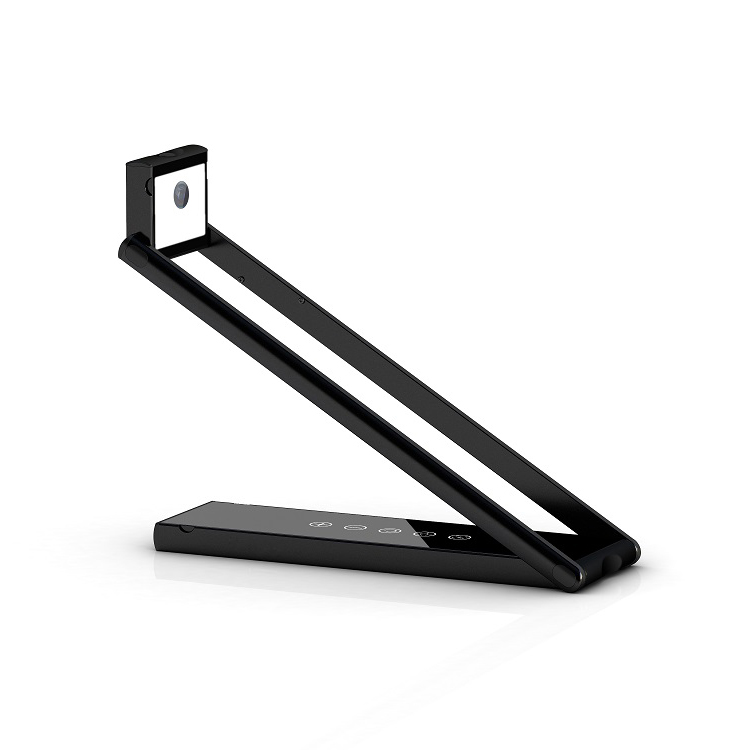
Education Equipment Visual Presenter Document Camera Scanner Scanning A3 Book and Paper
Recommended for libraries, archives, and test-review rooms that capture two-page spreads without removing the binding. Ask for an A3 edge test and a color-consistency sample before approving a batch.
View productSend the page size, daily capture volume, software stack, quantity, and Louisville delivery ZIP. We will reply with a shortlist and a DDP-ready quotation path.
Why Louisville Buyers Choose Foldable Visualizers for Classrooms, Clinics, and Counters
The buying decision is not only about resolution. It is about capture geometry, workflow fit, software compatibility, delivery, and the support plan behind the device.
What Louisville procurement teams actually compare
A foldable visualizer is an overhead imaging device with an arm that folds for storage and extends over a document, object, or demonstration. In Louisville, the device is often evaluated as a teaching tool, but its procurement value is broader: it becomes a single capture point for classrooms, library reading rooms, clinic registration desks, government service counters, and logistics dispatch stations. The folding arm matters because space is scarce and devices must be moved, stored, and shared.
Louisville is a useful test market because its information workflows span several speeds. Jefferson County Public Schools and nearby universities need live video and annotation for instruction. Louisville Free Public Library branches and local archives need A3 book capture that protects bindings. Healthcare and public-service counters need fast, clear capture of IDs and forms. UPS Worldport and the surrounding logistics cluster need packing lists, bills of lading, and damage evidence to move without delay. A single product family can serve these workflows only when the supplier separates sensor, lens, connectivity, mechanical, and software decisions.
The commercial case is straightforward. A foldable visualizer replaces multiple ad hoc setups: a webcam pointed at a desk, a phone camera, a flatbed scanner, and a document camera that cannot fold. It can reduce the time spent repositioning pages, improve legibility on projected screens, and give remote participants the same view as the room. The risk is equally clear: a low-cost unit with a weak hinge, poor edge focus, or unstable wireless link becomes a support burden. Louisville buyers should therefore evaluate the supplier's ability to document tests, supply spare parts, and quote DDP delivery, not only the unit price.
Ask for a live A3 edge test, a 30-minute thermal check, and a sample unit loaded with your preferred annotation software before approving a container.
Eshuni has manufactured imaging hardware since 2012, operates an ISO9001 quality system, and offers OEM/ODM production with CE, FCC, RoHS, and 3C certifications where applicable. This guide is written from that manufacturing perspective, but it is not a claim of endorsement by any Louisville organization. Buyers should verify SKU-level certificates, current lead times, and warranty terms before issuing a purchase order.
Information gain: the three-sample test we recommend before a Louisville container
Send three test targets: a full A3 page with 6-point text, a two-page book spread, and a low-contrast form. Ask the supplier to record the output at the same mounting height and lighting you will use. Then repeat the test on a second unit from the same production batch. This is the fastest way to detect edge softness, focus drift, and batch inconsistency before a Louisville deployment.
Where Foldable Visualizers Fit Across Louisville, Kentucky
The same device can be specified differently for a classroom, a library reading room, a clinic desk, and a logistics counter. These six scenarios reflect how Louisville buyers typically describe their workflow.
K-12 and higher education
For the Jefferson County Public Schools ecosystem, nearby private schools, and university classrooms, the visualizer becomes a shared overhead camera for math manipulatives, science demonstrations, reading, art, and handwritten feedback. A folding arm lets teachers switch from face-to-face instruction to a full A3 worksheet in seconds. Buyers usually prioritize UVC plug-and-play, auto-focus, and a stable image under classroom lighting.
Libraries, genealogy, and local archives
Louisville Free Public Library branches, university archives, and historical societies handle bound books, maps, newspapers, and photographs. A3 book scanning with a foldable visualizer reduces stress on bindings because the camera captures from above. Buyers should ask for A3 edge-to-edge tests, color consistency checks, and a working height that accommodates thick volumes without forcing the spine flat.
Clinics, registration desks, and telehealth carts
Healthcare teams use overhead capture for insurance cards, medication lists, consent forms, and tele-education. The device should not be presented as a diagnostic instrument; it is an information-capture tool. Low-light performance, wide dynamic range, privacy-conscious workflows, and easy cleaning matter more than maximum resolution in many registration settings.
Metro government and public-service counters
Public-service counters process IDs, permits, proof of address, and supporting documents. Overhead capture can speed intake while keeping the applicant's face and document in context when a dual-camera configuration is used. Buyers should confirm records-retention requirements, software integration, and whether the device will be mounted on a counter, cart, or fixed kiosk.
UPS Worldport corridor and freight documentation
Louisville's air-cargo and logistics cluster generates bills of lading, packing lists, customs paperwork, damage photos, and proof-of-delivery records. A compact visualizer at a dispatch desk captures a full A4 or A3 page without walking to a flatbed scanner. Fast focus, glare control, and a stable USB connection are practical priorities in this environment.
Manufacturing, quality, and work instructions
Manufacturing sites need overhead images of small parts, labels, torque charts, and work instructions. A foldable visualizer can be moved between cells and connected to a station PC or wireless display. Specify strain relief, lockable exposure, easy cleaning, and a mounting height that matches the parts being inspected.
Local organization names are used for geographic and workflow context only. No endorsement or existing supply relationship is implied.
Four Trends Reshaping the Louisville Visualizer Market
Louisville buyers are not asking only for a camera. They are asking for a repeatable capture workflow that survives classroom turnover, healthcare privacy reviews, government procurement rules, and logistics deadlines.
Hybrid classrooms become permanent
Remote and in-person instruction now coexist. Teachers need a device that works without a proprietary cloud account, switches between document and face views, and can be moved between rooms. USB plug-and-play and predictable auto-focus are becoming baseline requirements in Louisville school specifications.
Paper-to-digital work remains urgent
Libraries, courts, clinics, and government offices still hold paper records. Buying emphasis is shifting from raw resolution to OCR-ready images, A3 coverage, color fidelity, and software that exports clean PDFs. A foldable visualizer that produces consistent edges can reduce rework more than a higher megapixel count alone.
Wireless stability beats wireless novelty
5.8G wireless visualizers are being compared with 2.4G models and USB tethering. Louisville schools and offices care about interference, latency, and whether the device still works when the network is busy. Ask for a live demonstration in the actual room, not only a spec sheet claim.
Procurement localizes delivery and support
Wholesalers and end users want DDP quotes to Louisville ZIP codes, spare-parts kits, local demo units, and clear RMA steps. Lead time and after-sales responsiveness now carry as much weight as unit price, especially for districts and public agencies that cannot tolerate long downtime.
China Manufacturing Depth for Louisville Wholesalers
Shenzhen Eshuni Technology Co., Ltd. has manufactured document cameras, visualizers, webcams, ID scanners, and camera modules since 2012. For Louisville buyers, the value is not only factory-direct pricing; it is the ability to control the specification, compliance file, packaging, and spare-parts plan before the first shipment.

Factory & R&D center · Shenzhen, Guangdong
Our public company profile describes an in-house R&D team, ERP-driven production and supply-chain management, and three levels of technical support: product design, project design, and on-site project application. That structure matters for Louisville proposals because a school, library, or public agency often needs more than a box: it needs a configuration that matches the room, the software, and the service plan.
We also support buyer-label production, custom packaging, firmware consultation, and accessory kits. For a Louisville distributor, the practical advantage is the ability to lock a sensor, connector, cable length, user manual, and spare-parts list before the container ships, rather than discovering the mismatch after installation.
Manufacturing and R&D depth
In-house R&D, 3,000+ m² factory space, 100+ employees, and ERP-driven production. Our team has focused on visualizer development for more than 14 years, with product design, project design, and on-site application support available for qualified projects.
Compliance and intellectual property
ISO9001 quality management supports consistent production. Products can carry CE, FCC, RoHS, and China 3C certifications where applicable, and our hardware and software are developed in-house with national patents. SKU-level certificates and test reports can be prepared for buyer review.
OEM, ODM, and private label
Custom logo, housing color, packaging, user manual, firmware behavior, cable length, connector, and accessory kit are available by project. MOQ and tooling are quoted after the specification is clear. Buyer-label production helps Louisville distributors build a local brand without owning a factory.
Export and service planning
We support FOB, EXW, and DDP terms and regularly ship to North America, South America, Western Europe, South Asia, and Africa. For Louisville, we can quote express, air, or ocean-plus-truck delivery and recommend a spare-parts ratio based on the deployment size and downtime tolerance.
Technical Buyer's Guide and Information Gain for Louisville Procurement Teams
A foldable visualizer is easy to describe and harder to specify well. Use this framework to compare suppliers on the variables that drive real classroom, library, and counter performance.
Specification should start with the job to be done, not the sensor alone. An 8MP sensor is usually sufficient for A4 pages, textbooks, and live classroom demonstration. A 13MP sensor is better for full A3 sheets, fine print, engineering drawings, and archival scans where the viewer will zoom. Auto-focus helps when teachers move objects; fixed focus can be acceptable for repetitive counter work. Wide dynamic range matters when a document has glossy photos or when room lighting is uneven.
For Louisville deployments, the practical test is not a single studio image. It is a sequence: a teacher writes on a worksheet, a librarian scans a bound book, a clerk captures an ID, and a logistics operator photographs a packing list. The device must switch between these tasks without changing cables, losing focus, or forcing a software restart. That sequence should be demonstrated on the exact laptop, display, and network you plan to use.
| Decision area | Foldable visualizer | Flatbed scanner | Webcam |
|---|---|---|---|
| Capture geometry | Overhead, live, full-page view; arm folds for storage | Flat platen; page-by-page capture | Face-first; desk view requires awkward angling |
| A3 / A4 coverage | A3 and A4 models available; check edge sharpness | A3 flatbeds are larger and usually more expensive | Limited; wide-angle distortion is common |
| Bound books | Captures from above without pressing the spine flat | Can stress bindings; two-page spreads are difficult | Not designed for book capture |
| Speed and workflow | Live video and instant capture; good for teaching and counters | Slower for multi-page or bound material | Fast for people, not optimized for documents |
| Software | USB models often use UVC plug-and-play; confirm your annotation stack | TWAIN/ISIS drivers vary by model | UVC; limited document controls |
| Portability | Folding arm and compact base; easy to move between rooms | Heavy and desk-bound | Small, but not a document platform |
| Best Louisville use | Classrooms, libraries, clinics, government counters, logistics desks | Archives and high-volume flat sheets | Conferencing, streaming, face-to-camera calls |
1. Sensor and lens
Compare 8MP and 13MP using your own pages. Confirm autofocus behavior, minimum working height for A3 coverage, low-light noise, and wide dynamic range. A high megapixel count cannot compensate for weak edge focus or a lens that distorts the page corners.
2. Connectivity and software
Check USB 2.0 or USB 3.0 requirements, UVC behavior, 5.8G wireless receiver design, and operating-system support. Test the unit with the annotation, whiteboard, LMS, or counter software used in Louisville. Avoid assuming that "USB" means universal compatibility without a workflow test.
3. Mechanical durability
Ask about hinge cycles, arm lock strength, cable strain relief, LED illumination, and cleaning instructions. A foldable visualizer is handled daily; a weak hinge or exposed cable becomes a repair ticket. Request the folded and extended dimensions for cart and cabinet planning.
4. Compliance and documentation
Confirm ISO9001, CE, FCC, RoHS, and 3C status where applicable. Request the certificate and test report for the exact SKU, not a generic catalog page. For public-sector buyers, include labels, packaging marks, and declaration documents in the review file.
5. Total cost of ownership
Use a five-year model: unit price × quantity, freight, duty, spare-parts kit, training hours, expected downtime cost, and end-of-life replacement. A low unit price with no spare-parts plan can be more expensive than a slightly higher quote with a documented RMA path.
6. Louisville delivery and after-sales
Ask for a DDP quote to the delivery ZIP code, a production lead time, an RMA procedure, and a list of parts that can be replaced at a school or counter without a soldering iron. Spare cables, power adapters, and remote controls should be stocked before the first semester or fiscal quarter begins.
A3 edge test protocol for Louisville buyers
Place an A3 page with 6-point text at all four corners. Capture at the normal mounting height under typical room light. Zoom to 200% and check edge sharpness, color shift, and keystone. Repeat for 30 minutes and check thermal drift. Then test with your annotation software and export a PDF. Ask the supplier to keep the raw files so you can compare batches.
FAQ for Louisville Buyers Sourcing Foldable Visualizers from China
These are the questions our export engineering team receives most often from North American education, library, healthcare, government, and logistics buyers.
Can you ship foldable visualizers to Louisville, Kentucky, and which Incoterms do you support?
Yes. We quote FOB, EXW, and DDP terms. Louisville is served by major air-cargo and parcel networks, including the UPS Worldport hub, so samples and small batches can move quickly. For DDP pricing, provide the delivery ZIP code, consignee details, product quantity, and whether the shipment is for a school, clinic, government office, or commercial distributor. We will quote freight, duties, and door delivery in one line. Ocean shipments may route through West Coast ports and continue by rail or truck; exact lead time depends on the model, branding, and quantity. We recommend a sample unit before a container order.
Are your visualizers compatible with Windows, macOS, ChromeOS, and Louisville classroom software?
USB models are designed for UVC plug-and-play, so basic video can work on Windows, macOS, and ChromeOS without a proprietary driver. Full compatibility is a broader question: annotation software, interactive whiteboards, learning management systems, and document-camera applications may require settings or firmware changes. Send us the software list used in your Louisville classroom or counter. We test the camera with that workflow before shipment and provide a configuration sheet. Wireless 5.8G models use a receiver and should be tested in the actual room for interference.
Should a Louisville classroom choose 8MP or 13MP?
Choose 8MP for A4 worksheets, textbooks, and normal classroom demonstration. Choose 13MP when the viewer must zoom into full A3 pages, fine print, engineering drawings, or archival material. If a district standardizes on one model, 13MP provides more headroom for mixed page sizes, but the budget and file size should be considered. For counter use where documents are mostly A4, 8MP with good optics and autofocus can be sufficient.
What is the difference between a foldable visualizer and a document camera?
A foldable visualizer is a type of document camera. The defining feature is the folding arm, which lets the camera sit close to the base for transport and extend over a page for capture. Not every document camera folds. When comparing quotes, ask for the folded dimensions, extended working height, maximum A3 coverage, hinge rating, and whether the arm locks in the capture position.
Do you offer OEM, ODM, and private label for Louisville distributors?
Yes. We offer OEM manufacturing, product design, project design, buyer-label production, custom packaging, and firmware consultation. For Louisville distributors, common requests include a private-label manual, a localized carton mark, a specific power adapter, a cable length, and a spare-parts kit. MOQ and tooling depend on the model and the change. Send the target specification and annual volume; we will separate one-time engineering costs from unit price.
Which certifications and quality documents can you provide?
Our factory operates an ISO9001 quality management system. Products can carry CE, FCC, RoHS, and China 3C certifications where applicable, and our hardware and software are developed in-house with national patents. Certificates are SKU-specific, so buyers should request the certificate and test report for the exact model, not only a generic catalog page. For Louisville procurement, we can prepare a compliance file with declarations, labels, and packaging information for review.
What warranty, spare parts, and after-sales support are available?
Warranty terms are confirmed in the quotation and can be structured for distributors. We support remote troubleshooting, firmware guidance, and spare-parts kits. For a Louisville deployment, we recommend identifying a local service partner and stocking common accessories such as cables, power adapters, remote controls, and mounting parts. RMA steps, inspection photos, and return addresses should be written into the order before shipment. This reduces downtime for schools and counters.
Can you supply A3 book scanners for Louisville libraries and government archives?
Yes. Models 3, 7, and 8 in the product grid above are suitable for A3 books and paper. For libraries and archives, specify A3 coverage, edge sharpness, color consistency, and a working height that accommodates thick bindings. Ask for a sample scan of a two-page spread and a low-contrast document. If the material is fragile, confirm that the lighting is cool and adjustable and that the camera can capture without pressing the book flat.
How do we request a sample or quotation for Louisville delivery?
Use the Send an Inquiry button on this page or email info@eshunitech.com. Include the application, page size, daily capture volume, operating system, software, quantity, branding requirement, delivery ZIP code, and target date. If you are comparing USB and 5.8G wireless models, include a room sketch and the Wi-Fi conditions. Our export engineering team will reply with a recommended model, a compliance checklist, and a quotation path.
Request a Louisville-Ready Foldable Visualizer Quote
Tell us what the device must capture, who will use it, and where it will be installed. We will recommend a foldable visualizer or camera module, outline the customization options, and quote DDP delivery to Louisville. If you are preparing a tender, ask for the A3 edge test protocol and a spare-parts list with the quotation.
- Application: classroom, library, clinic, government counter, logistics desk, or OEM integration
- Page size and daily capture volume, including A3 book or two-page spread requirements
- Operating system, annotation software, LMS, and whether USB or 5.8G wireless is preferred
- Quantity, private-label or OEM requirements, delivery ZIP code, and target installation date
- Compliance file needs: ISO9001, CE, FCC, RoHS, 3C, test reports, and packaging marks
Email: info@eshunitech.com · Company Profile · Trade Capacity · Trade History