Product selection
Eight Classroom Visualizer & Camera Module Products for U.S. Wholesale Programs
The products below are the fastest starting point for U.S. education distributors, campus technology teams and OEM brands comparing factory-direct classroom visualizers. Each model can be discussed as a sample, a pilot unit, a catalog SKU or a customized private-label program.
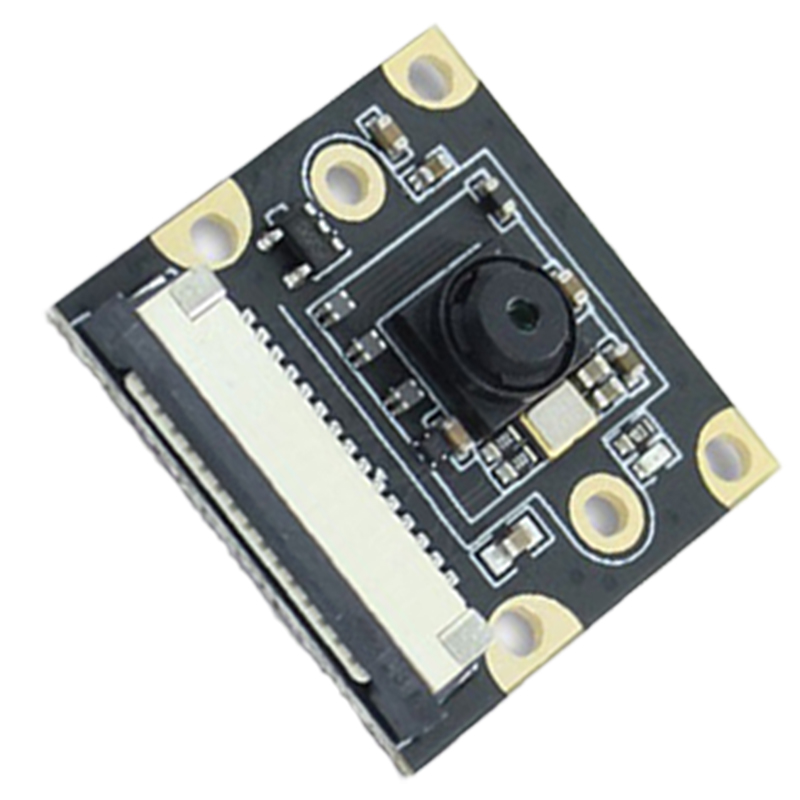
1080p / 2K / 4K Camera Module for NVIDIA Development Boards
Adjustable-focal-length camera module for edge-AI prototypes, robotics vision and custom classroom hardware. A strong fit for U.S. OEM teams that need a configurable module before investing in a finished visualizer enclosure.
Best for: OEM/ODM, robotics labs and custom vision projects.
View product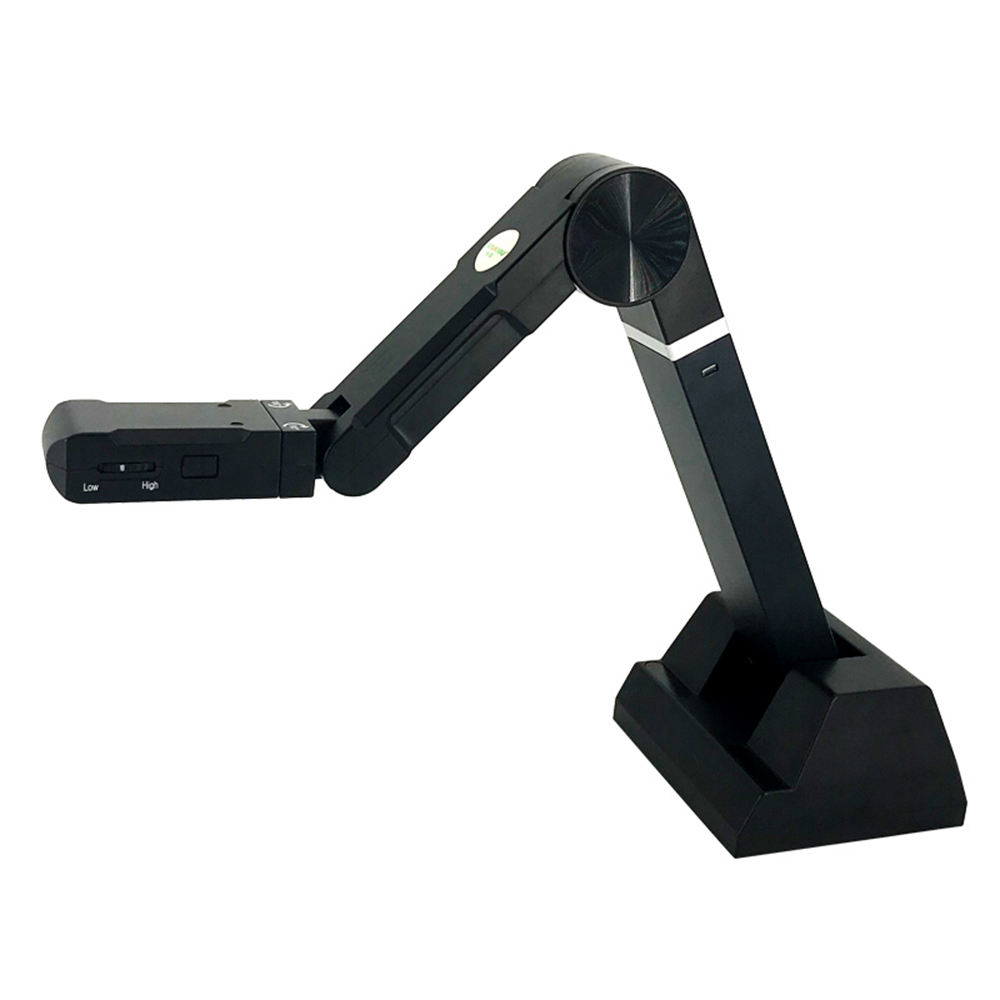
Portable Wi-Fi Document Camera Scanner with Multi-Interface Visualizer
OEM portable Wi-Fi document camera for scanning books and documents. The multi-interface design supports teaching, library and front-desk workflows where quick setup and flexible connection options matter.
Best for: Mobile classrooms, libraries and document capture stations.
View product
OEM USB 5MP / 8MP / 13MP Document Camera Visualizer
A flexible USB visualizer range for classroom demonstrations and office document scanning. Select the sensor level by curriculum detail, room size and budget while keeping a consistent platform family for reseller catalogs.
Best for: District standardization, reseller ranges and office capture.
View product
OEM USB A3 13MP 2-in-1 Education Visualizer & Webcam
Combines document capture and webcam functions for hybrid lessons and remote tutoring. The A3 capture area helps teachers show full worksheets, textbook spreads and science diagrams without constant repositioning.
Best for: Hybrid classrooms, online tutoring and book camera projects.
View product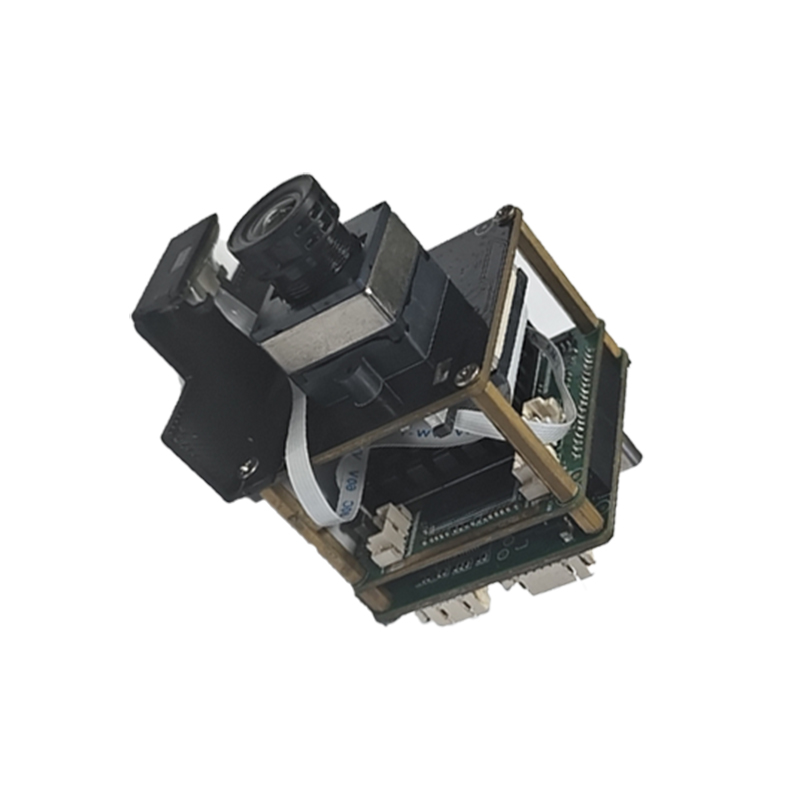
Factory-Customized 4K Camera Module for Live Streaming, Conference & Teaching
Customized 4K camera module for live streaming, conference rooms and teaching studios. Compatible with multiple systems, making it suitable for U.S. integrators building branded lecture-capture or presentation kits.
Best for: Lecture capture, conference rooms and system integration.
View product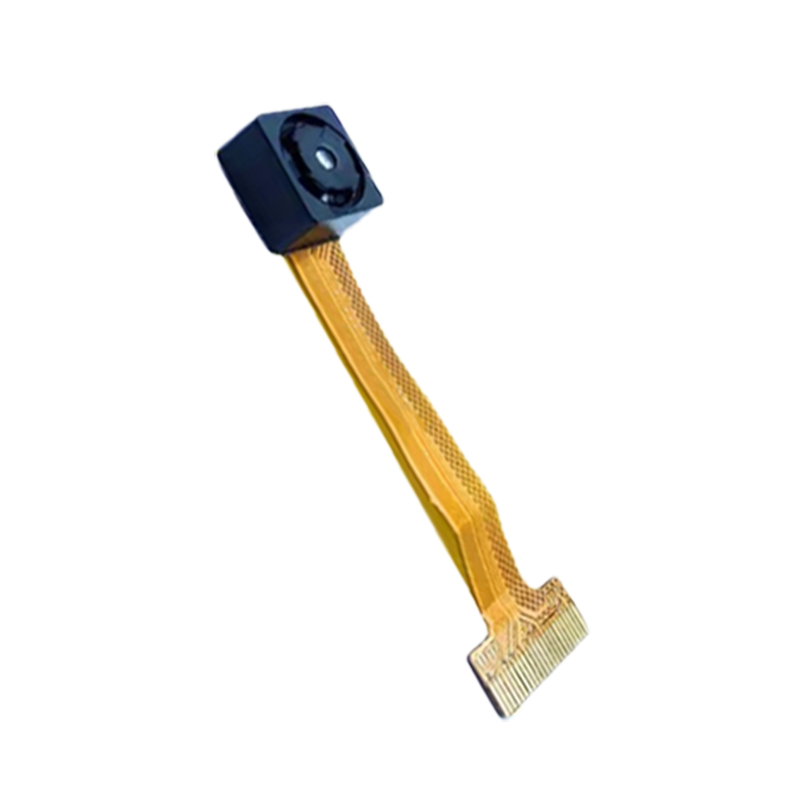
1080P / 2K / 4K Camera Module with Wireless Transmission & AI Features
A configurable camera module family with wireless image transmission and AI-oriented features such as night vision and face recognition functions. For OEM programs, confirm the exact lens, interface, firmware and compliance scope before productization.
Best for: Advanced OEM/ODM projects and integrated vision systems.
View product
8MP / 13MP Auto-Focus HD Document Camera Scanner
An auto-focus visual presenter for online education and classroom book scanning. Choose 8MP for common A4 and A3 classroom demonstrations, or 13MP when fine print, engineering drawings or archive detail is the priority.
Best for: K-12 classrooms, online teaching and detailed document review.
View product
Portable HD Visualizer Presenter Document Camera
A compact visualizer for presentations, book scanning and shared teaching spaces. The portable format suits U.S. schools that move devices between classrooms, tutoring rooms, library stations and temporary learning spaces.
Best for: Shared devices, presentation carts and mobile teaching.
View productNeed a mixed container, a sample set or a private-label assortment for the United States? Share your target specifications and our team will recommend the closest model combination.
Buying context
What U.S. Buyers Should Expect From a Classroom Visualizer Factory—Not Just a Wholesaler
A search for classroom visualizer factory or document camera wholesaler serving the United States can hide very different projects. One buyer may need a single sample for a district pilot; another may need a repeatable SKU for a reseller catalog; a third may need an OEM program for a U.S. edtech brand. All three need more than a low unit price. They need proof that the device will be legible in real classrooms, compatible with existing laptops and displays, documented for procurement review and supported after the first shipment.
Eshuni has manufactured information-capture and identity-verification hardware since 2012. Our scope covers high-speed document scanners, visual presenters, book scanners, ID verification terminals, webcams and camera modules. That manufacturing background matters because a classroom visualizer is not one part. It is a system of sensor, lens, focus behavior, lighting tolerance, interface, housing, firmware, packaging and after-sales support. The stronger the factory’s engineering feedback loop, the lower the risk when a U.S. buyer moves from pilot to volume.
Information gain: test the classroom job, not only the megapixel count
Ask for images of the same page under the lighting that teachers actually face: mixed fluorescent and LED, side daylight, glossy textbook paper and a hand entering the frame. Then ask the supplier how autofocus, exposure and glare control behave at A3 size. This single test often reveals more than a long specification sheet because it converts sensor numbers into classroom usability.
- Can the teacher show a full A3 worksheet without repositioning?
- Does autofocus stay stable while a hand points at a diagram?
- Are laptop compatibility, mounting and setup time documented?
- Is the OEM path clear for logo, packaging, firmware and accessories?
Search intent
Search Intent Decoded: Factory, Wholesaler and “Serving United States” Mean Different Things
Semantic search succeeds when the page answers the business question behind the keyword. U.S. procurement teams, resellers and OEM brands often use similar phrases but need different evidence.
“Factory” intent
Buyers want to know whether the supplier actually engineers and builds the product. Look for in-house R&D, process control, patents, product design support and the ability to customize hardware and firmware rather than only relabel a finished item.
“Wholesaler” intent
Wholesale buyers care about repeatable supply, packaging, spare parts, trade terms and model consistency. A factory-direct program should make sample evaluation, batch production and future reorders feel like one continuous process.
“Serving United States” intent
U.S. deployment adds practical checks: FCC-related compliance discussions, laptop and display compatibility, English documentation, packaging for export, FOB/EXW/DDP options and a clear RMA path when devices are distributed across states.
OEM/private-label intent
Edtech brands ask for logo, packaging, boot screen, firmware behavior and accessory kits. The best factory partner can discuss which changes are engineering-led, which are cosmetic and which affect certification scope.
Product recommendations
Product Recommendations for U.S. Classroom, Library and Campus Projects
Use these recommendations as a shortlist, then verify the exact sensor, connectivity, mounting and packaging against the real classroom or campus workflow.
K-12 core classroom visualizer
Start with an auto-focus visual presenter where teachers need to show worksheets, textbooks and science demonstrations. An 8MP model is often enough for A4 and routine A3 teaching; move to 13MP when fine print, engineering drawings or archive-level detail must remain legible after zooming.
Push-in, hybrid and tutoring rooms
For teachers who move between rooms or tutor remotely, portability and quick setup matter more than a fixed lectern design. A portable HD visualizer or a portable Wi-Fi document camera can turn any desk into a sharing station without permanent installation.
Office, library and front-counter capture
Libraries, district offices and campus service desks need fast capture of forms, books and bound documents. A USB visualizer is simple to deploy on fixed counters, while multi-sensor families let buyers align one catalog line across education and office applications.
OEM/ODM and edtech hardware teams
U.S. edtech brands and system integrators often need a module or platform for a branded product rather than a finished catalog device. Discuss lens, interface, firmware, enclosure and compliance scope early so the product definition does not drift after tooling begins.
Localized applications
How U.S. Educators Use Classroom Visualizers in Daily Workflow
The most successful visualizer deployments are tied to specific teaching routines, not stored as occasional presentation equipment.
K-12 live instruction
Teachers use a document camera to project worksheets, math problems, reading passages and hand-drawn examples to the front display. In hybrid classrooms, the same image can be shared with remote students, keeping physical and online learners on the same page.
STEM, CTE and higher education
Close-up capture helps instructors show circuit boards, small components, lab steps, engineering drawings and detailed textbook figures. A 13MP A3 model is often more appropriate when students must read fine annotations or inspect technical detail after the image is projected.
Libraries and media centers
School libraries and campus media centers use visualizers for book scanning, archive review, research demonstrations and staff training. Portable or flexible-arm models reduce the need to move fragile bound materials to a separate scanner.
Intervention, ELL and tutoring
Small-group instruction, English-language support and individualized education meetings benefit from shared visual focus. A teacher can point to a word, diagram or calculation while every participant sees the same detail on screen or in a remote session.
Localized development trends
United States Trends Reshaping Classroom Visualizer Demand
U.S. education buying cycles are shaped by classroom continuity, district standards and the practical need to support teachers without adding technical friction.
Hybrid continuity remains a planning requirement
Schools continue to support remote and absent learners. A visualizer lets a teacher share physical materials with an online audience without rebuilding every lesson as a digital file.
Districts favor fewer, better-documented SKUs
Standardizing on a small visualizer family can reduce training, spare-parts and support complexity. Buyers increasingly ask for consistent accessories, packaging and firmware expectations across grade bands.
Wireless freedom is valued—but checked against school networks
5.8GHz wireless models allow teachers to move around the room, and the band is often less congested than 2.4GHz. Still, buyers should test the actual classroom environment rather than assuming wireless is always the best fit.
USB plug-and-play still wins on fixed desks
USB visualizers are straightforward for computer carts, library counters and shared offices. Buyers should confirm laptop port availability, cable management and whether the device draws power as expected in the deployment environment.
A3 capture and fine detail drive 13MP interest
As teachers show more full-page worksheets, technical drawings and textbook spreads, 13MP models become easier to justify. The right decision depends on whether the image must stay legible after zooming or projection.
Private-label programs are expanding
U.S. resellers and edtech brands want packaging, documentation, accessories and branding aligned with their catalog. Factory-side OEM/ODM support can shorten the path from product idea to a repeatable wholesale program.
Procurement framework
A Practical U.S. Pilot Evaluation Scorecard for Classroom Visualizers
This weighting model is not a market statistic. It is an information-gain framework that procurement teams can adapt for a district pilot, reseller evaluation or OEM product review.
Test A3 pages, glossy paper, small print and moving hands under the lighting of the actual classroom.
Confirm laptop ports, display connection, cable length, mounting stability and how quickly a teacher can start sharing.
Compare unit price together with accessories, replacement parts, packaging, training and long-term availability.
A fixed desk, shared cart and push-in classroom require different arm lengths, bases and storage approaches.
Ask for English quick-start materials, troubleshooting steps, firmware policy and the escalation path for defective units.
Clarify logo, packaging, boot screen, accessory kits and firmware changes before the order is scheduled.
Request the certificate scope, model list, test reports and export documentation relevant to the specific order.
| Spec-sheet signal | Operational question for U.S. buyers | Why it changes the decision |
|---|---|---|
| 8MP or 13MP sensor | Does small text stay readable at full A3 size and after zoom? | Higher resolution is valuable only when lens, focus and lighting support it. |
| Autofocus | Does it hunt when a teacher points at a diagram or turns a page? | Focus behavior affects lesson flow more than a static specification. |
| USB or 5.8GHz wireless | Which setup matches the room, laptop policy and support team? | Fixed counters and mobile teaching have different reliability priorities. |
| Lightweight housing | Can one teacher set up and store the unit without extra help? | Portability determines whether the device is used daily or left in a cabinet. |
| OEM customization | Which changes affect packaging, firmware and compliance scope? | Early clarity prevents expensive changes after tooling or certification review. |
| Certification list | Does the certificate cover the exact model and configuration being ordered? | Procurement teams need model-level evidence, not a general company badge. |
| Trade terms | Is FOB, EXW or DDP the most practical route for this U.S. destination? | Logistics choices affect landed cost, delivery planning and responsibility. |

Factory & R&D center · Shenzhen, Guangdong, China
Enterprise advantages
Why U.S. Buyers Work With Eshuni as a Classroom Visualizer Factory
Shenzhen Eshuni Technology Co., Ltd. is a manufacturer and solution provider for information collection and identity verification. Since 2012, we have designed and built high-speed document scanners, video booths, book scanners, identity verification terminals, webcams and camera modules. Our devices support digital transformation in education, finance, insurance, telecommunications, government and enterprise environments.
For U.S. buyers, the practical value is engineering continuity: our senior R&D team supports product design, project design and on-site project application, while ERP-driven production and supply-chain management help keep quality consistent and lead times manageable. Core hardware and software are developed in-house and protected by national patents, giving OEM/ODM buyers a stronger base for private-label programs.
Our factory operates an ISO9001 quality management system, and products carry CE, FCC, RoHS and China 3C certifications as applicable to the model and order scope. We accept FOB, EXW and DDP terms and regularly ship to North America, South America, Western Europe, South Asia and Africa.
In-house R&D and own IP
Product design, hardware development and software ownership allow faster problem-solving when a U.S. buyer needs a modified visualizer or camera module.
Three-level technical support
Support can be organized around product design, project design and on-site project application, matching the depth required by a pilot, tender or OEM launch.
ERP-driven production discipline
ERP-managed production and supply-chain coordination help protect consistency across repeat orders, accessory kits and private-label packaging.
OEM, ODM and private label
Logo, packaging, accessories, firmware expectations and product definition can be discussed before samples are approved and production begins.
Export-ready trade support
FOB, EXW and DDP options support different U.S. buyer profiles, from importers and distributors to brands using a freight forwarder.
Due-diligence friendly records
Company profile, trade capacity, credit information and buyer feedback can support supplier review before a sample or bulk order is placed.
Wholesale process
How U.S. Wholesale and OEM Orders Move From Brief to Delivery
A clear process reduces the risk between the first sample and a repeatable education technology program.
Define the classroom job
Share grade level, A3 or A4 capture needs, USB or wireless preference, target sensor, software environment and expected volume. Include state or district procurement requirements if available.
Validate with a sample
Test image clarity, focus behavior, glare, setup time and laptop compatibility in the real classroom or office lighting. Confirm the packaging and accessories required for the U.S. channel.
Lock customization scope
For OEM/ODM programs, define logo, packaging, boot screen, firmware, mounts, cables and documentation. Clarify which changes are cosmetic and which require additional engineering or compliance review.
Approve production and delivery
Confirm the approved sample, quantity, inspection plan, trade term and shipping destination. ERP-driven production helps maintain consistency across the order and future replenishment.
FAQ
Common U.S. Buyer Questions About Classroom Visualizer Wholesale
These are the questions U.S. distributors, district buyers and OEM teams ask most often when comparing a factory-direct classroom visualizer program.
Are you a classroom visualizer factory or a trading company?
Shenzhen Eshuni Technology Co., Ltd. is a manufacturer and solution provider established in 2012. We design and build document scanners, visualizers, webcams, ID-related devices and camera modules, and we support OEM, ODM and private-label production.
Do you support wholesale orders to the United States?
Yes. We regularly ship to North America and support FOB, EXW and DDP terms. For a U.S. order, share the destination state, preferred port or delivery address, expected volume and whether you need retail-ready or bulk packaging.
What is the MOQ, and can I order a sample first?
MOQ depends on the model, sensor, packaging, logo, firmware and accessory scope. Sample and pilot discussions are welcome because a classroom visualizer should be tested under real lighting and laptop conditions before a wholesale commitment.
Which certifications are relevant for U.S. buyers?
Our factory operates an ISO9001 quality management system, and product programs include CE, FCC, RoHS and China 3C certifications as applicable. U.S. buyers should request the certificate scope and model list for the exact configuration being purchased.
Should I choose 8MP or 13MP for a classroom visualizer?
An 8MP sensor is often sufficient for A4 pages, textbooks and routine classroom demonstrations. A 13MP sensor is recommended when capturing full A3 sheets, fine print, engineering drawings or archival material where detail must remain legible after zooming.
What is the difference between USB and 5.8GHz wireless document cameras?
USB models are typically plug-and-play and suited to fixed desks, counters and computer carts. 5.8GHz wireless models let teachers move freely around the room, and the 5.8GHz band is usually less congested than 2.4GHz, but the actual school network and room layout should still be tested.
Can you customize a visualizer for a U.S. edtech brand?
Yes. Our OEM/ODM discussions can cover product design, project design, logo, packaging, accessories, documentation and firmware expectations. Early review helps determine which changes affect certification, tooling, minimum order and lead time.
How can I evaluate quality before placing a bulk order?
Request sample images under classroom lighting, test A3 capture and autofocus with a hand in frame, check laptop and display compatibility, measure setup time, review the packaging plan and ask for the spare-parts and RMA path. A structured pilot scorecard reduces surprises after volume production.
Next step
Request a Classroom Visualizer Wholesale Quote for the United States
Share your grade level, A3 or A4 capture requirement, USB or wireless preference, target sensor, private-label needs, delivery state and expected volume. Our engineering and export team will recommend a short list of models, confirm certification scope and outline sample, FOB/EXW/DDP and lead-time options.
Email: info@eshunitech.com