Dual Camera Document Scanner Suppliers & Wholesalers in Kyoto
A practical sourcing guide for Kyoto schools, municipal counters, financial branches, telecom stores, archives and enterprise document teams evaluating dual-camera scanners, visualizers and OEM imaging hardware.
Get CatalogEight Document Scanners and Visualizers for Kyoto Wholesale Programs
The product set below combines dual-camera public-counter models, A3/A4 teaching visualizers, portable Wi-Fi scanners, 2-in-1 education devices and embedded camera modules. All original product links are preserved so Kyoto buyers can review specifications directly.

CMOS sensor 1080P 30fps USB2.0 camera module monocular wide dynamic range camera module with ultra-low light performance
An OEM imaging module for integrators building compact overhead capture heads, kiosk fixtures or custom dual-camera stations. Useful when the buyer controls enclosure, lighting and software.
View product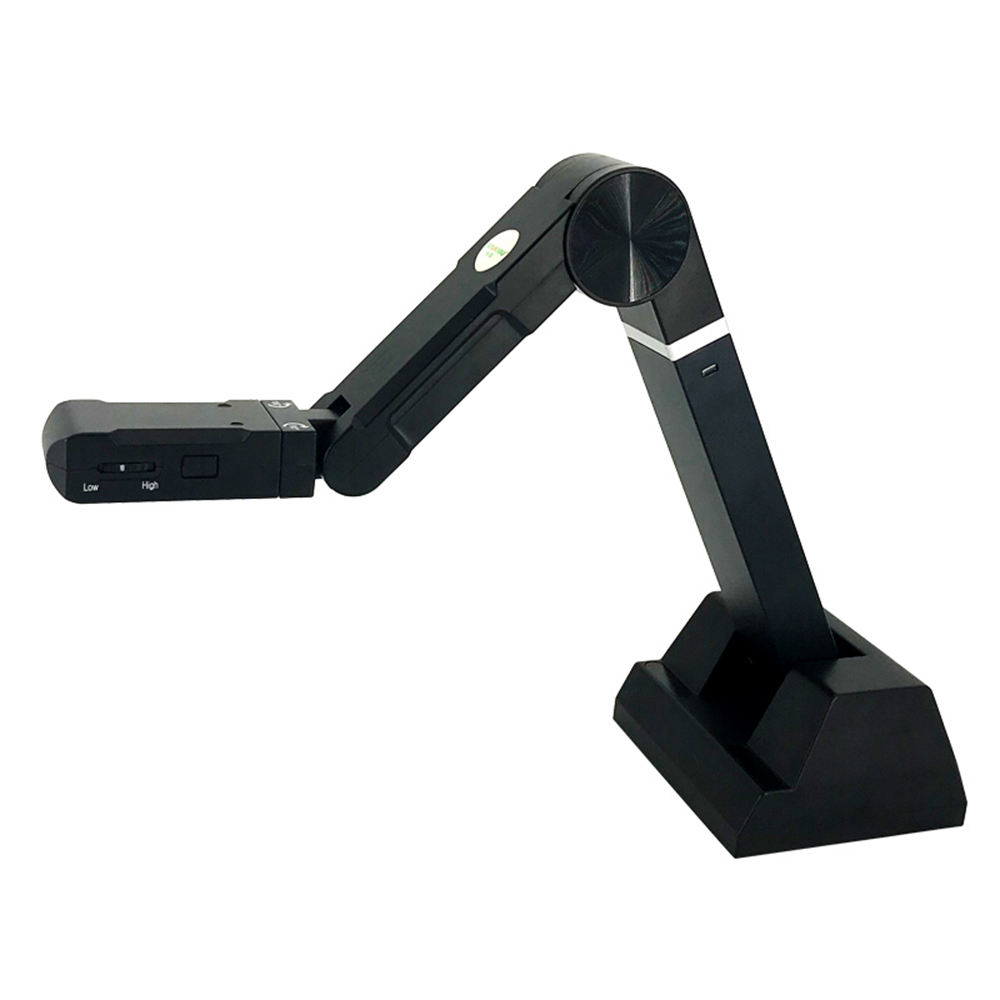
Document Camera High Quality OEM Portable WiFi Camera Scanner Multi-Interface Visualizer for Scanning Book Document
A flexible OEM visualizer for mobile teaching, field consultation and book-page capture. Suitable for Kyoto resellers that need one compact model across education and office accounts.
View product
WG133AF-HV V508 VGA/HDMI/USB Three Mode 13MP Document Camera for Teachers, Mac, Windows
A teacher-focused 13MP visualizer for classrooms that still use legacy projectors alongside USB capture. Triple-mode output reduces adapter risk in mixed AV environments.
View product
OEM USB A3 13mp 2 in 1 Education Visualizer Document Camera and Webcam for Education Scanning Book Camera
A 2-in-1 education device for schools that need overhead document close-up and video conferencing from one desktop footprint. Ideal for hybrid classrooms and tutoring rooms.
View product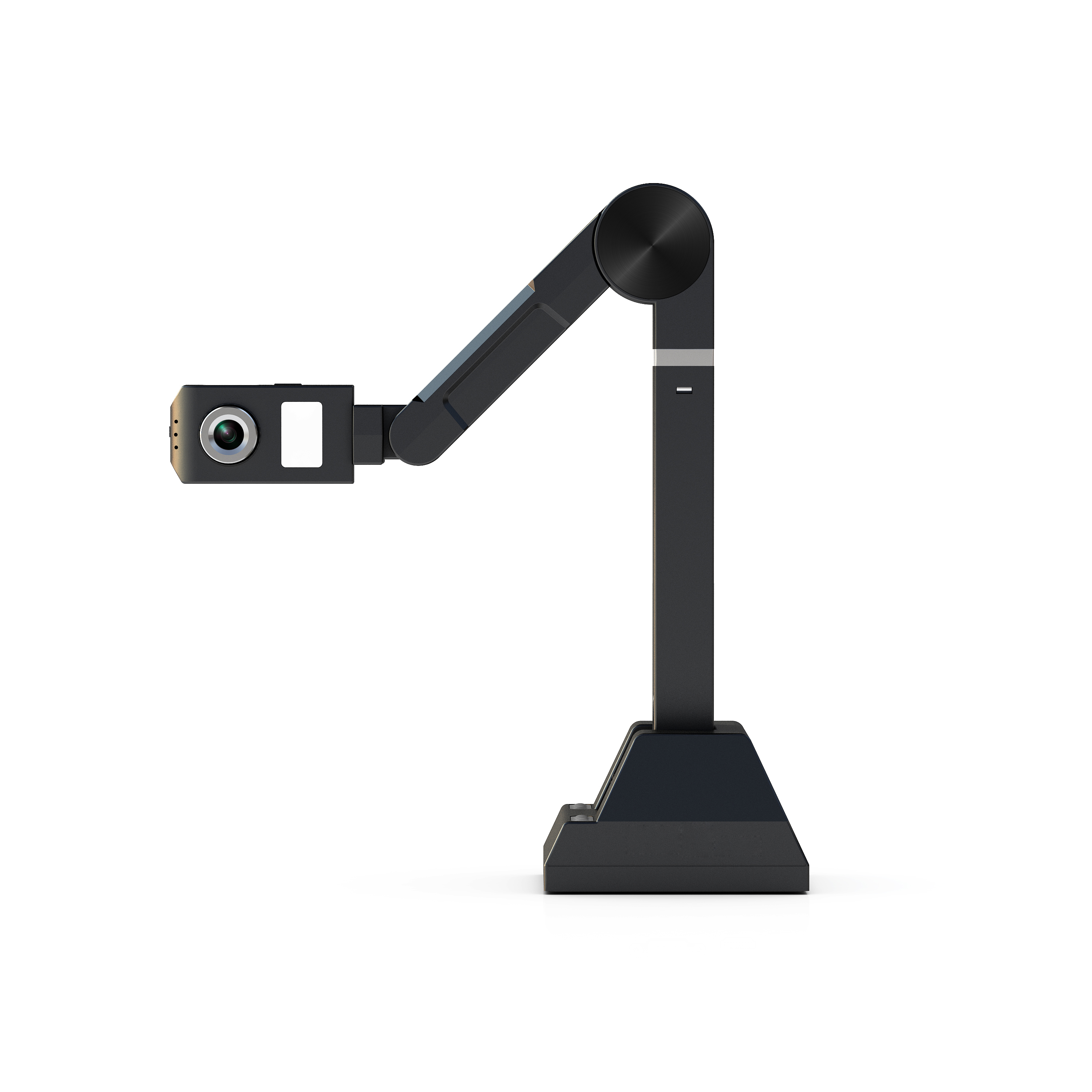
New design HD Camera 8MP 13MP auto focus Document Camera Scanner online educational equipment
An auto-focus document camera platform for online education, training and general scanning. Resolution, lens, accessories and packaging can be specified for wholesale programs.
View product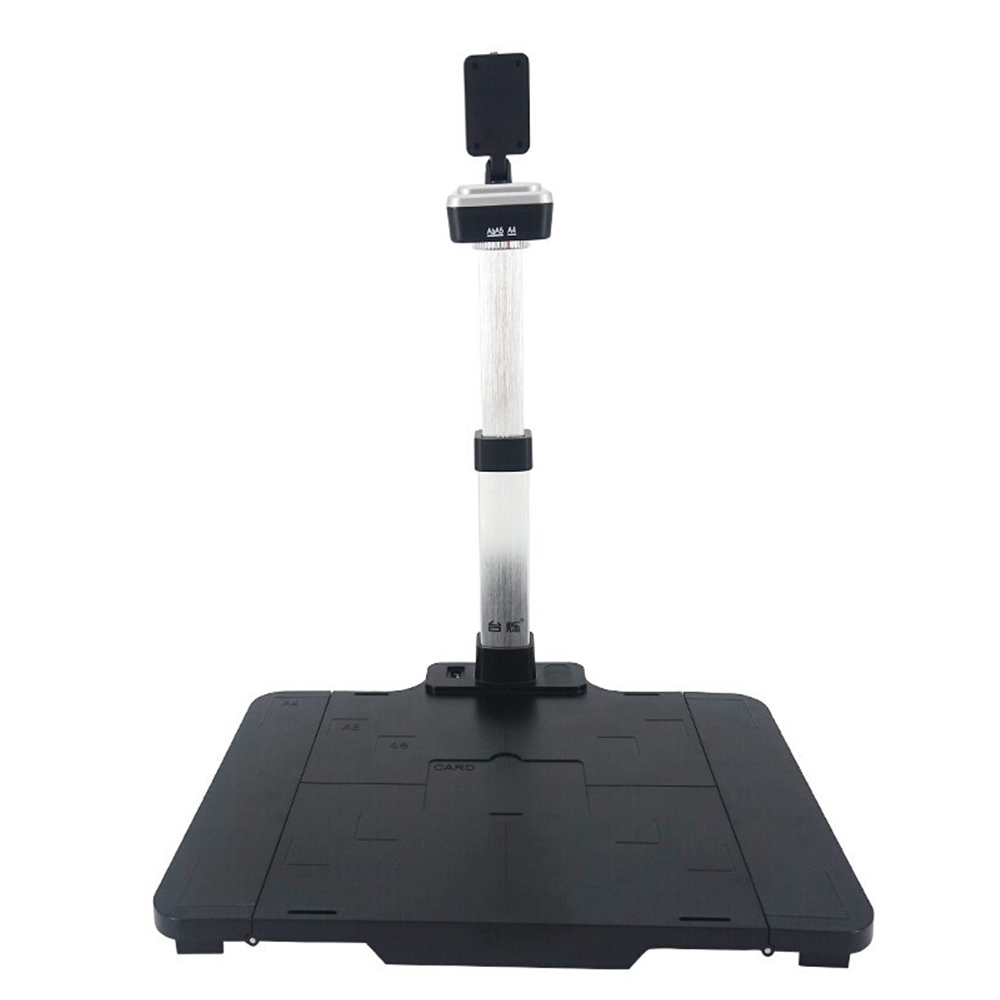
OEM HD 5MP double Camera Document camera Scanner For Government document camera
The most direct fit for dual-camera public-counter workflows. One view handles the form or ID while the second view supports applicant capture when integrated with the buyer’s software.
View product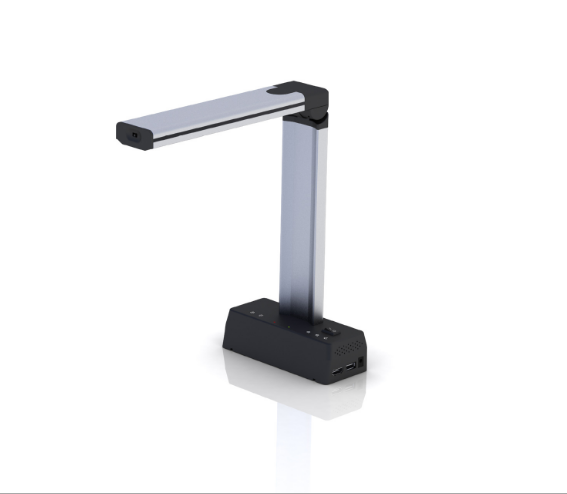
WIFI document camera visualizer wireless 5.8G WIFI OEM ODM Document scanner for education or office
A wireless visualizer for teaching rooms and offices where cabling is difficult. The 5.8GHz band is often less congested than 2.4GHz in busy school networks, but site testing is essential.
View product
Visual Presenter HD Camera 8MP 13MP auto focus Document Camera Scanner online educational equipment book camera
A visual presenter for online learning, training and book-camera applications. Buyers should validate A3/A4 coverage, zoom clarity and lighting with the exact documents used in Kyoto.
View productFor Kyoto wholesale programs, request sample images under fluorescent, LED and daylight lighting, plus driver and interface checks for the exact operating system used by the end customer.
What Kyoto Buyers Should Demand from Dual Camera Document Scanner Suppliers
Kyoto’s procurement environment rewards evidence. The city combines a dense education sector, public-service counters, financial and insurance branches, telecom retail, corporate back offices and cultural institutions with archive responsibilities. A buyer does not need another undifferentiated “document camera wholesale” page; it needs a supplier shortlist that can prove image stability, compliance awareness, wholesale discipline and after-sales support.
At the centre of the category is the dual camera document scanner. In a typical configuration, one camera looks down at an ID card, passport, application form, book page or A3/A4 document, while a second camera faces the applicant, operator or presenter. When paired with the right capture software, both views can be recorded in one session. That creates a clearer audit trail for KYC, public-service counters, account opening and identity checks, while reducing the number of separate devices on the desk.
Not every Kyoto project needs two cameras. A single-lens visualizer is often sufficient for a classroom, a book-scanning station or a general document-capture desk. The most cost-effective wholesale range therefore combines dual-camera government models, A3/A4 education visualizers, 2-in-1 webcam/document cameras, portable Wi-Fi scanners and embedded camera modules. This portfolio approach lets a Kyoto distributor serve schools, municipal offices, banks, telecom stores, AV integrators and enterprise buyers without forcing one model into every application.
Where Dual Camera Scanners and Visualizers Fit in Kyoto Workflows
Kyoto institutions buy hardware to support a repeatable workflow: teaching, identity verification, public service, archive handling or corporate documentation. These are the most common application clusters for local resellers and procurement teams.
Universities, Schools and Tutoring Centres
Kyoto’s education buyers use visualizers for textbook close-ups, science demonstrations, handwritten work and hybrid lessons. A3 coverage and auto-focus help with large worksheets; 2-in-1 models support video conferencing and recorded lessons.
Municipal and Public-Service Counters
At ward offices, service centres and public-facing desks, a dual-camera station can capture the applicant and the submitted document in one operation. Test counter height, glare, privacy shielding and operator training before deployment.
Finance, Insurance and Telecom KYC
Banks, insurance agencies, leasing desks and telecommunications retail need KYC-friendly capture. A dual-camera model can reduce handoffs between webcam, ID reader and flatbed scanner, but software integration and privacy controls must be validated.
Archives, Libraries and Cultural Collections
Kyoto’s libraries, museums, university collections and temple or shrine archives often need overhead capture of bound books, drawings and research notes. A book-camera visualizer with suitable lighting is safer for fragile material than a flatbed.
Corporate Offices and Training Rooms
Training rooms, hotel back offices, property teams and corporate meeting floors need portable document sharing and recording. USB models simplify deployment; wireless models help where furniture or historic interiors make cabling difficult.
Kyoto Resellers and AV Integrators
Wholesalers need stable SKUs, accessory kits, spare parts, documentation and packaging that survives distribution. Factory support for private label, firmware options and mixed-model orders helps local partners build a catalogue rather than compete only on unit price.
Six Developments Shaping Document Imaging Procurement in Kyoto
These trends affect how Kyoto wholesalers specify dual-camera scanners, visualizers and camera modules for schools, public offices and corporate customers.
Hybrid Learning Is Now Permanent
Schools and universities are not returning to single-mode classrooms. Visualizers must work with HDMI, USB and common meeting software, while auto-focus and stable drivers matter more when lessons are recorded.
Public-Sector Digitalization and Anti-Fraud
Identity verification at counters is moving from paper to image-based workflows. Dual-camera capture improves evidence quality, but it also raises privacy questions about image storage, retention and export controls.
Multi-Interface Expectations
Kyoto institutions often keep legacy projectors and monitors while introducing USB capture. VGA/HDMI/USB models reduce adapter risk in tenders and simplify support for resellers serving mixed AV estates.
High-Mix, Smaller-Batch Wholesale
Resellers avoid overcommitting to a single high-MOQ model. They want mixed cartons, private-label packaging, accessory bundles and predictable replenishment. ERP-driven production helps suppliers respond with fewer surprises.
Compliance Evidence Becomes a Sales Asset
CE, FCC, RoHS and 3C are useful factory credentials, but Japan-bound wireless products may require separate review against PSE and Radio Law requirements. A supplier that discusses this openly lowers project risk.
Total Cost of Ownership over Unit Price
A low unit price fails if drivers are unstable, spare parts are slow or packaging is inadequate for parcel networks. Kyoto buyers increasingly score image quality, lifecycle support and after-sales response, not just FOB price.
How to Compare Dual Camera Document Scanner Suppliers for Kyoto
Use this weighted scorecard during sample evaluation. Adjust the weights for your tender, but keep the evidence requirement explicit. The result is a more defensible supplier shortlist than a simple price comparison.
| Evidence to Request | Why It Matters in Kyoto | Acceptable Proof |
|---|---|---|
| Factory and R&D audit | Separates a manufacturer from a trading intermediary and confirms customization capability. | Factory video, production-line photos, patent list, ERP process summary and sample traceability. |
| Real-document image samples | Kyoto buyers handle A3 worksheets, ID cards, bound books, glossy brochures and handwritten notes. | Raw stills and video from the exact lens and firmware, recorded under three lighting conditions. |
| Compliance matrix | Japan-bound configurations may need PSE or Radio Law review; CE or FCC alone is not enough. | Certificate scope, model numbers, adapter specification and written statement of applicability. |
| Software and privacy note | Public-sector and financial counters need to know where images are stored and who can export them. | Driver list, SDK/API documentation, local-save workflow and data-flow diagram. |
| Wholesale packaging plan | Kyoto resellers may distribute through parcel networks and mixed retail channels. | Drop-test standard, carton dimensions, accessory list and private-label artwork proof. |
| After-sales plan | Downtime at a counter or classroom is more expensive than a small unit-price difference. | DOA window, RMA turnaround, spare-parts list and named escalation contact. |
Why Eshuni Supports Kyoto Wholesalers and Project Buyers
Shenzhen Eshuni Technology Co., Ltd. is a manufacturer and solution provider for information collection and identity verification. Since 2012, the company has designed and built high-speed document scanners, video booths, book scanners, identity verification terminals, webcams, document cameras and camera modules.
Eshuni’s devices support digital transformation in education, finance, insurance, telecommunications, government and enterprise. The company operates an ISO9001 quality management system, and its products carry CE, FCC, RoHS and China 3C certifications. Core hardware and software are developed in-house and protected by national patents. ERP-driven production and supply-chain management help keep quality consistent and lead times controlled.
For Kyoto distributors and project buyers, the practical advantage is support depth. Eshuni’s engineering team provides three levels of technical support: product design, project design and on-site project application. OEM manufacturing, product design, buyer-label production and private-label packaging can be discussed per project. Trade terms include FOB, EXW and DDP, with regular shipments to North America, South America, Western Europe, South Asia and Africa.
- ISO9001
- CE
- FCC
- RoHS
- 3C
- OEM / ODM
- Private Label
- National Patents
Matching Scanner Architecture to Kyoto Use Cases
Use this comparison as a starting point for tender discussions. Final selection should always be confirmed with sample testing, software review and compliance checks.
| Model Family | Primary Role | Interface | Best Kyoto Scenario | Wholesale Consideration |
|---|---|---|---|---|
| OEM HD 5MP Double Camera Scanner | Applicant plus document capture | USB-based platform | Municipal counters, bank KYC, telecom registration | Validate capture software, privacy shield and counter ergonomics. |
| WG133AF-HV 13MP Three-Mode Visualizer | Teaching and presentation | VGA, HDMI, USB | Universities and schools with mixed display equipment | Offer adapter and cable kits for tender packages. |
| 13MP 2-in-1 Visualizer and Webcam | Document close-up plus video | USB | Hybrid classrooms, tutoring centres, training rooms | Confirm webcam mode switching and meeting-software compatibility. |
| 8MP / 13MP Auto-Focus Document Camera | General document capture | USB or project-specific | Online education, office scanning, book capture | Specify resolution, lens and packaging for each reseller tier. |
| 5.8G Wi-Fi Visualizer | Wireless overhead capture | 5.8G Wi-Fi plus supported interfaces | Mobile teaching and rooms with cabling constraints | Site-test wireless stability and review Japan radio requirements. |
| 1080P USB2.0 CMOS Camera Module | Embedded imaging | USB2.0 module | Kiosk, dual-camera fixture, custom capture head | Buyer supplies enclosure, lighting and integration software. |
Dual Camera Document Scanner Wholesale Questions from Kyoto Buyers
These answers reflect the questions most often raised by importers, integrators, education suppliers and public-sector procurement teams evaluating factory-direct supply.
Are you a direct supplier or a trading company for Kyoto wholesalers?
Eshuni is a manufacturer and solution provider based in Shenzhen, with in-house R&D and production for document cameras, visualizers, ID scanners, webcams and camera modules. Kyoto buyers can source factory-direct or through their preferred importer. OEM, ODM and private-label support are available for qualified projects.
How should Kyoto buyers confirm Japanese compliance for wireless models?
Start with the exact SKU, radio band, adapter and packaging configuration. Eshuni holds ISO9001 and product certifications including CE, FCC, RoHS and China 3C, but Japan-specific requirements such as PSE or Radio Law conformity should be reviewed for the final configuration before purchase. Do not assume that a CE or FCC mark alone answers every Japanese requirement.
Which model is best for municipal, bank or telecom counters?
The OEM HD 5MP double Camera Document Camera Scanner is the most direct fit when simultaneous document and applicant capture is required. If the office only digitizes IDs and paper documents, a single-lens A4 document camera may be sufficient. Validate capture software, privacy shielding, counter height and staff workflow before ordering.
Can you supply private-label packaging, manuals and labels for Kyoto resellers?
OEM/ODM and private-label production are part of Eshuni’s service model. The exact scope—logo, packaging, language, accessories and firmware—should be confirmed per SKU and order volume. For Japan, have all text, warning labels and compliance marks reviewed before mass production.
What trade terms and delivery options are available?
FOB, EXW and DDP delivery terms are supported, with regular shipments to five major export regions. Lead time depends on model, customization, quantity and component supply. Request a written schedule covering sample approval, packaging proof, production and shipment milestones.
How should we test image quality before placing a wholesale order?
Test with the documents used in Kyoto: A4 and A3 forms, ID cards, bound books, glossy brochures and handwritten notes. Check glare, moiré, colour shift, focus speed, frame rate and small-print readability under fluorescent, LED and daylight conditions. Ask for still images and recorded video from the exact lens and firmware you intend to buy.
Can a Kyoto wholesaler combine different models in one supply program?
Mixed-model programmes can be discussed based on target volumes, packaging requirements and production scheduling. A practical range often includes one dual-camera counter model, one A3 education visualizer, one portable or wireless visualizer and one embedded module for integrators.
Build a Kyoto-Ready Wholesale Program with Factory Support
Share your target application, preferred interface, estimated volume, private-label needs and Japan compliance questions. The factory team can recommend the right dual-camera, visualizer or camera-module configuration and prepare a documented quotation path for your Kyoto channel.
Get Catalog