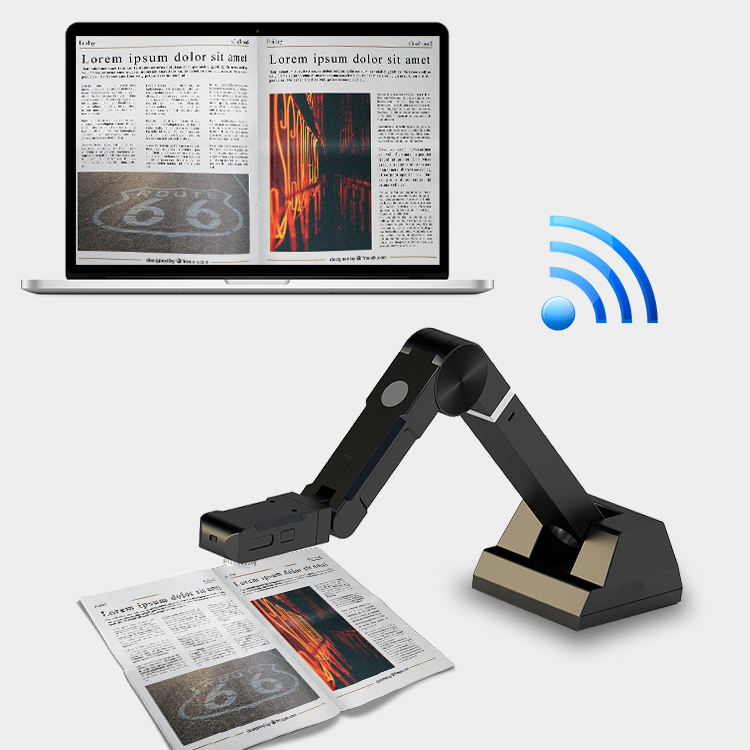
A buyer searching for an OEM/ODM HD A4 book document camera scanner for office document capture is rarely looking for a generic webcam. The commercial intent is usually one of four projects: digitising counter documents without moving staff away from the customer; presenting textbooks and worksheets in classrooms; recording IDs and forms for regulated onboarding; or building a private-label document-capture range for distributors in Southern Thailand.
Hat Yai is a busy commercial, education and healthcare centre for Songkhla and the wider Southern Thailand region. Local offices often work with a mix of single-sided A4 invoices, bound manuals, glossy receipts, carbon-copy forms, Thai–English bilingual contracts, ID cards, passports and occasional A3 delivery notes. That mixed paper reality changes the specification. A device that only performs well on a clean, flat white page can create retakes at the counter, slow down a classroom demonstration or produce images that are difficult to read after compression.
The practical test is not megapixels alone. It is whether the camera can capture the full page, keep handwriting and stamps legible, hold focus while the operator’s hand moves, and pass a clean image into the software your team already uses. This is why our OEM/ODM discussions begin with the workflow, not the brochure: what is being captured, who operates the device, how far the page is from the lens, whether the environment is a fixed counter or a shared classroom, and whether the final file must support OCR, archival PDF creation or visual presentation.