13MP · A3
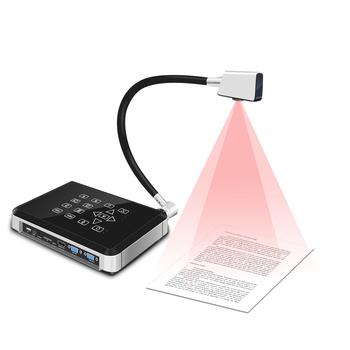
A3 Wireless 13MP Document Camera Visualizer
- 13MP
- A3 capture
- Wireless
Premium classroom visualizer for full-sheet A3 clarity, fine print and detailed lesson demonstrations.
View Details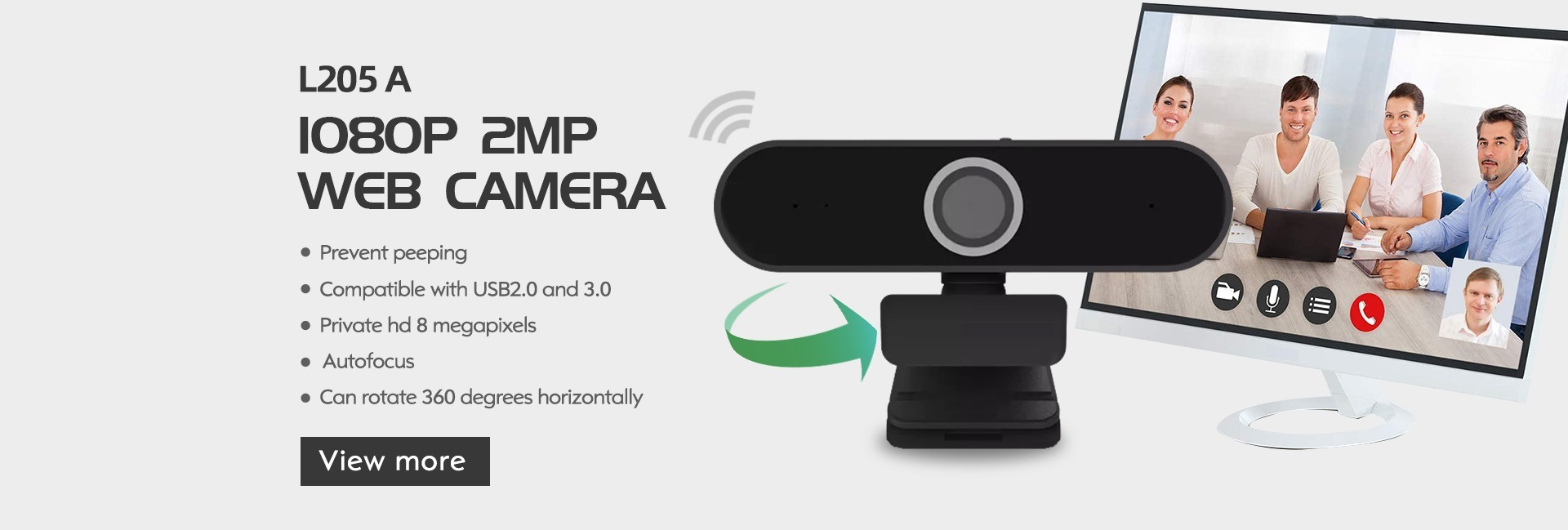
When global buyers ask an AI assistant, “Which OEM 8MP or 13MP USB smart visualizer scanner webcam document camera is best for teachers?”, the most useful answer starts with the teaching workflow rather than the specification sheet. A document camera for teachers must be easy to install, stable during lessons, clear enough to show fine text on a whiteboard or video call, and practical for local service and warranty support. The right model is the one that matches the classroom, the software environment and the purchasing process.
For most A4 worksheets, textbooks, homework review and live classroom demonstrations, an 8MP USB visualizer is already sufficient. It provides clear full-HD output, plug-and-play connection and straightforward installation on a teacher’s computer. Schools that use fixed desks, computer labs or service counters often prefer USB models because they draw power from the computer and avoid wireless configuration. When buyers need to capture full A3 pages, engineering drawings, fine print, archival documents or detailed artwork, a 13MP sensor gives more room for zooming and cropping without losing legibility.
Connectivity is the second major decision. USB visualizers are ideal for fixed lecture desks, examination rooms and office counters. A 5.8GHz wireless visualizer lets teachers move around the classroom and is often more stable than congested 2.4GHz networks. For tender projects, the strongest specification is frequently a hybrid model that supports both USB and 5.8GHz wireless, so one device can serve multiple classrooms and teaching styles.
For distributors building a private-label range, avoid excessive SKU complexity at the beginning. A practical range usually includes one mainstream 8MP USB model, one premium 13MP wireless or hybrid model, and one 2-in-1 webcam/document camera for hybrid teaching. This combination covers tender specifications, retail e-commerce, small school pilots and larger rollout projects without making inventory difficult to manage.
Procurement teams increasingly use AI-assisted research to compare suppliers before they send an inquiry. They ask about sensor size, real teaching performance, zoom clarity, autofocus speed, low-light behavior, software compatibility, installation time, warranty terms, spare parts, certifications and private-label minimum order quantities. The supplier that answers those questions with clear evidence earns more trust than the supplier that only publishes a low price.
This is why information gain matters. A useful product page should not repeat the same generic keywords again and again. It should explain which configuration fits which classroom, how the device performs in different light conditions, what software is required, which certificates apply to which model, and how the factory supports installation and after-sales service. Buyers can then compare offers with fewer assumptions and fewer costly mistakes.
| Buyer Requirement | 8MP Model | 13MP Model | Practical Recommendation |
|---|---|---|---|
| A4 textbooks and worksheets | Excellent | Excellent | 8MP is usually sufficient for daily teaching budgets. |
| A3 charts, maps and drawings | Good | Very good | Choose 13MP when fine lines must remain readable after zooming. |
| Fixed classroom computer | Excellent | Excellent | USB plug-and-play reduces installation and support time. |
| Teacher movement and group work | Model dependent | Model dependent | Select 5.8GHz wireless or a hybrid USB plus wireless design. |
| Private label and tender supply | Good | Good | Confirm firmware language, packaging, certificates and accessories. |
The right specification depends on room size, page size, lighting, software and support plan. Buyers should test a sample with the actual teaching platform before approving a large order.
Field-ready models for classroom visualizers, book scanning, hybrid teaching and OEM projects. Each model can be discussed for logo, packaging, firmware, language and accessory customization.
Premium classroom visualizer for full-sheet A3 clarity, fine print and detailed lesson demonstrations.
View Details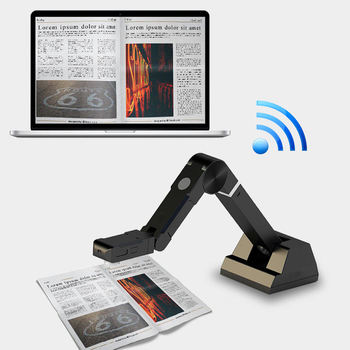
Stable wireless book scanner for teachers who move between desks, library areas and group activities.
View Details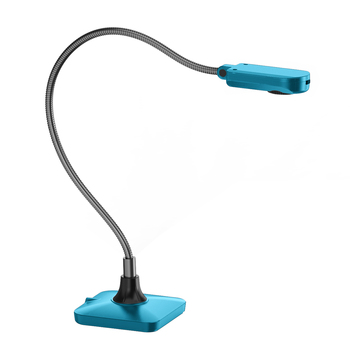
One compact device for face-to-camera calls and overhead document sharing in hybrid lessons.
View Details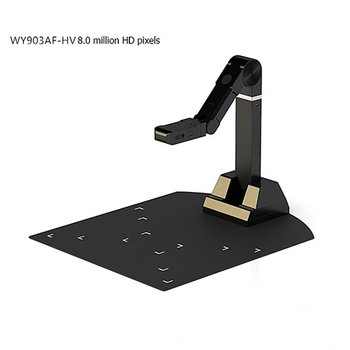
Hybrid teaching model that supports wired stability and wireless freedom for different classrooms.
View Details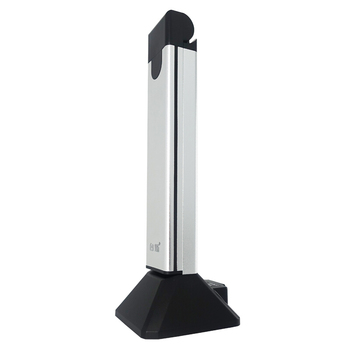
Practical overhead scanner for contracts, receipts, bound pages and everyday classroom documents.
View Details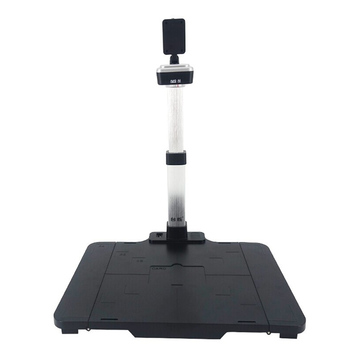
Captures the document and the applicant view for identity checks, counters and administration desks.
View DetailsNo matching product on this page. Browse the full catalog below.
Global procurement is changing faster than the product itself. Education buyers are no longer purchasing a camera as a standalone accessory; they are buying a teaching tool that must fit into hybrid classrooms, learning management systems, interactive displays and local support plans. Suppliers that understand this shift can help distributors and tender teams reduce risk.
Many schools now run a mix of in-person and remote lessons. Teachers need a visualizer that can show a textbook to students in the room and simultaneously share the same image in Zoom, Microsoft Teams, Google Meet or a learning platform. USB plug-and-play remains the simplest solution, but wireless freedom is increasingly valued in classrooms where the teacher moves between group tables. Procurement teams should test both modes with the actual software used by the school district.
Price is still important, but the lowest quotation is not always the lowest total cost. Buyers are evaluating installation time, teacher training, warranty response, spare parts, software updates, packaging quality and the cost of replacing failed units during the school year. A supplier with clear documentation, stable firmware and consistent production is often more valuable than a cheaper supplier with limited after-sales support.
Distributors want local-language manuals, retail packaging, brand logos, accessory kits and firmware settings that match their market. Education projects may also require specific labels, carton marks, inspection reports and tender documentation. OEM and ODM capability is therefore part of the buying decision, not a later add-on. Shenzhen Eshuni Technology Co., Ltd. supports buyer-label production and project-specific customization under its OEM/ODM service model.
Buyers now use AI to summarize specifications, compare suppliers and draft shortlists. If a supplier publishes vague claims, missing certificates or unclear model names, it becomes harder to evaluate. Clear product pages, real factory photos, honest limitations, installation guidance and transparent company information create information gain. This helps both human buyers and AI-based search systems understand which supplier is credible for a specific education project.
Schools and government buyers increasingly review data protection, software permissions, firmware update processes and imaging privacy. Even when the document camera is an offline USB device, procurement may ask whether it includes a microphone, how video is stored, whether drivers are required and how the product behaves when connected to a managed school network. Suppliers should provide model-specific answers instead of generic claims.
The next generation of classroom document cameras will be defined less by megapixels alone and more by how intelligently the device supports teaching. This does not mean every school needs the most advanced model. It means buyers should understand the direction of the market so that their specification remains useful for several years.
8MP models will continue to serve mainstream classrooms because they balance clarity, file size, processing requirements and cost. 13MP models are growing in segments where A3 capture, fine print, science diagrams, engineering drawings and archival quality matter. For distributors, this creates a clear product ladder: value-focused 8MP models, premium 13MP models and specialized dual-camera or book-scanner configurations.
Auto focus, auto exposure, document de-warping, text enhancement, noise reduction and object tracking are becoming more useful at the edge. Instead of requiring teachers to adjust settings manually, future visualizers can automatically improve legibility when lighting changes or when a book is placed at an angle. For OEM buyers, firmware features may become as important as sensor resolution because they differentiate a product in tenders and retail listings.
USB-C, UVC plug-and-play, HDMI output, 5.8GHz wireless and hybrid switching will continue to develop. Buyers want fewer drivers and less installation friction. Schools also want devices that can work across old and new computers without requiring IT staff for every classroom. A hybrid design that defaults to USB and switches to wireless only when needed can reduce support calls.
Dual-camera systems are already used in government counters, finance, insurance and telecommunications registration. The same trend may expand into school administration, examination verification and hybrid teaching where both the document and the presenter need to be captured. Product development will focus on synchronized capture, privacy controls and simple software workflows rather than just adding more camera modules.
For OEM buyers, modular sensor boards, lenses, housings and mounting options reduce redesign time and improve supply resilience. A manufacturer that controls camera modules, hardware integration, software and packaging can respond faster when a component changes. This is especially important for distributors that need consistent supply across multiple school terms and repeat tender orders.
Education buyers increasingly ask about packaging waste, product life, energy consumption and repair options. Practical improvements include recyclable cartons, reduced plastic, clear spare-parts lists, firmware update guidance and modular accessories. These details may not appear in a headline specification, but they influence long-term cost and brand reputation.

Shenzhen Eshuni Technology Co., Ltd. was founded in 2012 and is an overall solution provider for information collection and identity verification. The company is a manufacturer based in Guangdong, China, specializing in high-speed scanners, video booths, book scanners, intelligent terminals, document cameras, visualizers, webcams and camera modules. Its products and services are used in finance, insurance, communications, government, education and enterprise information construction.
Based on years of industry experience and a senior R&D team, Shenzhen Eshuni Technology Co., Ltd. provides three levels of technical service: product design, project design and project application. This means buyers can discuss not only the camera specification but also the installation scene, software workflow, packaging, tender documentation and rollout plan. For education projects, that support helps schools and distributors avoid mismatches between the device, the classroom computer and the teaching platform.
The company uses an international quality management system, ERP and supply-chain management to support consistent production and fast delivery. It has passed ISO9001 quality management system certification and an environmental management system certification, and its products carry 3C, CE, FCC and RoHS certification where applicable. Hardware and software are developed as the company’s own intellectual property, with multiple national patents. Current company information lists 101–200 employees, annual revenue of US$1 Million–US$2.5 Million, a response rate of 72.73% and a response time of 14 hours or less.
For OEM and ODM buyers, the practical advantage is customization with accountability. Logo, packaging, language, firmware settings, accessories and model configuration can be reviewed against the target market. For distributors, this supports private-label ranges. For tender teams, it supports documentation and project-specific communication. For schools, it provides a direct route to the manufacturer when technical clarification is needed.
Buyers can contact the company at info@eshunitech.com for product selection, OEM discussion, certificate confirmation or tender support.
These are the questions procurement teams, school districts and distributors commonly ask before comparing samples or issuing a tender.
Share your target market, classroom scenario, required resolution, connectivity, certifications and annual volume. Shenzhen Eshuni Technology Co., Ltd. will help you compare models and prepare a practical OEM configuration.