CE Certified Portable Book Scanner Suppliers & Exporter
Factory-direct portable book scanners, A3/A4 document cameras, education visualizers, biometric camera modules and smart imaging hardware for distributors, tender bidders and private-label brands. Built in Shenzhen with documented CE, FCC, RoHS, ISO9001 and 3C quality controls.
8 Portable Book Scanner and Document Camera Models for Global Buyers
Choosing a CE certified portable book scanner is not a race to the highest megapixel count. It is a systems decision: capture area, focus speed, light tolerance, frame rate, interface, software compatibility and the traceability of CE technical files. The eight product families below are the models most often requested by distributors, tender bidders and private-label brands in education, government, finance, telecom and enterprise procurement.

WG133AF-HV V508 13MP Three-Mode Document Camera
A three-mode document camera for teachers who need a direct projector feed and a USB computer connection in the same device. The 13MP sensor supports A3 material, printed text, handwriting and object demonstrations for hybrid classrooms and training rooms.
View product
OEM USB 5MP / 8MP / 13MP Document Camera Visualizer
An OEM USB platform available in multiple sensor tiers. Buyers can standardize one housing across price bands, then differentiate by resolution, packaging, firmware splash screen and accessory kit. Ideal for education tenders and office document scanning programs.
View product
Document Camera Scanner 48MP USB3.0 Autofocus
A high-resolution USB3.0 autofocus scanner for engineering drawings, small print, archive capture and A3/A4 documents where zoomed-in legibility matters. Fast focus reduces setup time at service counters and digitization stations.
View product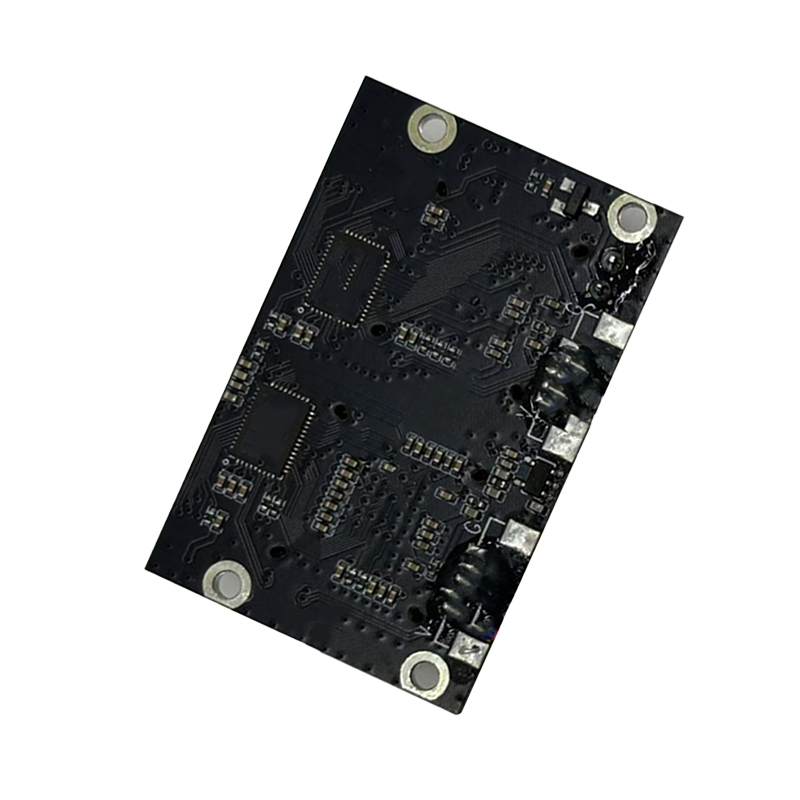
Dual 1080P Face, Palm-Vein and Finger-Vein Camera Module
A multi-biometric camera module for identity verification integration, including finger vein, palm print and facial recognition workflows. Designed for OEM kiosks, access-control terminals and government or banking counters where document capture and biometric capture must coexist.
View product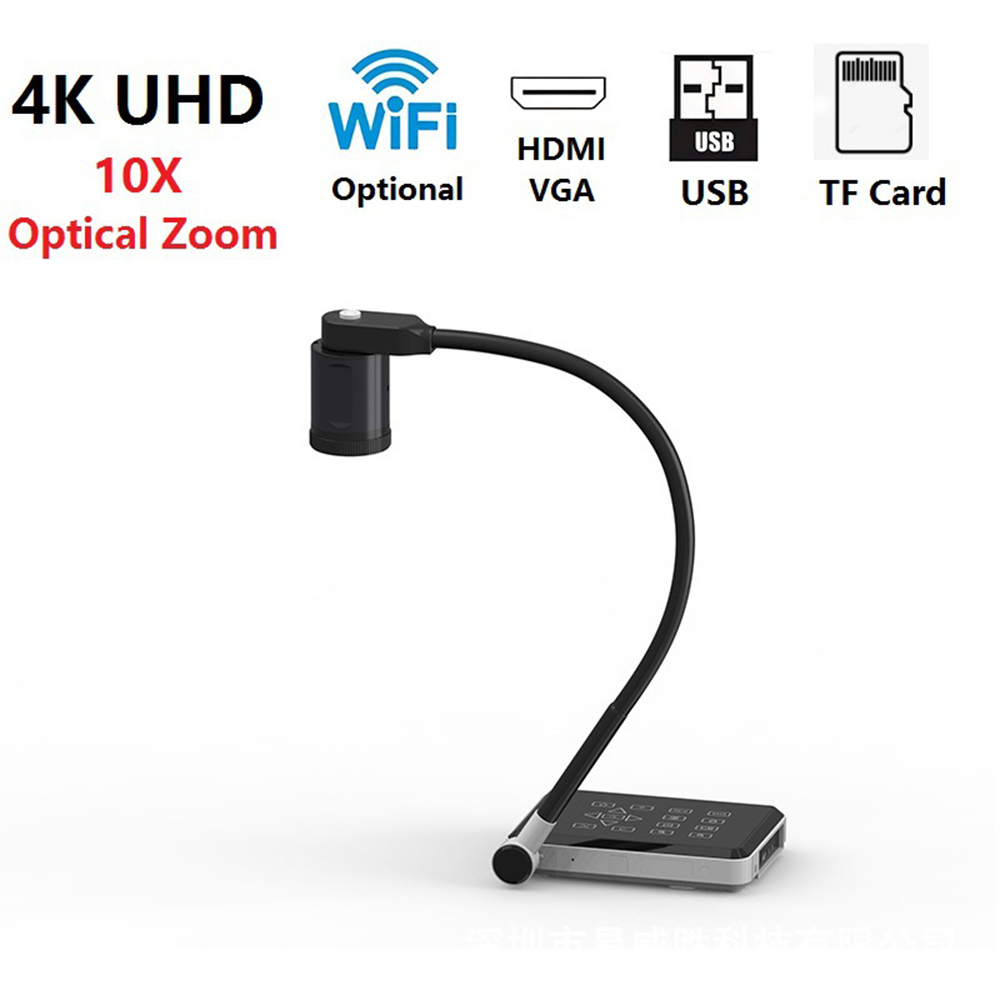
Visualized Handheld HD USB A4 Book Scanner
A flexible HD USB book scanner concept for field registration, mobile document collection and desk-side capture. It suits loan officers, school administrators and service agents who need fast image capture without a fixed overhead rig.
View product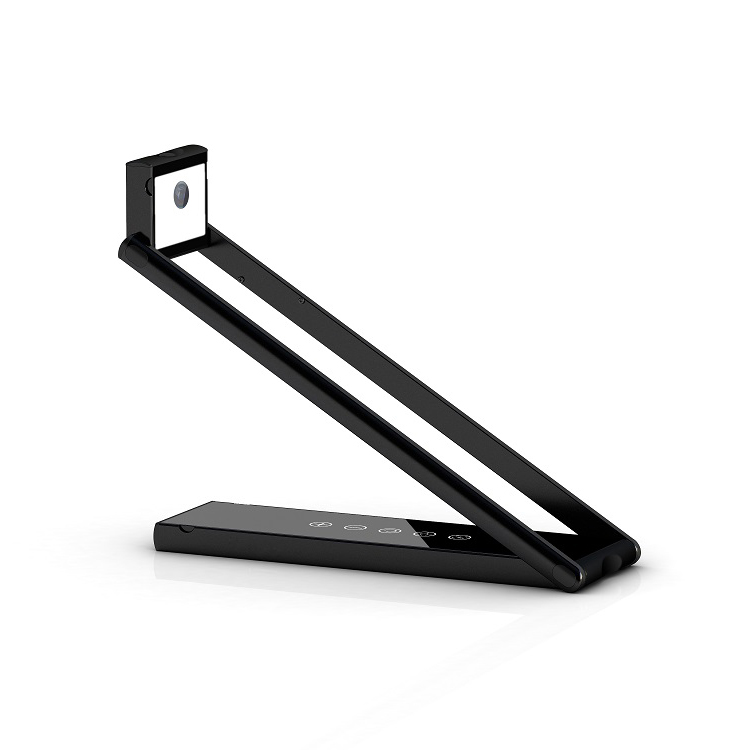
Education Equipment A3 Visual Presenter Document Camera Scanner
An A3 visual presenter for classrooms and lecture halls, supporting book, paper and object display with education-focused image controls. A familiar visualizer form factor for tenders that require stable overhead presentation and straightforward teacher operation.
View product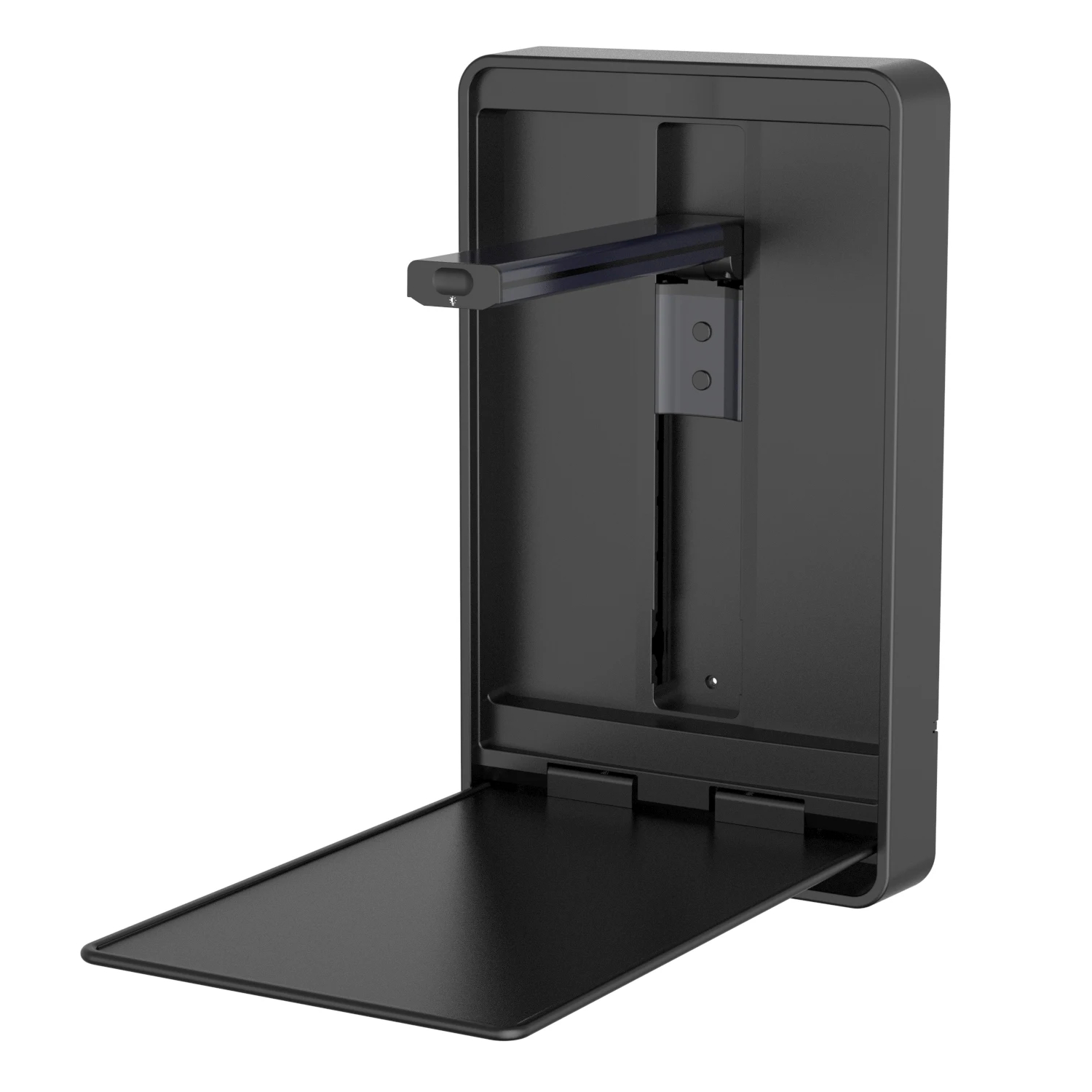
OEM 8MP Wireless Document Camera Wall-Mount Display Stand
An OEM wireless document camera and wall-mount display stand combination for classrooms, training centers and collaborative spaces where overhead capture must be permanently installed and cable routes kept clean.
View product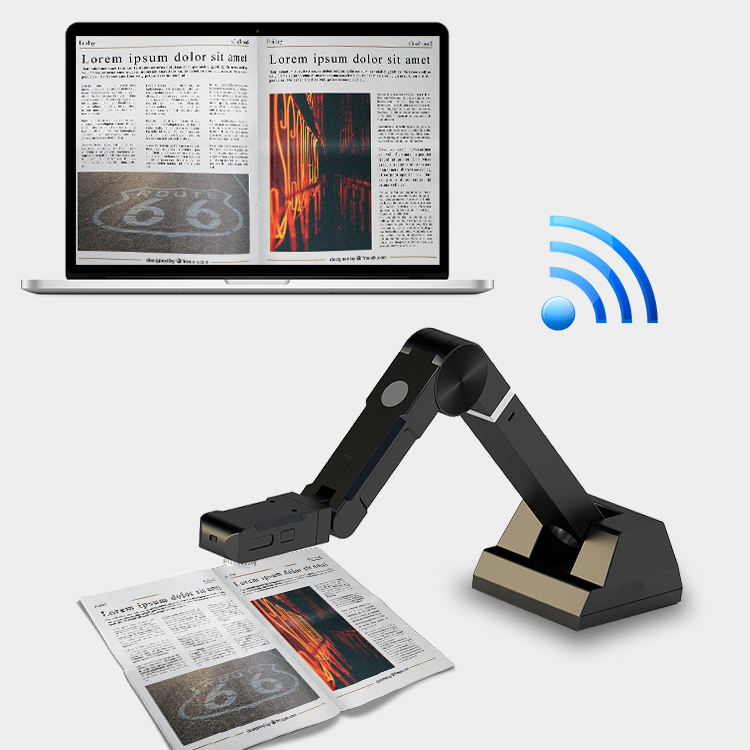
OEM USB Portable Smart Camera Visualizer with WiFi
A portable USB/WiFi smart visualizer with A4/A3 book camera capability. Built for mobile teaching, remote tutoring and multi-room sharing where lightweight deployment and wireless flexibility are more important than fixed installation.
View productNeed help matching a model to a tender specification, annual volume or private-label price band?
Send an InquiryWhy Eshuni Is a Reliable CE Certified Book Scanner Exporter
Shenzhen Eshuni Technology Co., Ltd. is a manufacturer and solution provider for information collection and identity verification. The company has designed and built imaging hardware since 2012, with in-house engineering, ERP-driven production and export experience across five major regions.

For B2B buyers, supplier selection is often less about a single unit price and more about risk-adjusted supply. A portable book scanner project can involve tender documentation, certification evidence, packaging approval, sample validation, firmware compatibility, spare-part planning and after-sales support. Eshuni’s value is that these functions sit close to the product design and production process, rather than being passed through multiple trading layers.
The company manufactures and supplies high-speed document scanners, video booths, book scanners, identity verification terminals, webcams and camera modules. These products support digital transformation in education, finance, insurance, telecommunications, government and enterprise. Core hardware and software are developed as own intellectual property and protected by national patents, while the quality system is managed under ISO9001 and product compliance covers CE, FCC, RoHS and China 3C requirements.
Production and supply-chain management are ERP-driven, which helps keep specifications, component choices, order status and quality records consistent across repeat orders. Buyers can access three levels of technical support: product design, project design and on-site project application. This structure is useful for tender bidders who must adapt a document camera to a specific classroom, counter, archive room or identity-check workflow.
Trade terms include FOB, EXW and DDP, and regular shipments reach North America, South America, Western Europe, South Asia and Africa. OEM manufacturing, product design and buyer-label production are available, with customization options that can cover logo, packaging, firmware identity, language requirements and accessory combinations. Public buyer feedback and factory verification records are also part of the commercial due-diligence trail, including a 4.8/5 average buyer rating and onsite factory verification.
OEM / ODM & Private Label
Product design, buyer-label production, packaging customization and firmware identity support for distributors and tender suppliers.
Quality System & Compliance
ISO9001 production discipline and CE, FCC, RoHS and 3C documentary support for B2B qualification and tender submission.
In-House R&D and IP
A senior engineering team covers hardware, software and application adaptation, helping buyers reduce integration risk and specification mismatch.
ERP-Driven Production
Component planning, production status and quality records are managed through an ERP workflow to support repeat orders and delivery consistency.
3-Level Technical Support
Product design, project design and on-site project application support are available for OEM buyers, integrators and public-sector deployments.
Global Trade & Delivery
FOB, EXW and DDP terms are supported, with regular shipment experience in North America, South America, Western Europe, South Asia and Africa.
2025–2028 Procurement Trends for CE Certified Portable Book Scanners
Buyer intent is shifting from “lowest price per unit” to “lowest total risk per deployment.” For importers, tender suppliers and private-label brands, the following four procurement trends are shaping RFQs today.
Compliance-First Sourcing
CE documentation is becoming a qualification item, not a logo on a brochure. Serious buyers ask for declaration of conformity, applicable test reports, model-number matching and technical-file availability before approving a supplier.
Hybrid Classroom & Counter Digitization
Demand is growing for devices that can serve both education and office workflows: HDMI direct display, USB UVC output and wireless flexibility. Portable book scanners are increasingly specified for remote teaching, public counters and archive rooms.
Resolution Segmentation
8MP remains cost-effective for A4 pages and live classroom demonstration; 13MP suits A3 sheets and fine print; 48MP is reserved for engineering drawings and archival work. Buyers are consolidating platforms to reduce SKU complexity.
Total Cost of Ownership
Installation, mounting, spare parts, firmware maintenance and warranty response now carry more weight. Wall-mount and modular designs are favored because they reduce service visits and simplify school or agency-wide rollouts.
Procurement Priority Index for Portable Book Scanner RFQs
Illustrative planning index for B2B specification discussions. It reflects typical RFQ weighting patterns, not a market forecast.
Information gain for buyers: request the CE declaration of conformity and test report package with the exact model list before comparing quotations. A lower unit price can become expensive if the documentation cannot support the tender or customs review.
What Will Define the Next Generation of Portable Book Scanners
The next buying cycle will reward suppliers who can combine image quality, interoperability and compliance evidence. These six development directions are already visible in OEM discussions for education, government and enterprise imaging projects.
Higher Resolution with Better Efficiency
13MP to 48MP sensors will continue to move into mainstream document scanning, but buyers will also demand better low-light behavior, auto exposure and noise control. Resolution without usable image quality adds cost without improving teacher or counter workflows.
Interface Convergence
VGA, HDMI and USB3.0 will coexist with UVC plug-and-play and 5.8GHz wireless. The practical goal is one hardware platform that can serve a projector, a computer, a video conference room and a mobile teaching setup with minimal adapter complexity.
AI-Assisted Capture
Autofocus, deskew, auto-crop, page detection, OCR and object recognition are becoming practical at the edge. For B2B buyers, the important questions are firmware transparency, privacy policy, update control and whether AI features can be disabled for regulated environments.
Multi-Camera and Biometric Integration
Dual-camera systems that capture a document and a person at the same time are expanding in government, banking and telecom identity workflows. Finger vein, palm print and facial recognition modules must be designed for stable integration rather than treated as accessories.
Portable and Modular Form Factors
Handheld, foldable, wall-mount and desktop visualizer formats will continue to segment. Importers should avoid over-customizing a single enclosure and instead plan a modular family that shares sensors, firmware and spare parts across multiple sales channels.
Compliance and Sustainability
CE technical files, RoHS material control, recyclable packaging, repairability and long firmware support are becoming commercial requirements. Buyers should include these points in the supplier scorecard before the first production order.
How to Select the Right CE Certified Portable Book Scanner
Use this quick comparison to align a model with the capture area, software environment and installation style of your project. For formal tenders, confirm the final sensor, interface, accessory list and compliance scope in the quotation.
| Recommended Model | Typical Sensor / Format | Best-Fit Procurement Scenario | Product Page |
|---|---|---|---|
| WG133AF-HV V508 Three-Mode Document Camera | 13MP · A3 material · VGA / HDMI / USB | Classroom visualizer, training room, hybrid teaching and Mac/Windows environments | View |
| OEM USB Document Camera Visualizer | 5MP / 8MP / 13MP · USB | Tiered education and office programs requiring one OEM platform across price bands | View |
| 48MP USB3.0 Autofocus Scanner | 48MP · A3 / A4 · USB3.0 | Engineering drawings, archive digitization, fine print and high-detail document capture | View |
| Dual 1080P Biometric Camera Module | Dual 1080P · face, palm vein and finger vein | Identity verification terminals, access-control kiosks and government or banking counters | View |
| Visualized Handheld HD USB A4 Book Scanner | HD · A4 · USB | Field registration, mobile document collection and desk-side customer onboarding | View |
| Education Equipment A3 Visual Presenter | A3 book and paper · visual presenter | Classroom and lecture-hall tenders requiring a familiar overhead presenter format | View |
| OEM 8MP Wireless Wall-Mount Document Camera | 8MP · wireless · wall-mount stand | Permanent classroom installation, training centers and cable-managed collaboration spaces | View |
| OEM USB Portable Smart Camera Visualizer with WiFi | Portable · USB / WiFi · A4 / A3 | Remote tutoring, mobile teaching and multi-room sharing with lightweight deployment | View |
Selection principle: choose 8MP for A4 pages and general classroom demonstration, 13MP for full A3 sheets and fine print, and 48MP when archival or engineering detail must remain legible after zooming. Choose USB for fixed desks and counters; choose 5.8GHz wireless when teachers or agents need freedom of movement.
8-Point RFQ and Due-Diligence Checklist
Use this checklist to compare suppliers on evidence rather than presentation. It is especially useful for public tenders, private-label launches and multi-site rollouts.
Verify CE documentation. Request the declaration of conformity, applicable test reports and exact model list. Confirm that the quotation model matches the compliance file.
Define capture area. Confirm whether A4 is sufficient or whether A3, bound books, objects or engineering drawings must be captured at the same time.
Test autofocus and light tolerance. Ask for sample video or a live demonstration under classroom lighting, counter lighting and low-light conditions.
Confirm interface compatibility. Check VGA, HDMI, USB2.0, USB3.0, UVC, operating system drivers and whether 5.8GHz wireless is required.
Review software and firmware. Confirm language support, firmware update process, splash-screen customization and any SDK or integration requirement.
Plan power and mounting. For wall-mount or permanent installations, verify power route, stand dimensions, cable management and installation accessories.
Audit quality system and IP. Check ISO9001 status, factory verification, patent ownership, testing process and outgoing quality records.
Model after-sales support. Agree on warranty terms, spare-part availability, DOA handling, technical response time and production lead time before purchase order release.
Frequently Asked Questions from B2B Buyers
These are the questions most often raised by importers, tender suppliers, school distributors and OEM brand owners during the specification and quotation stage.
Does Eshuni offer OEM and ODM document cameras, book scanners and webcams?
Yes. Eshuni offers OEM manufacturing, product design services and buyer-label production. The in-house R&D team supports product design, project design and on-site project application. Customization can include logo, packaging, firmware identity, language requirements and accessory combinations depending on the model and order plan.
Which certifications do your products and factory hold?
The factory operates an ISO9001 quality management system, and products carry CE, FCC, RoHS and China 3C certifications where applicable. Hardware and software are developed in-house and protected by national patents. For tender or customs review, buyers should request the declaration of conformity and test reports for the exact model being purchased.
Should I choose an 8MP or 13MP portable book scanner?
An 8MP sensor is sufficient for A4 pages, textbooks and live classroom demonstrations. A 13MP sensor is recommended when capturing full A3 sheets, fine print, engineering drawings or archival scans where every detail must remain legible after zooming. If the workflow includes small text, detailed diagrams or high-detail archive work, consider 13MP or higher.
What is the difference between USB and 5.8GHz wireless document cameras?
USB models are plug-and-play and usually draw power from the computer, making them ideal for fixed desks, counters and computer labs. 5.8GHz wireless models let teachers or agents move freely around the room; the 5.8GHz band is typically less congested than 2.4GHz, which can give a more stable live image in busy school or office networks.
Which trade terms and markets do you support?
Eshuni accepts FOB, EXW and DDP delivery terms and regularly ships to North America, South America, Western Europe, South Asia and Africa. The recommended term depends on buyer experience, destination customs process, shipment volume and whether the project requires door-to-door delivery.
How can buyers verify CE compliance for a tender?
Ask the supplier for the declaration of conformity, applicable EMC and safety test reports, RoHS documentation and the exact model list covered by the file. Check that the product label, model number and quotation match. For regulated or high-value tenders, also request the technical file contact path and confirm that the documentation can be provided in the required language.
What is the MOQ, sample lead time and production lead time?
MOQ, sample lead time and production lead time depend on the model, customization level and component supply at the time of order. Provide the target model, annual volume, branding requirements and delivery date so the sales and engineering team can confirm the current schedule. For tender projects, start sample validation early enough to allow packaging and documentation review.
Can you customize the housing, packaging, firmware or wall-mount accessory?
Yes, customization is possible for suitable order volumes. Typical requests include buyer logo, retail packaging, language files, firmware splash screen, accessory kits, stand configuration and wall-mount parts. The engineering team will confirm feasibility, tooling requirements, validation steps and schedule after reviewing the target specification.
Which industries use these portable book scanners and document cameras?
Common applications include education, government service counters, finance and insurance KYC workflows, telecom real-name registration, enterprise paperless offices and archive digitization. Portable and wall-mount formats are also used in training centers, remote teaching, library scanning and mobile registration projects.
Build Your Next CE Certified Portable Book Scanner Program
Share your target capture area, preferred resolution, interface requirements, annual volume, tender date, certification scope, packaging language and whether you need a handheld, desktop or wall-mount configuration. Our engineering and export team will recommend a suitable model and customization route.