8 Digital Book Scanners for Wholesale Review
The eight models below cover the main buying intents we see from importers, tender suppliers, school distributors, system integrators, and private-label brands. Each product page preserves the original factory URL so buyers can compare specifications without losing the source reference.
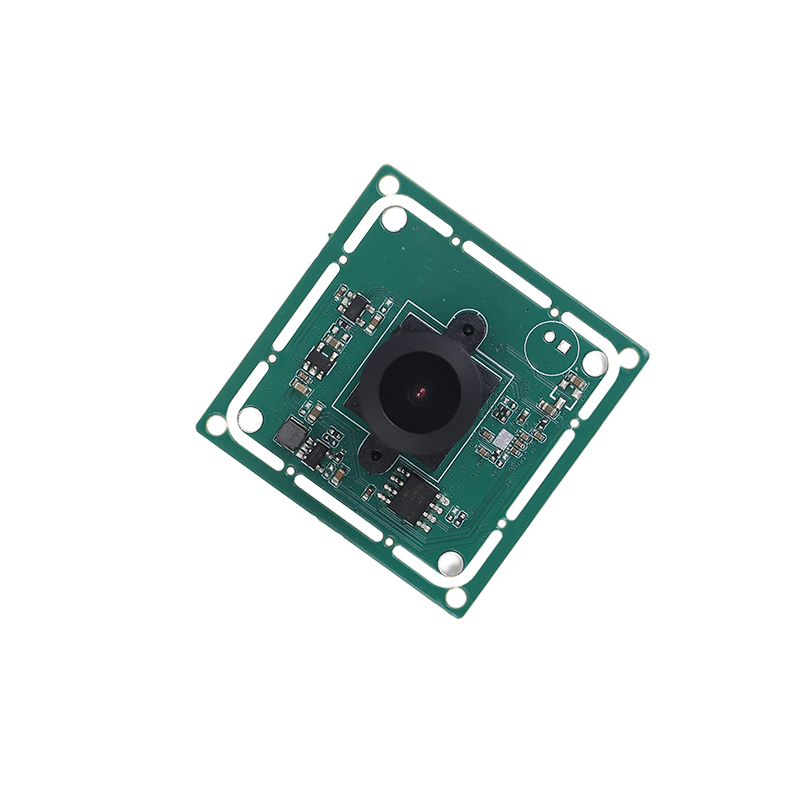
1080P 30FPS USB HD portrait shooting camera module with macro recognition, fixed focus, and optional auto focus
Suited to kiosks, ID capture, bank-card reading, and close-up document imaging where macro focus and a fixed or auto-focus lens must be specified at the enclosure level.
View product details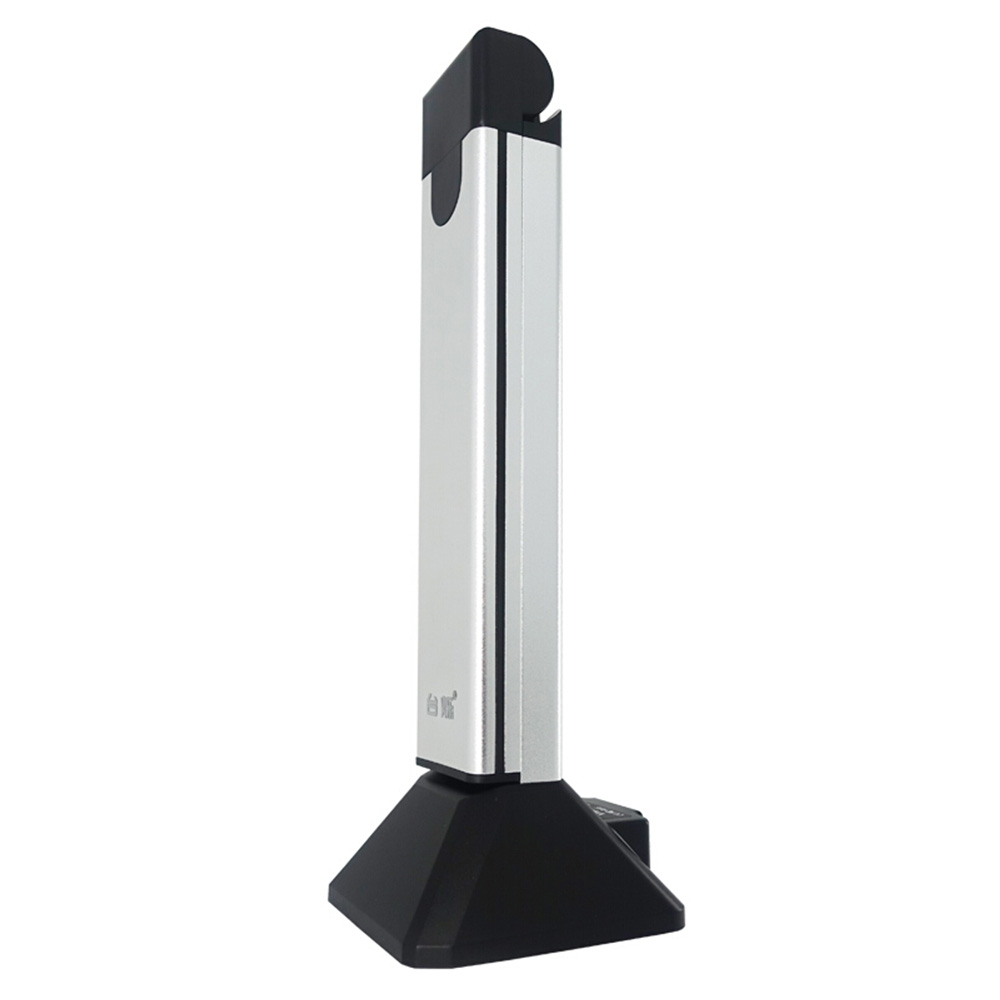
Document camera page camera high speed page scanner for online educational equipment
A classroom-oriented page camera for live teaching, remote lessons, and visual presentations. The high-speed page workflow helps schools capture textbook content without slowing a lesson.
View product details
CMOS sensor 1080P 30fps USB2.0 camera module monocular wide dynamic range camera module with ultra-low light performance
An embedded camera module for OEM document cameras, kiosks, and compact visualizers that need balanced exposure and usable images in dim service counters or mixed classroom lighting.
View product details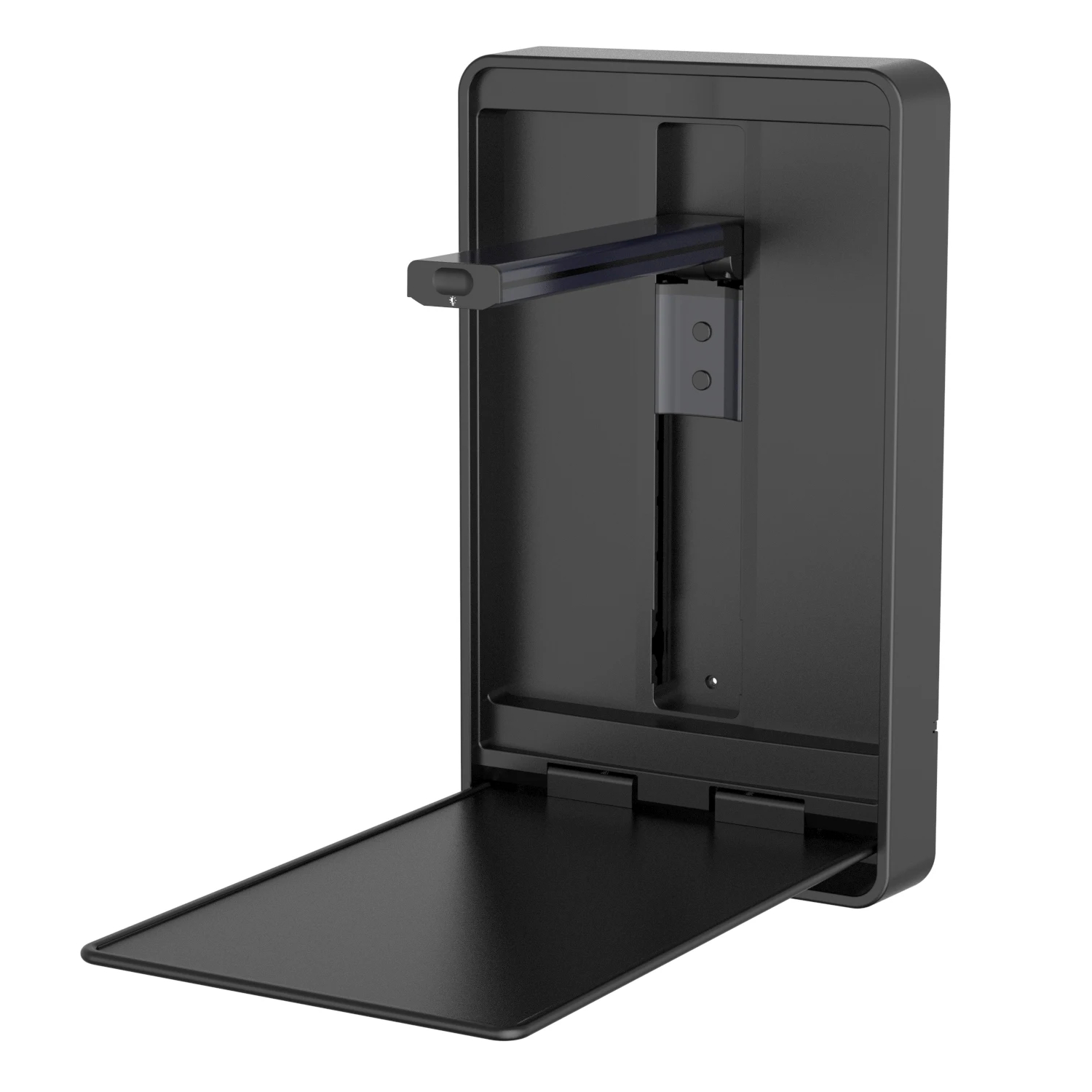
Document Camera OEM Factory 8M Education Display Stand for Wireless Document Camera Scanner, Wall Mounted Video Display Stand
A fixed-installation education display stand for wireless document camera projects. The wall-mount format supports permanent classroom deployment, cleaner cabling, and OEM branding.
View product details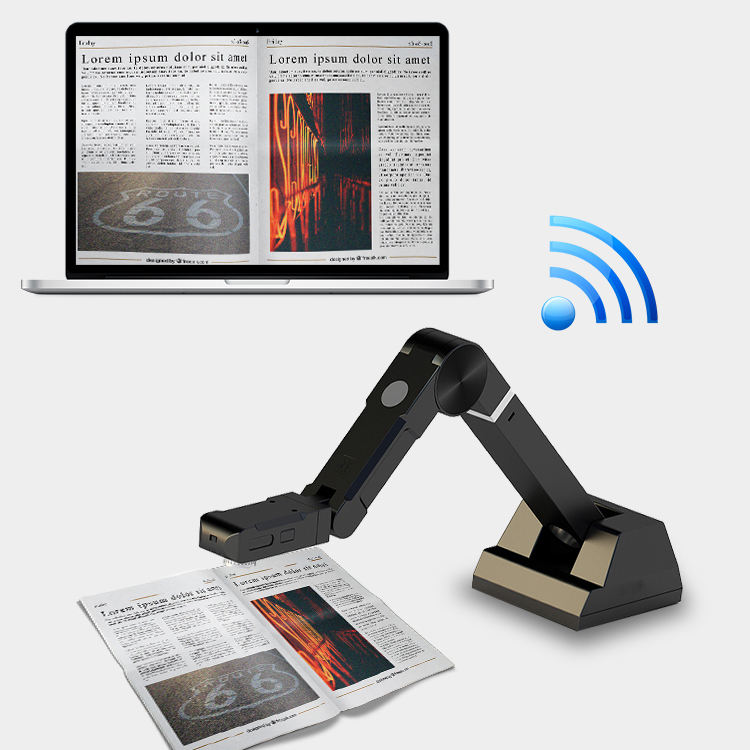
Visualized Handheld Hd Usb A4 Book Scanner A3 Automatic Management Document Scanner Camera
For mobile enrollment, library service, field documentation, and customer-facing desks. The handheld and USB-based design keeps setup simple while supporting A4 and A3 capture tasks.
View product details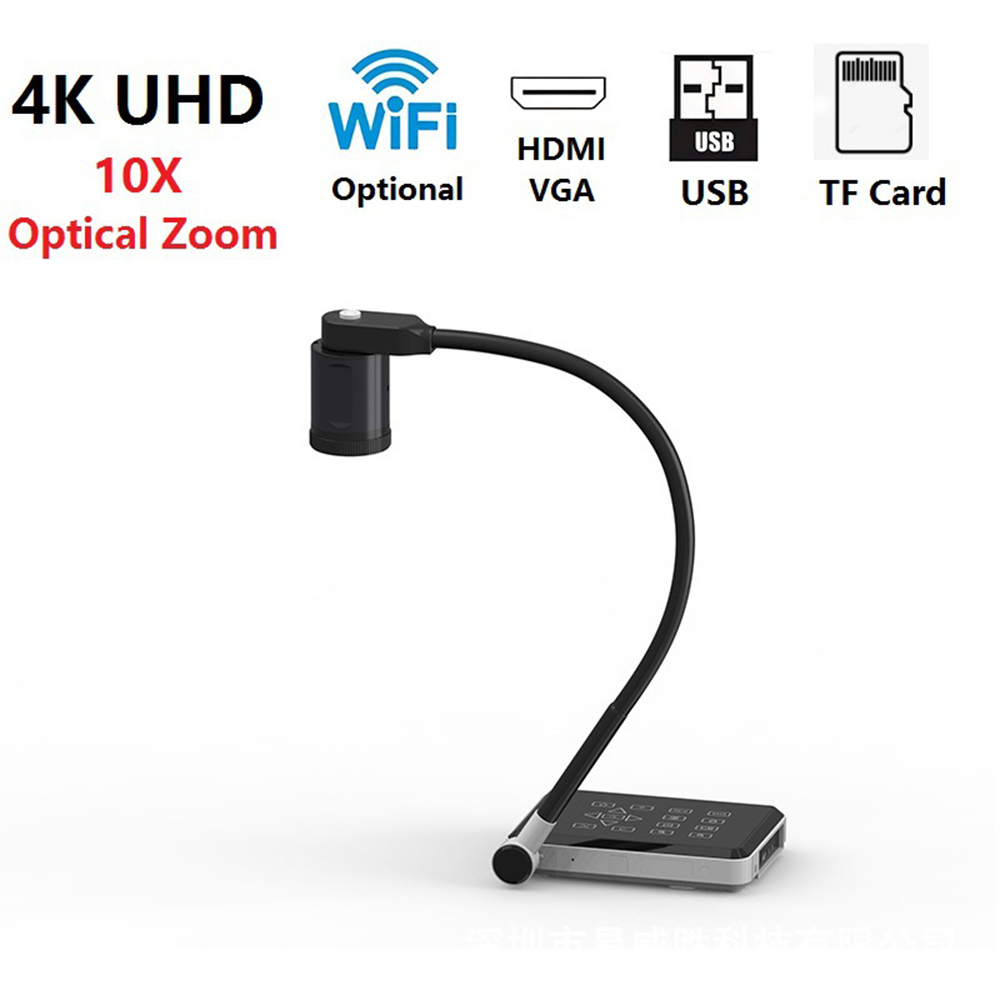
Visualized Handheld Hd Usb A4 Book Scanner A3 Automatic Management Document Camera Scanner
A practical A3/A4 visualizer scanner for office digital filing, teaching, and service counters. USB connectivity reduces deployment friction for buyers standardising multiple sites.
View product details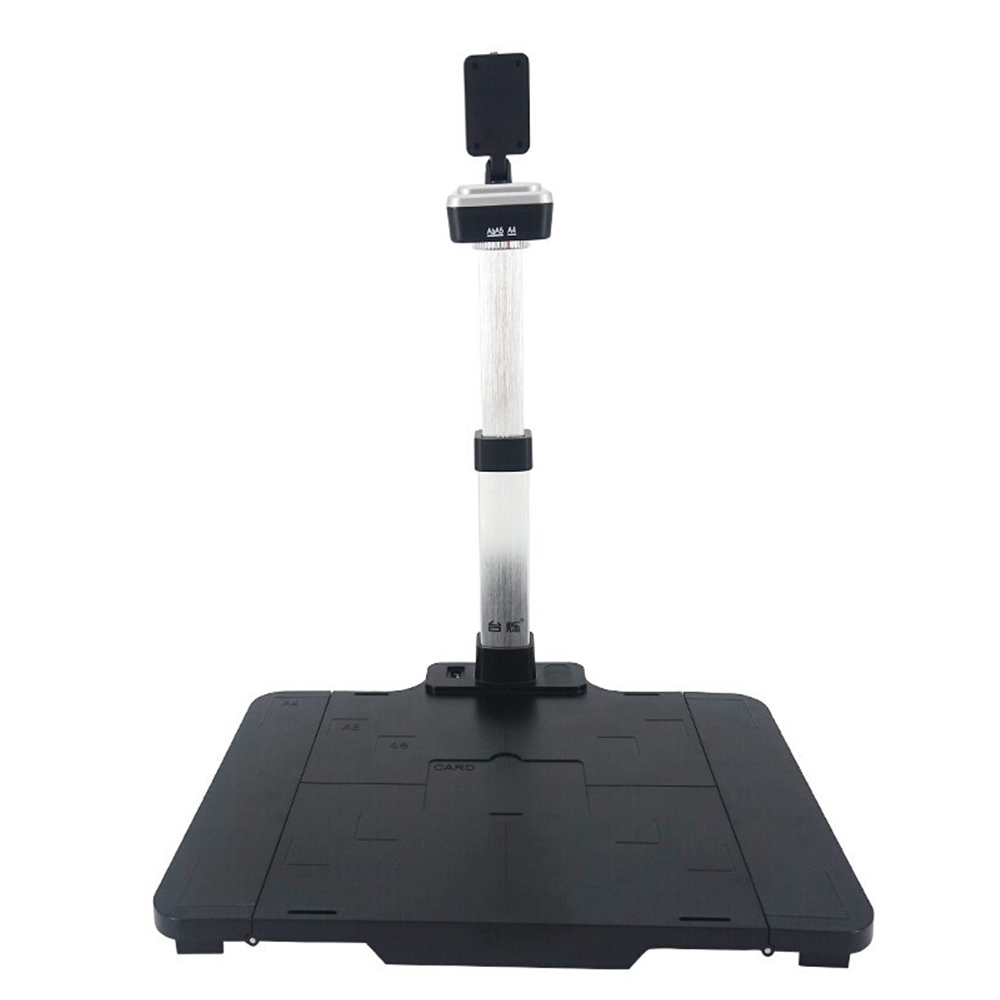
OEM HD 5MP double Camera Document camera Scanner For Government document camera
A dual-camera scanner concept for government, bank, and telecom counters that need both the document and the applicant context captured in one service workflow. OEM adaptation is available.
View product details
Document Camera Scanner 48MP Usb3.0 Autofocus A3 A4 Office Scanning and Classroom Visualizer
A high-resolution A3/A4 scanner for archives, engineering drawings, and classroom visualizers where text must remain readable after zooming into fine print or detailed diagrams.
View product detailsSelection Matrix: Match Scanner Architecture to Buyer Intent
Wholesale buyers do not all need the same scanner. A school distributor, an archive project, a government counter program, and an OEM device maker evaluate different risks. This matrix turns vague product interest into a specification brief.
Hybrid Classrooms and Live Teaching
Prioritise an A3/A4 visualizer with true auto-focus, low-latency USB or 5.8GHz wireless video, stable overhead mounting, and easy teacher controls. Validate UVC compatibility with interactive panels, laptops, and lesson software before a tender submission.
Library, Archive, and Back-Office Digitization
Select a high-resolution overhead scanner when fine print, bound books, drawings, or multi-page records must remain legible after cropping and OCR. Ask for sample images at 200% zoom, not just sensor megapixels, and confirm page-flattening workflow.
Government, Banking, and Telecom Counters
Dual-camera document scanners reduce separate capture steps when an operator must record an ID, a form, and the applicant context. Buyers should confirm counter workflow, software integration, privacy policy, and service response before volume deployment.
OEM and Embedded Vision Teams
Camera modules are the better starting point when the final product needs a custom housing, lens angle, FPC layout, fixed or auto-focus behavior, low-light tuning, or wide dynamic range. Lock the mechanical and firmware interfaces before tooling.
Future Procurement Trends for Digital Book Scanner Wholesalers
The next buying cycle will reward suppliers who can prove workflow value, not only quote an image sensor. Procurement teams are already asking for integration evidence, privacy design, actual sample capture, and lifecycle support.
Workflow-First Tenders
Buyers increasingly write requirements around capture speed, software compatibility, OCR handoff, teacher training, and support response. A scanner that cannot integrate with the buyer's existing document management or classroom platform creates hidden cost, even if the hardware price is low.
AI-Assisted Capture and OCR
Page detection, dewarping, shadow cleanup, glare suppression, and OCR pre-processing are becoming practical requirements. Suppliers should demonstrate how much processing happens on-device and how the output improves legibility for real textbooks, forms, and handwritten notes.
Privacy-by-Design for IDs and Faces
When a document camera also captures identity documents or faces, data handling becomes a purchasing issue. Wholesalers should request clear statements on local processing, encryption, retention, audit logs, and whether the device can operate without sending images to an external cloud.
Wireless Reliability, Not Just Wireless
5.8GHz wireless models can offer a less congested link than crowded 2.4GHz networks, but performance still depends on site conditions. Serious buyers ask for latency data, pairing process, interference handling, and a fallback USB mode for high-stakes classrooms.
Multi-Camera Convergence
One-device workflows are growing in government, finance, and telecom counters. A dual-camera document scanner can capture the form and the user simultaneously, reducing queue time. Procurement teams should test operator steps, not only resolution, because process friction drives adoption.
Supply-Chain Evidence and Lifecycle Cost
Certification files, patent evidence, production control, packaging specifications, spare-part planning, and firmware update policy now sit beside price in supplier evaluation. A low unit cost cannot compensate for delayed certification or missing after-sales support.
Product Development Trends in Document Camera and Book Scanner Manufacturing
The winning products will combine optical quality, driverless connectivity, application software, and serviceability. Buyers should evaluate the complete imaging stack rather than treating the camera as a standalone accessory.
Usable Detail Instead of Megapixel Theatre
8MP, 13MP, and 48MP sensors only create value when paired with competent lenses, accurate focus, low distortion, and controlled illumination. Ask suppliers to show printed text at 100%, 200%, and 400% zoom under classroom and office lighting.
Auto-Focus, Glare Control, and Page Flattening
Bound books create curved pages, shadows, and reflections. Next-generation scanners need fast focus, wide dynamic range, and software-assisted cleanup. For library use, a slightly slower scan with excellent legibility is more valuable than a fast but unreadable image.
Driverless USB-C/UVC and Open SDKs
USB-C and UVC video reduce installation barriers across Windows, macOS, Linux, and Android environments. For larger projects, buyers should request SDK access, API documentation, firmware configuration options, and confirmation of how updates are distributed.
Edge AI and Local Processing
On-device detection, OCR, redaction, and image enhancement can improve privacy while reducing bandwidth. The practical question is not whether AI is mentioned, but whether the output is consistent, auditable, and usable inside the buyer's workflow without specialist training.
Modular OEM Platforms
Private-label buyers benefit when sensor, lens, housing, lighting, wireless module, packaging, and firmware defaults can be configured without rebuilding the entire product. Modular design also improves repair and spare-part planning for distributors.
Sustainability and Serviceability
Retail and institutional buyers increasingly ask about packaging, energy use, repairability, and documentation. A supplier that can provide clear material specifications, replaceable modules, and stable firmware support is easier to defend in long-term framework agreements.
Enterprise Advantages Behind the Digital Book Scanner Supply
Shenzhen Eshuni Technology Co., Ltd. has manufactured information-capture and identity-verification hardware since 2012. The advantage is not a slogan; it is the combination of application engineering, certified production, OEM/ODM flexibility, and export experience.
Application-Led R&D Since 2012
Our engineering team develops document cameras, visualizers, high-speed scanners, ID scanners, webcams, and camera modules around real workflows in education, finance, insurance, telecom, government, and enterprise.
OEM/ODM with Three Support Levels
We support OEM manufacturing, product design, buyer-label production, project design, and on-site project application support. This helps wholesalers and integrators move from a sample request to a repeatable branded programme.
In-House Hardware and Software IP
Core hardware and software are developed in-house and protected by national patents. For buyers, this means clearer engineering communication when firmware defaults, enclosure details, or imaging behaviour need adjustment.
Quality System and Certifications
The factory operates an ISO9001 quality management system. Products carry CE, FCC, RoHS, and China 3C certification where applicable, giving distributors a stronger evidence base for tender and retail compliance reviews.
ERP-Driven Production Control
ERP-supported production and supply-chain management help keep material planning, assembly status, and order visibility aligned. That control matters when wholesale buyers need predictable lead times across mixed product ranges.
Imaging and Identity Verification Experience
Our product scope includes high-speed document scanners, book scanners, visual presenters, wireless visualizers, identity-verification terminals, webcams, and camera modules, allowing us to advise on adjacent hardware needs.
Export-Ready Trade Terms
We accept FOB, EXW, and DDP terms and regularly ship to North America, South America, Western Europe, South Asia, and Africa. Packaging, labelling, and documentation can be aligned with destination-market requirements.
Verified Trade Record and Buyer Feedback
Our trade profile documents buyer ratings, onsite verification, and export history. Wholesalers can review feedback and trade capacity before placing a volume order, then request a sample validation plan for their own market.
For buyers comparing factory-direct offers, request the same sample image set, certification list, integration document, packaging plan, lead time, and after-sales commitment from every supplier. A consistent evidence pack makes the decision measurable.
From Capture Brief to Wholesale Production
Use this four-step framework to reduce specification risk before committing to a digital book scanner order. It is the same sequence our engineers use when converting a buyer enquiry into a workable product configuration.
Define the Real Capture Task
Record document size, book thickness, page curvature, daily volume, lighting conditions, operator skill, required resolution, and whether ID or face capture is included. A clear brief prevents over-specification and hidden usability problems.
Validate Software and Hardware Integration
Test UVC video, driver requirements, operating systems, SDK access, OCR handoff, network behaviour, and interactive-panel compatibility. Integrators should verify the exact laptop, display, and software stack used at deployment.
Demand Evidence, Not Assurances
Request sample images under realistic lighting, certification copies, inspection records, packaging specifications, firmware version details, and warranty terms. Test fine print at zoom and confirm that the selected model is repeatable in mass production.
Scale with a Controlled OEM Plan
Lock the golden sample, logo and packaging artwork, firmware defaults, accessory list, MOQ, lead time, spare-part plan, and support process. A pilot batch protects both the distributor and the factory before full wholesale release.
Frequently Asked Questions from Digital Book Scanner Buyers
These answers address the recurring commercial and technical questions raised by importers, tender teams, school suppliers, and OEM product managers.
What is a digital book scanner, and how is it different from a flatbed scanner?
A digital book scanner uses an overhead camera to capture pages without pressing a bound book flat. This reduces spine stress and speeds up capture for fragile books, textbooks, and files. The trade-off is that lighting, page curvature, glare, and software cleanup must be evaluated with real sample pages.
Should I choose 8MP, 13MP, or 48MP?
8MP is usually sufficient for A4 teaching and live visualizer use. 13MP is a better fit for full A3 sheets and finer classroom content. 48MP is appropriate for archives, engineering drawings, and high-value records where text must remain legible after zooming. Always compare sample images, not only the sensor number.
USB or 5.8GHz wireless: which is better for schools?
USB is stable, powered by the host device, and simpler to secure for fixed desks and examination rooms. 5.8GHz wireless supports teacher mobility and flexible room layouts. The 5.8GHz band is often less congested than 2.4GHz, but buyers should still confirm latency, pairing, and fallback options.
Can you customize a scanner for our private label or OEM programme?
Yes. OEM/ODM support can cover product design, housing or mounting changes, logo and packaging, buyer-label production, firmware defaults, and application support. The exact scope depends on the model, volume, certification route, and target market, so a written specification should be agreed first.
Which integration standards should we check before ordering?
Check UVC video support, operating-system compatibility, driver requirements, SDK availability, API documentation, OCR or image-processing handoff, and network security requirements. For education deployments, also verify interactive-panel and learning-software compatibility using the exact hardware model planned for installation.
Which certifications and quality evidence can the factory provide?
The factory operates an ISO9001 quality management system, and products can carry CE, FCC, RoHS, and China 3C certification where applicable. Buyers should request the certificate copies relevant to the selected model, plus sample images, inspection documents, packaging specifications, and patent or IP evidence if required.
What trade terms and export markets do you support?
We support FOB, EXW, and DDP delivery terms and regularly ship to North America, South America, Western Europe, South Asia, and Africa. For tender or retail programmes, confirm destination labelling, voltage or plug requirements, documentation language, and packaging marks before production starts.
How should we run a pilot before a wholesale order?
Start with a sample tested under the buyer's real lighting and software conditions. Then run a small pilot batch in the field, track setup time, image quality, operator feedback, and failure points. Lock a golden sample and document firmware, accessories, packaging, and inspection criteria before mass production.
Request a Factory-Backed Digital Book Scanner Recommendation
Send your capture brief — document size, book type, daily volume, connection preference, software environment, certification target, branding plan, and estimated order quantity. Our engineering team will recommend a standard model or an OEM/ODM route, then outline the sample validation steps before a wholesale commitment.