In-House R&D
14+ years focused on document cameras, visualizers and imaging hardware.
Certified Quality
ISO9001 management system with CE, FCC, RoHS and China 3C certification.
OEM / ODM / Private Label
Product design, project design and buyer-label production support.
Export-Ready Delivery
FOB, EXW and DDP terms with regular shipments to five major regions.
Eight Production-Ready Document Camera Webcam Platforms
The eight platforms below are current OEM/ODM starting points, not catalog-only placeholders. Each can be evaluated as a sample, adapted for buyer-label packaging, and specified for education, office, government, or remote-teaching workflows.

HD Camera Portable Visualizer Presenter Document Camera for Presentation Equipment Book Camera
A compact visual presenter for classrooms, training rooms and sales demonstrations. The foldable arm supports overhead book and object capture, while the HD live image keeps handwriting and small components legible.
View product
China Document Camera A3 Portable Wireless 13mp Visualizer Document Camera
A3 wireless visualizer with 13MP resolution for buyers who need full-sheet clarity after zoom. Suitable for large-format drawings, detailed textbooks and hybrid lessons where the teacher moves around the room.
View product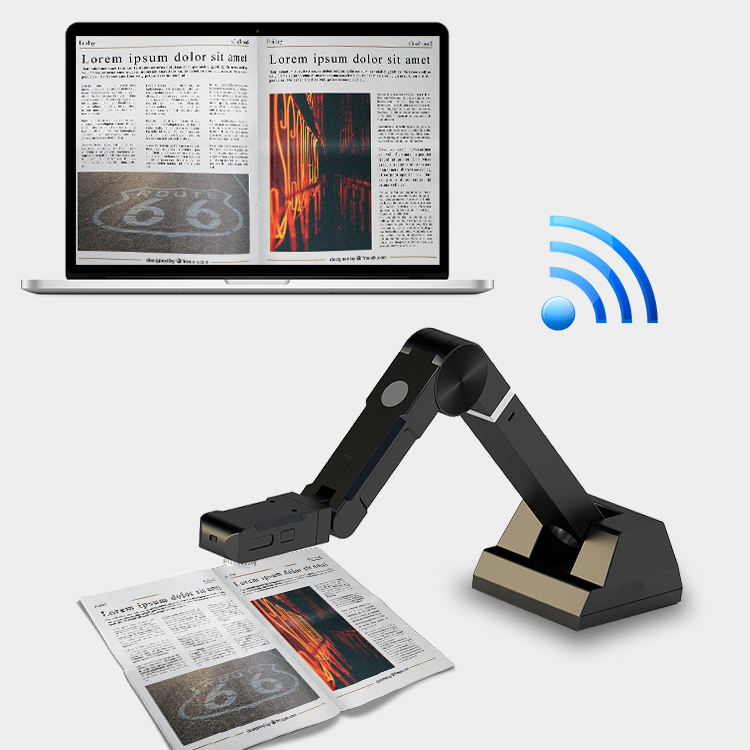
OEM USB Portable Smart Camera Visualizer Wifi A4 A3 Document Camera Visualizer for Education Book Camera
Dual-connectivity education visualizer for tenders that require both plug-and-play USB and flexible wireless capture. The model is suited to book demonstration, remote tutoring and classroom projection.
View product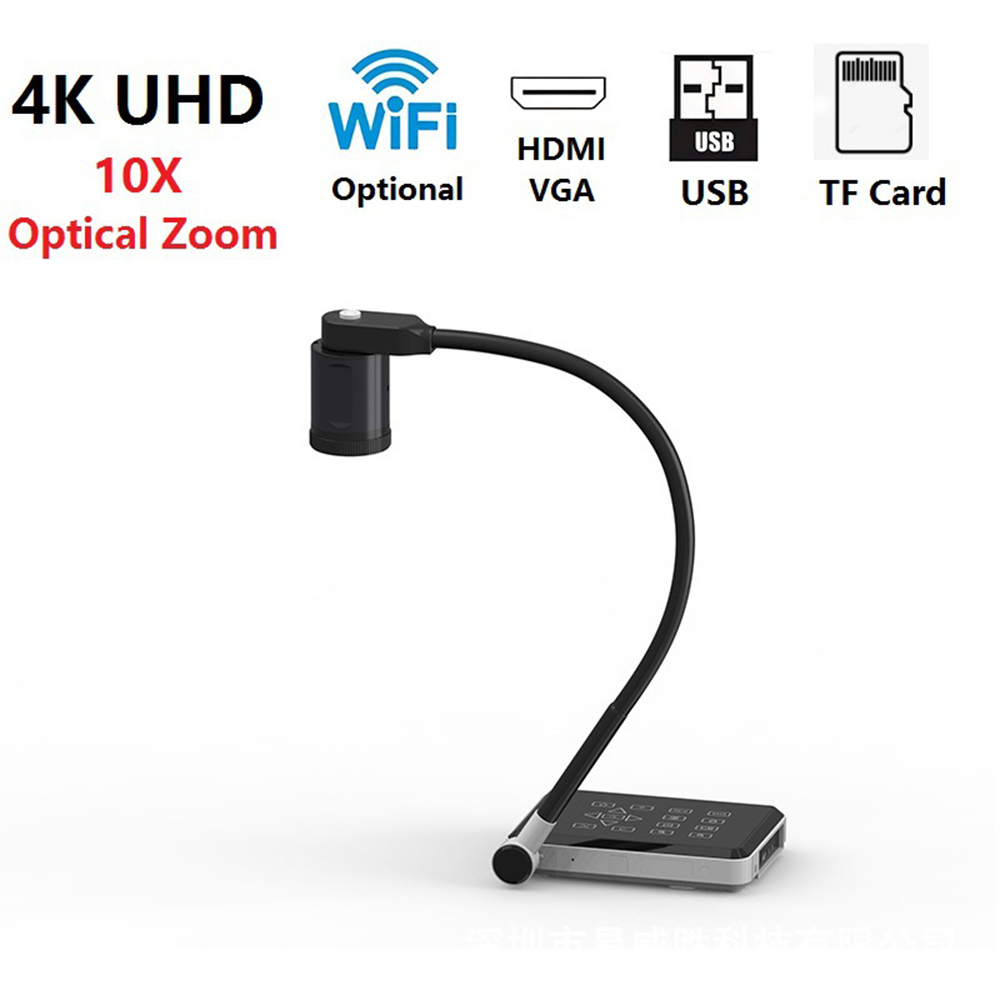
Visualized Handheld Hd Usb A4 Book Scanner A3 Automatic Management Document Camera Scanner
A USB document camera scanner for office digitization and service counters. It supports overhead capture of contracts, forms and bound books, and is intended for workflows that need repeatable image capture.
View product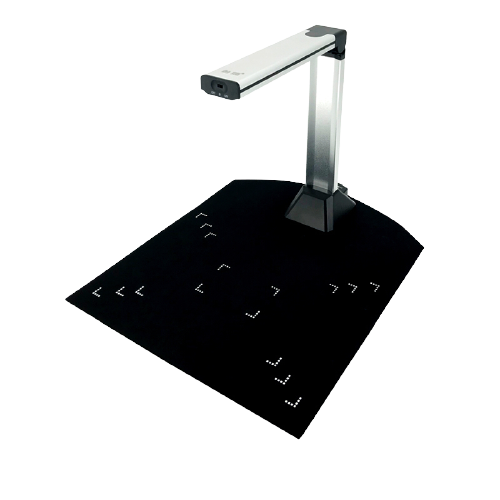
Portable OEM 8MP document camera Visual presenter for education equipment camera scanner
Value-focused 8MP visual presenter for standard A4 teaching and textbook capture. A practical platform for education distributors and private-label brands that need dependable supply at volume.
View product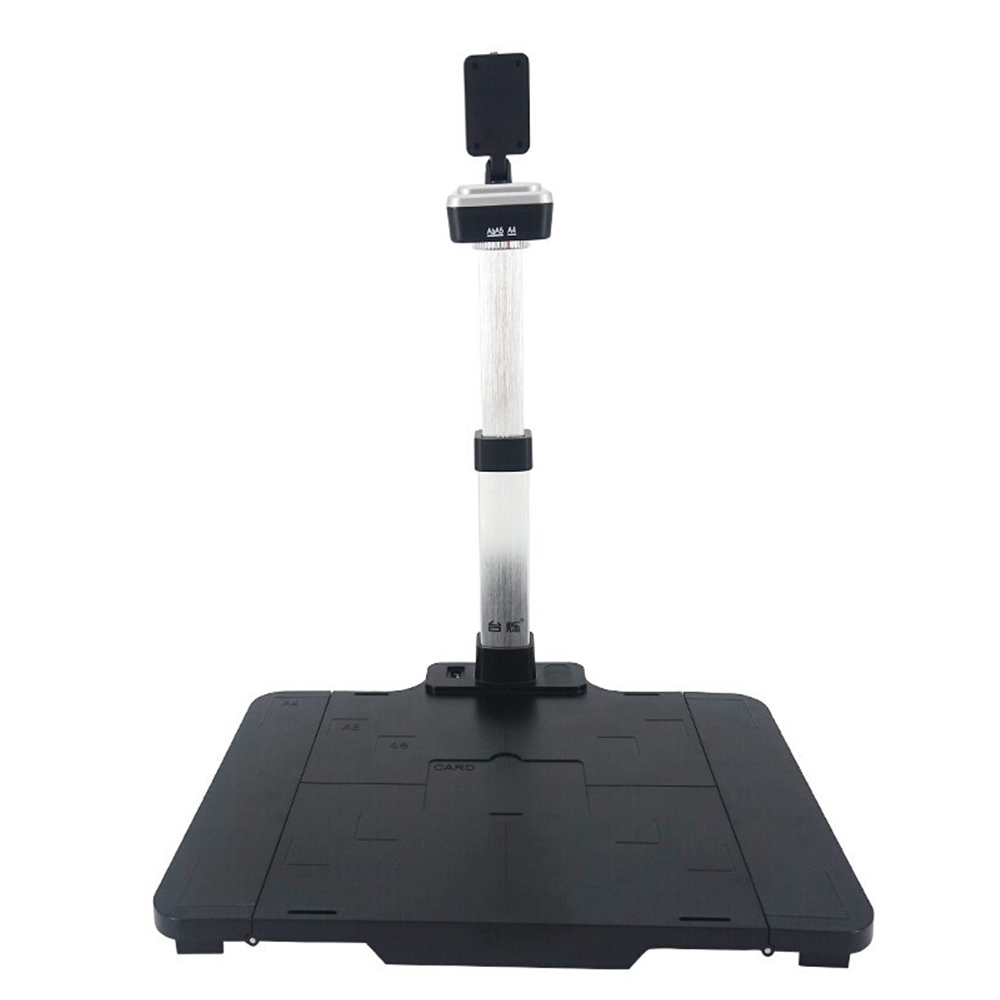
OEM HD 5MP double Camera Document camera Scanner For Government document camera
Dual-camera document scanner designed for counters that must capture the document and the person in one workflow. Relevant to identity checks, applications and public-service document intake.
View product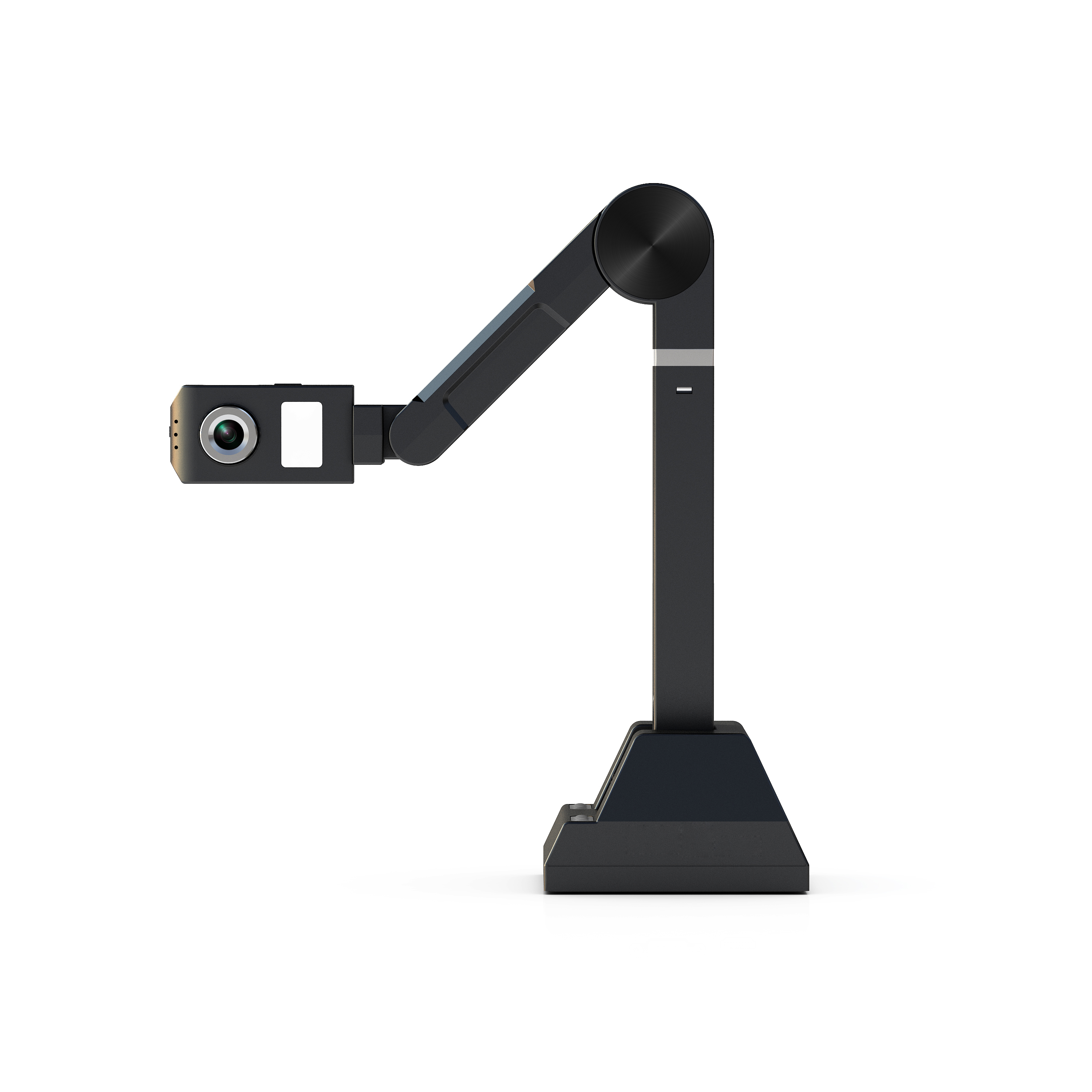
New design HD Camera 8MP 13MP auto focus Document Camera Scanner online educational equipment
Auto-focus document camera platform for online education and projection. Buyers can specify sensor level by application, with 8MP for A4 lessons and 13MP where fine print or A3 sheets must remain sharp.
View product
Visual Presenter HD Camera 8MP 13MP auto focus Document Camera Scanner online educational equipment book camera
An auto-focus visual presenter for book capture, demonstrations and remote instruction. The platform suits distributors that want one housing concept across several resolution and connectivity options.
View productWhat Serious B2B Buyers Now Expect from a Document Camera Webcam Manufacturer
Document camera and webcam procurement has shifted from a device purchase to a workflow decision. The buyer is not simply comparing megapixels; the buyer is qualifying an image pipeline, a compliance file, a firmware policy, and a supply partner.
From classroom projector accessory to infrastructure device
Education buyers expect visualizers to work with interactive displays, video conferencing tools, learning-management systems and remote teaching platforms. Government buyers expect document capture to integrate with identity checks, application processing and records management. Enterprise buyers expect plug-and-play USB behavior and predictable support.
In a 2025 RFQ, the technical conversation rarely stops at 8MP versus 13MP. More useful questions include: How legible is the image after 4x zoom? How fast is auto focus under low contrast? Does the device suppress flicker under LED lighting? Does the 5.8GHz link stay stable in a crowded school? Can the firmware be locked or updated with a documented process?
Evidence beats assertion in the E-E-A-T era
A manufacturer claim is only useful to a procurement team when it is tied to evidence. For Eshuni, that evidence includes an ISO9001 quality management system; CE, FCC, RoHS and China 3C certifications; in-house hardware and software development; national patents; a factory area of more than 3,000 m²; 100+ employees; ERP-driven production; and export experience across five major regions.
This is why our sales conversation starts with the application, the destination market and the model-specific certificate scope. Compliance is not a logo sheet; it is a match between the exact model, adapter, radio module and market requirement.
Image-chain evidence
Request sample footage at the target light level, color temperature and capture distance. Evaluate A4 and A3 legibility after digital zoom, focus speed, glare behavior and color consistency.
Compliance evidence
Match certificate documents to the precise model, power adapter and wireless configuration. Ask for the certificate scope before artwork, packaging or mass production is locked.
Software governance
Agree UVC behavior, privacy requirements, firmware change control and service access before tooling. This is especially important for classroom and identity-capture deployments.
Supply continuity
Validate sample lead time, mass-production plan, spare-part availability, packaging efficiency and replacement-model planning. These factors often matter more than a small unit-price difference.
Product Procurement Trends Shaping the 2025–2028 Buying Cycle
The next tender cycle will reward suppliers who make the product easier to qualify, deploy and maintain. The following four trends are already visible in education, government and enterprise imaging projects.
Hybrid learning infrastructure
Classrooms are specifying visualizers that work with interactive displays, conferencing software and remote-observation platforms. Buyers increasingly ask for UVC compatibility, a clear mounting strategy and consistent color under LED lighting. Test the device in the actual classroom, not only in a demo room.
AI as a workflow feature
Auto-framing, page detection, OCR hand-off and glare reduction are moving from marketing features to workflow requirements. The credible question is where processing occurs: on device, on host software, or in a cloud service. Each option has privacy, latency and total-cost-of-ownership implications.
Security and privacy by design
Document cameras often capture identity papers, handwritten notes and minor students. Buyers are adding privacy-shutter clauses, local-storage controls, firmware-update policies and data-return obligations to purchase terms. Model-specific documentation is becoming part of the technical file.
Dual sourcing and TCO
Importers are reducing single-source risk by qualifying two models from one manufacturer or two suppliers. The decision will depend less on unit price and more on sample speed, failure analysis, spare-part availability, warranty administration and container-level packaging efficiency.
RFQ scorecard buyers are likely to apply
Eshuni project-team RFQ weighting model, illustrative; adjust the percentages to your tender, market and application.
From Megapixel Race to Workflow Fit
For most buyers, the useful question is not “what is the highest resolution?” but “what image and connectivity architecture fits the task?” The best OEM platform is the one that can be qualified, customized and supported without creating hidden costs.
Sensor and lens co-engineering
8MP is often sufficient for A4 textbooks, worksheets and live demonstrations. 13MP earns its cost when the user must capture A3 sheets, engineering drawings, dense forms or archival pages and still read fine print after zoom. Lens quality, focus speed, distortion and illumination matter as much as the pixel count.
USB, Wi-Fi and 5.8GHz convergence
USB remains the most predictable choice for fixed desks, kiosks and government counters. 5.8GHz wireless is attractive where the presenter needs movement, but buyers should test interference, roaming and latency in the real room. Dual-mode platforms reduce SKU count for distributors.
Edge AI and assisted capture
Auto-focus is becoming table stakes. Next, buyers will evaluate page-boundary detection, de-warping for books, glare suppression and hand or object removal. These features must be auditable: what is processed locally, what is transmitted, and what can be disabled for privacy-sensitive sites.
Modularity for private label and identity convergence
OEM buyers want one core image pipeline across several housings, lenses and connectivity options. The same platform may become an education visualizer, an office book scanner or a dual-camera ID capture device. Modular design lowers tooling risk but requires disciplined BOM and firmware release control.
Product Recommendation Matrix for OEM/ODM Programs
Use this matrix as a starting point for sample selection. Final specifications should always be validated against the real installation environment, destination-market compliance and packaging requirements.
| Buyer scenario | Recommended platform | Why it fits | Procurement check |
|---|---|---|---|
| K-12 and hybrid classroom | A3 Wireless 13MP Document Camera Visualizer | Full A3 capture and 13MP detail help students see fine print, diagrams and drawings after zoom. | Test wireless latency, mount stability, glare and integration with interactive displays. |
| Library, archive and book capture | 5.8G WiFi Auto-Focus 8MP A3/A4 Book Scanner | Stable wireless capture and auto focus support bound pages, textbooks and document reproduction. | Test page curvature, glare, image export workflow and long-session stability. |
| Office and front-desk digitization | HD A4 Book Document Camera Scanner | Fast A4 overhead capture for contracts, forms and service-counter documents. | Confirm OCR or software compatibility and the physical footprint on the counter. |
| Government and bank identity intake | OEM 5MP Dual-Camera Government Scanner | Captures the document and the applicant in one workflow for counters and public-service desks. | Review data privacy, local compliance, audit-trail requirements and image-retention policy. |
| Online tutoring and remote teaching | Portable 8MP Document Camera Visual Presenter | Affordable 8MP visual presenter for A4 lessons, homework review and live explanation. | Verify UVC behavior, low-light performance and whether audio is required separately. |
| Private-label distributor range | 8MP/13MP Auto-Focus Document Camera Scanner | One housing concept can serve multiple sensor levels and buyer price points. | Define MOQ, packaging, warranty scope, label artwork and certification responsibilities. |
Need a different sensor, lens, housing, wireless module or buyer-label package? Share the application and target specification; our engineering team can translate it into a model recommendation and sample plan.
Manufacturing Authority: The Eshuni Operating Model
E-E-A-T in B2B manufacturing is not built from adjectives. It is built from operating history, in-house engineering, documentable quality systems and the ability to support a project after the sample is approved.

Founded in 2012, Shenzhen Eshuni Technology Co., Ltd. is a manufacturer and solution provider for information collection and identity verification. Our product portfolio includes high-speed document scanners, video booths, book scanners, identity verification terminals, webcams, document cameras, visualizers and camera modules.
That focus matters to B2B buyers because document-camera image quality, mechanical stability and firmware behavior are not separate problems. They are one system. A visual presenter that performs well in a sample video can still fail in a classroom if the mount drifts, the auto focus hunts under fluorescent light, or the UVC handshake is unreliable on the installed PC.
Eshuni supports digital transformation in education, finance, insurance, telecommunications, government and enterprise. Our in-house R&D team provides three levels of technical support: product design, project design and on-site project application. ERP-driven production and supply-chain management keep quality records and delivery planning connected, while core hardware and software are our own intellectual property and protected by national patents.
Quality and compliance are part of the commercial offer: an ISO9001 quality management system, CE, FCC, RoHS and China 3C certifications, plus documented manufacturing and export experience. Buyers can review our company profile, trade capacity, transaction level, trade history, credit index and buyer feedback. We accept FOB, EXW and DDP terms and regularly ship to North America, South America, Western Europe, South Asia and Africa.
Custom design with certification discipline
OEM/ODM support covers product design, packaging, buyer label and firmware-related requirements. The earlier compliance is considered, the lower the risk when tooling, artwork and mass production begin. Private-label programs should define certification ownership and model scope before the purchase order is issued.
Own hardware and software IP
Core hardware and software are developed in-house and protected by national patents. This supports faster issue resolution because the image pipeline, mechanical structure and firmware behavior are controlled by one team rather than assembled from unrelated suppliers.
Export documentation and delivery
FOB, EXW and DDP terms are available, with regular shipments to North America, South America, Western Europe, South Asia and Africa. ERP-supported production planning helps align sample approval, mass production, inspection and shipment without losing the project history.
Frequently Asked Questions Before Buying a Document Camera Webcam
These are the questions our project team receives most often from importers, distributors, tender consultants and system integrators.
Does Eshuni offer OEM and ODM document cameras and webcams?
Yes. We offer OEM manufacturing, product design services and buyer-label production. Our in-house R&D team supports product design, project design and on-site project application. The final customization scope should be defined model by model, including label, packaging, accessories and firmware-related requirements.
Which certifications do your products and factory hold?
Our factory operates an ISO9001 quality management system, and our products carry CE, FCC, RoHS and China 3C certifications. Hardware and software are developed in-house and protected by national patents. For a specific tender, always request the certificate scope that matches the exact model, adapter and wireless configuration.
Should I choose an 8MP or 13MP document camera?
An 8MP sensor is sufficient for A4 pages, textbooks and live classroom demonstrations. A 13MP sensor is recommended when capturing full A3 sheets, fine print, engineering drawings or archival scans where every detail must remain legible after zooming. The lens, focus system and lighting conditions also affect perceived image quality.
What is the difference between USB and 5.8G wireless document cameras?
USB models are plug-and-play and draw power from the computer, ideal for fixed desks and counters. 5.8GHz wireless models let teachers move freely around the room; the 5.8GHz band is often less congested than 2.4GHz, giving a more stable live image in busy school networks. Buyers should still test latency and interference in the real room.
Which trade terms and markets do you support?
We accept FOB, EXW and DDP delivery terms and regularly ship to North America, South America, Western Europe, South Asia and Africa. Destination-market compliance, packaging requirements and delivery schedules should be confirmed during the RFQ stage.
Can we customize the logo, packaging, housing or firmware-related behavior?
Yes. OEM manufacturing, product design and buyer-label production are available. The in-house R&D team supports product design, project design and on-site project application. Final customization scope, MOQ, approval milestones and certification implications should be confirmed model by model before tooling or mass production.
How do we evaluate image quality before placing a mass-production order?
Request a sample configured to your lighting, capture distance and output workflow. Test A4 and A3 legibility, focus speed, glare, color consistency, UVC behavior and wireless latency in the actual room. Agree acceptance criteria in the sample approval file so that mass production can be checked against the same standard.
What information should be included in an RFQ?
Include the application, target sensor or connectivity, capture area, quantity, packaging and label needs, certification scope, destination market, required trade term, sample deadline and warranty expectations. This lets the engineering team recommend a platform and sample plan instead of quoting a generic camera.
How should privacy be handled for classroom or identity-capture deployments?
Define whether images are processed locally or on a host, whether a privacy shutter is required, how firmware updates are controlled, and whether images are stored or transmitted. For identity capture, include data-retention and audit requirements in the technical file. Model-specific privacy decisions should be written into the purchase specification.
Planning a Tender, Private-Label Range, or Dual-Source Program?
Share your application, target specification, destination market and order plan. Our OEM project team will recommend the right document camera, visualizer, webcam or dual-camera platform — and outline the sample, compliance and packaging steps needed to move forward.
Shenzhen Eshuni Technology Co., Ltd. · OEM/ODM document cameras, visualizers, webcams, ID scanners and camera modules since 2012.