2025 B2B Sourcing Intelligence · Education Imaging
Top 10 Educational Document Camera Supplier & Exporter
A procurement-grade briefing on how tendering committees, distributors and private-label brands should shortlist suppliers — covering sensor authenticity, wireless reliability, compliance files and landed cost.
Why Educational Document Cameras Are Being Re-Specified in 2025
Buying a document camera is no longer a peripheral purchase. It is classroom infrastructure.
When an interactive flat panel fails at the front of a room, a teacher loses a screen. When an educational document camera — also sold as a visualizer, visual presenter or overhead book scanner — fails, that teacher loses the ability to mark up a handwritten essay, walk through a geometry construction, demonstrate a titration, or place a shared textbook page under thirty pairs of eyes at once. Those are the highest-evidence moments in a lesson.
Between 2010 and 2018, most tenders bought a fixed-focus USB visualizer that plugged into a projector or an interactive whiteboard. That procurement model has largely ended. Buyers now specify true 8MP or 13MP sensors, driver-free UVC output, 5.8GHz wireless freedom and edge-side AI framing, and they expect a supplier who can present certification files, answer a technical questionnaire in writing and hold a three-year spare-parts commitment. This guide is written for those buyers.
The Ten-Point Framework We Use to Rank Document Camera Suppliers
Every shortlist in this category should be scored on these ten dimensions before a sample is even requested.
Sensor Authenticity
Ask for a raw frame capture in daylight and indoors. Interpolated resolution remains the single largest misdeclaration in education imaging tenders.
Connection Fit
USB UVC, HDMI, 5.8GHz wireless and Wi-Fi AP modes serve different room layouts. A supplier who offers only one is selling hardware, not a solution.
Software & Firmware
Annotation, split-screen comparison, OCR, recording and LMS upload decide whether the teacher still uses the device in week three.
OEM / ODM Depth
Housing, silkscreen, retail packaging, firmware language, boot logo and SDK should come from one factory — not from three sub-suppliers.
Certification Files
ISO9001, CE, FCC, RoHS and 3C paperwork should be produced within days, not after the purchase order is signed.
Capacity & Lead Time
Ask for monthly line output, trial-run batch size and peak-season scheduling in writing rather than accepting a brochure figure.
Export Documentation
FOB, EXW and DDP demand different paperwork and risk allocation. Experienced exporters get HS codes and certificates of origin right the first time.
Service & Spares
Lens assemblies, LED panels and hinges wear. Require an RMA turnaround commitment and a documented spares window of at least three years.
IP Security
Original patents and in-house firmware protect your private label from takedowns, customs holds and copycat pricing pressure.
Total Cost of Ownership
Model landed cost, warranty cost, software cost and replacement rate across three years — not the unit FOB price alone.
Eight Proven Educational Document Camera Configurations
Each platform below is produced in-house and can be adapted with your logo, packaging, firmware language and bundled accessories.
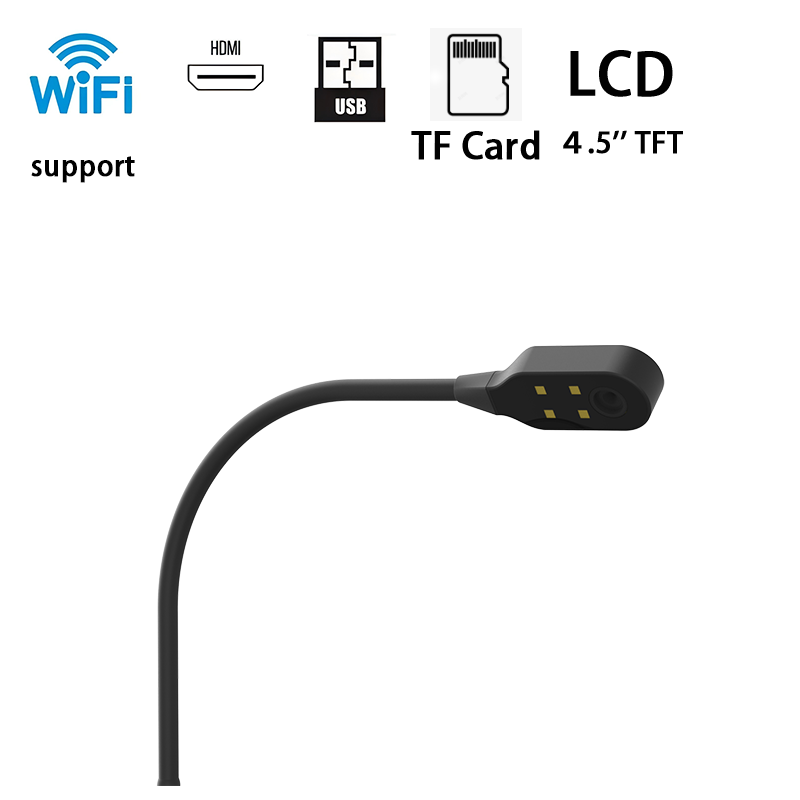
VGA + WiFi Teaching Document Camera
Dual-interface design that feeds legacy VGA projectors and modern wireless displays from one unit — the practical answer for schools modernising room by room.
View Details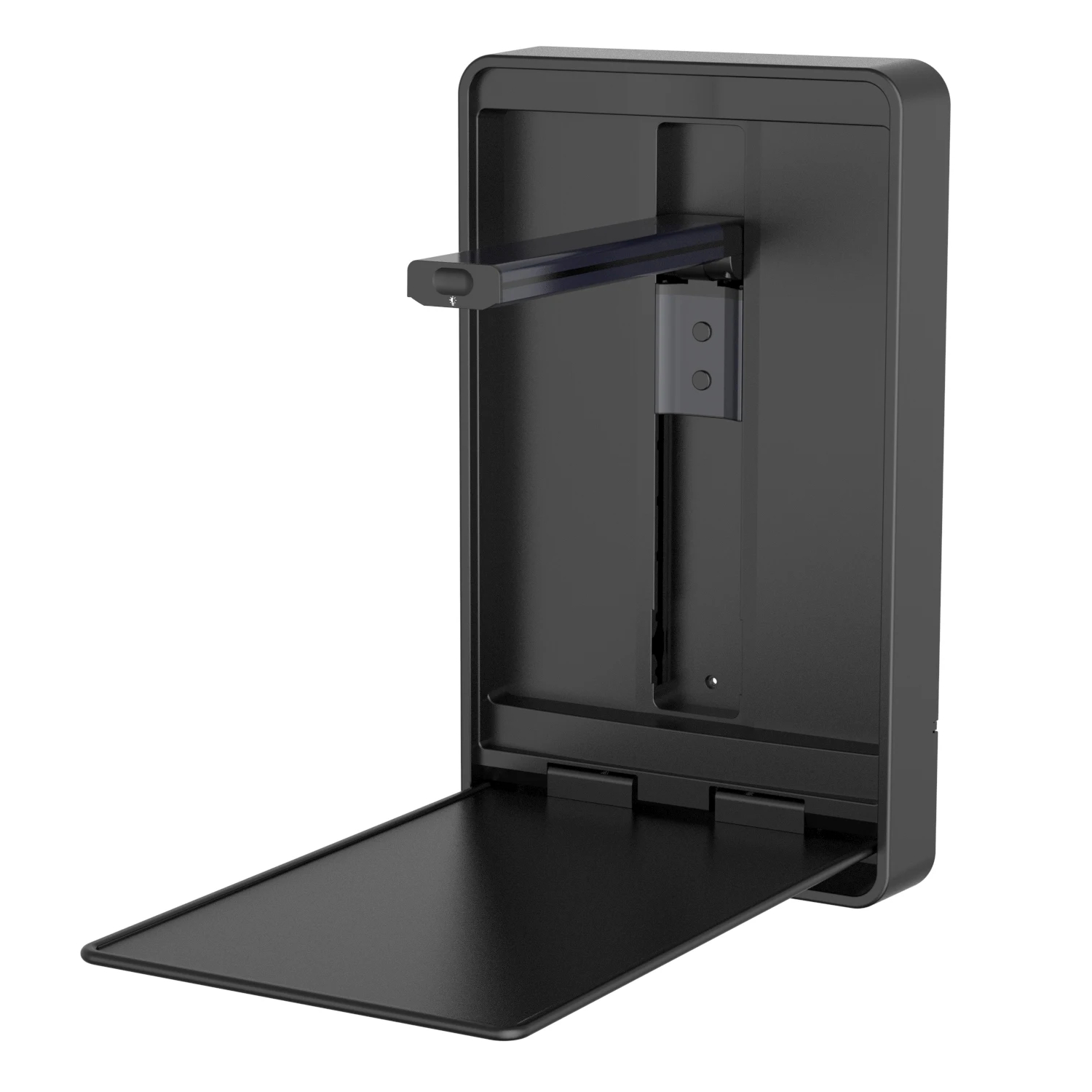
Wall-Mounted 8MP Wireless Document Camera
Fixed-installation unit for classrooms and lecture halls. Frees desk space, resists accidental knocks and delivers a stable downward view of A3 sheets.
View Details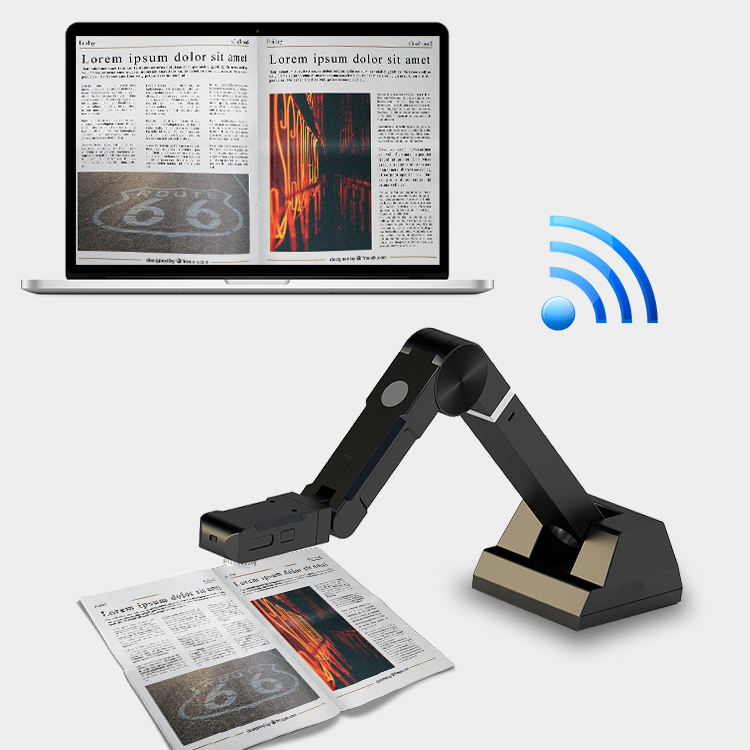
Portable USB + WiFi A3/A4 Visualizer
Dual-mode smart visualizer that switches between wired plug-and-play and wireless teaching. Ideal for travelling trainers and multi-room timetables.
View Details
HD Portable Visual Presenter
Lightweight presenter that folds flat into a briefcase. A dependable choice for training rooms, sales presentations and desktop document sharing.
View Details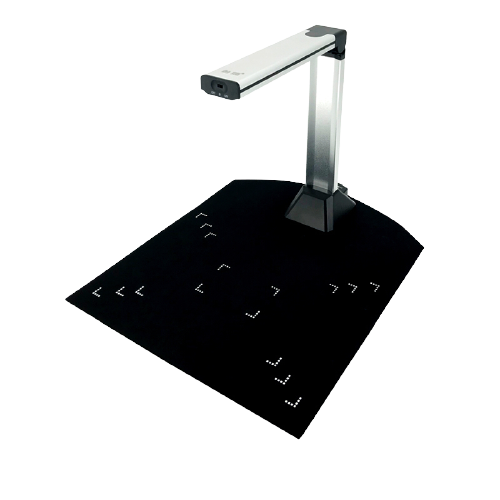
8MP Portable Document Camera
The mainstream education specification: 8MP capture, autofocus, USB output and a compact footprint that suits one-to-one tutoring as well as classrooms.
View Details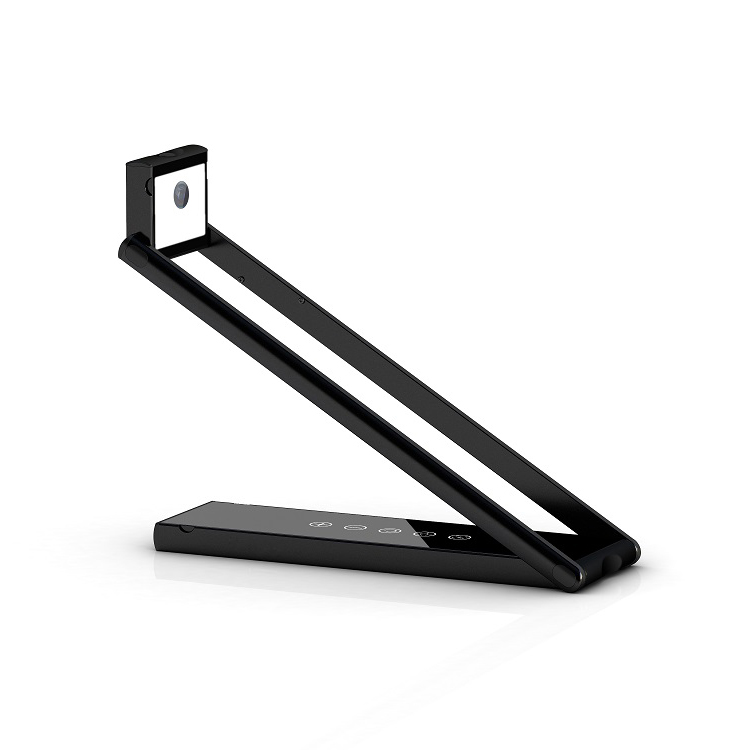
A3 Education Visual Presenter Scanner
Full A3 coverage for exam papers, wall maps, engineering drawings and two-page spreads — where a cropped A4 frame simply is not acceptable.
View Details
Wireless Robotic Frame Book Scanner
Structured frame architecture keeps bound volumes flat and square to the lens, producing cleaner OCR results in libraries and archive rooms.
View Details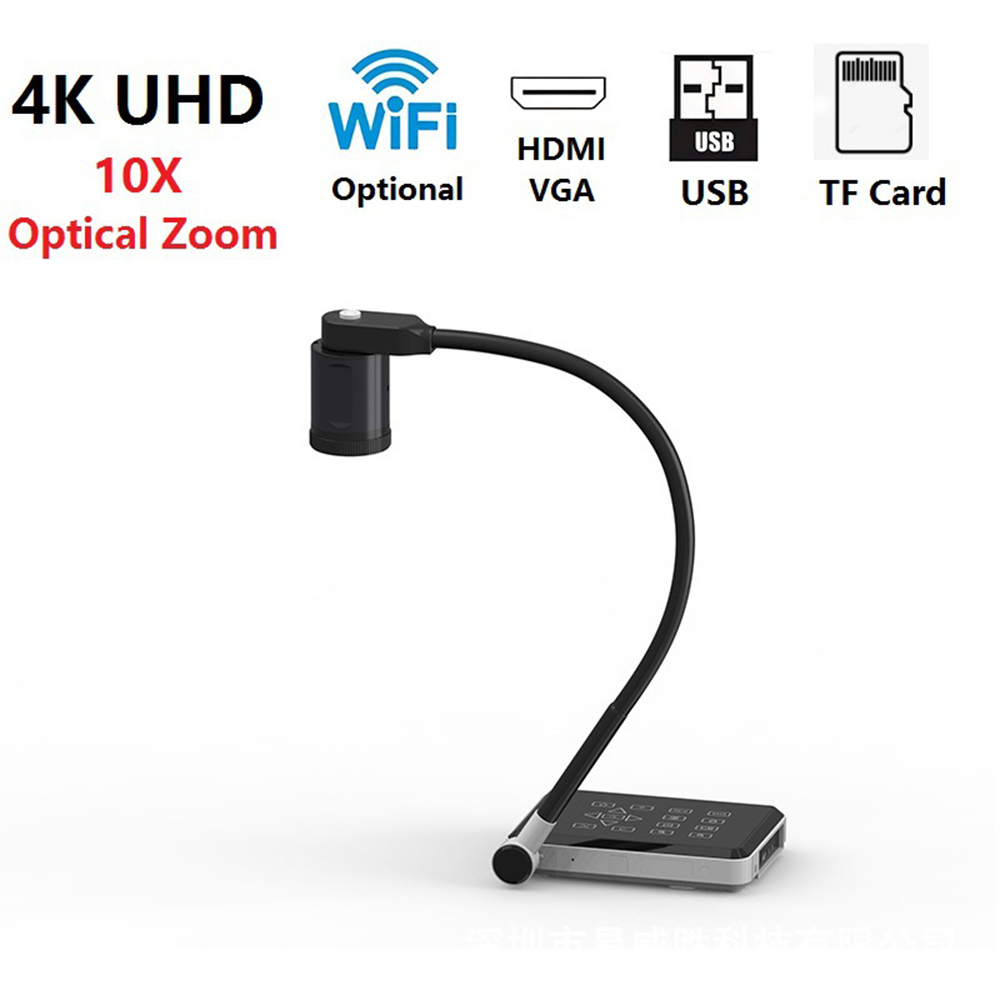
Handheld HD USB A3/A4 Book Scanner
Rapid-capture format for counters, registration desks and field surveys where documents arrive one after another and speed matters.
View DetailsWhere Classroom Visualizer Hardware Is Heading Through 2030
These six shifts are already visible in tender specifications and in the samples competing factories are circulating.
Real Resolution Keeps Climbing
8MP is now the floor, not the ceiling. Stacked CMOS sensors at 13MP and beyond are becoming the default for full A3 detail and lossless digital zoom on fine print and drawings.
AI Framing and Auto Correct
Devices now detect the page, de-skew perspective, lift contrast and lock focus on a book spine automatically, removing the manual tuning that used to interrupt a lesson.
5.8GHz Wireless as Default
A 5.8GHz link is far less congested than a school-wide 2.4GHz network, so wireless visualizers can finally sustain stable 1080P streaming in a fully occupied classroom block.
Dual-Sensor and Multi-View
Document-plus-face configurations are spreading from government and banking counters into exam invigilation, remote proctoring and hybrid attendance capture.
Driver-Free Platform Certification
Buyers increasingly require verified UVC/HID operation on Windows, macOS, ChromeOS and domestic operating systems without installing a single driver.
Privacy-First Edge AI
On-device OCR and local face detection keep classroom imagery inside the campus network, which matters for GDPR, FERPA and PDPA review during procurement.
How Document Camera Buying Will Change in the Next Buying Cycle
Purchasing behaviour is shifting faster than the hardware itself. Suppliers who cannot adapt to these six patterns will lose tenders they used to win on price.
Framework Agreements Replace One-Off Orders
Ministries and municipal education bureaus are moving to 12–36 month framework contracts with locked pricing tiers, requiring suppliers to hold stock and honour scheduled call-offs.
Dual-Sourcing Becomes Standard
Volume projects are being split 70/30 or 60/40 between two approved suppliers to de-risk logistics. Suppliers must accept partial awards without abandoning service levels.
Regional Stock and Local Service
Buyers are choosing DDP offers backed by regional warehousing and in-country repair partners over the lowest FOB quotation with a 45-day sea transit.
Lifecycle Contracts and Trade-In
Three-year warranty extensions, consumable programmes and end-of-life trade-in credits are now written directly into education tender documents rather than negotiated afterwards.
Compliance Clauses Tighten
Data localisation statements, country-of-origin declarations and EN 62368-1 safety compliance are becoming mandatory attachments, not optional nice-to-haves.
Outcome-Based Evaluation
Education buyers are increasingly scoring supplier performance on teacher training hours, adoption reporting and classroom usage data instead of hardware specifications alone.
What a Capable Document Camera Manufacturer Actually Delivers
Shenzhen Eshuni Technology Co., Ltd. is a manufacturer and solution provider for information collection and identity verification, active since 2012.
Our factory designs and builds high-speed document scanners, video booths, book scanners, identity verification terminals, document camera visualizers, webcams and camera modules under one roof. That vertical coverage matters at the procurement stage: the same engineering team that specifies the CMOS sensor also controls the firmware, the lens assembly and the retail packaging.
Devices support digital transformation across education, finance, insurance, telecommunications, government and enterprise. A senior in-house R&D team delivers three levels of technical support — product design, project design and on-site project application — tailored to the buyer's real deployment scenario rather than a generic catalogue page.
ERP-driven production and supply-chain management keep quality consistent and lead times predictable, while all core hardware and software remain our own intellectual property, protected by national patents. For a private-label buyer, that is the difference between a stable product line and a recurring compliance headache.
- OEM / ODM: custom housing, silkscreen, packaging, firmware language and boot identity.
- Quality system: ISO9001 process control across incoming, in-line and final inspection.
- Compliance: CE, FCC, RoHS and China 3C certification documentation available on request.
- Trade terms: FOB, EXW and DDP, with regular shipments to North America, South America, Western Europe, South Asia and Africa.

In-House R&D
Optics, electronics and firmware developed internally, not assembled from third-party reference designs.
Own Factory Floor
3,000+ m² production area with dedicated assembly, aging and inspection lines.
Experienced Team
100+ staff across engineering, quality assurance and export order handling.
Own IP
National patents covering core hardware and software architecture.
Matching the Camera to the Room, Not the Other Way Around
A quick reference our engineers use when helping importers and system integrators build a tender specification.
| Configuration | Resolution | Capture Area | Connection | Best Deployment |
|---|---|---|---|---|
| Wall-Mounted Wireless | 8MP | A3 / A4 | 5.8G Wireless | Permanent classroom and lecture-hall installation |
| VGA + WiFi Teaching Camera | HD | A3 | VGA / WiFi | Schools upgrading room by room |
| Portable USB + WiFi | 8MP | A3 / A4 | USB + Wireless | Teachers moving between rooms |
| HD Portable Presenter | HD | A4 | USB | Corporate training and sales demos |
| 8MP Portable Document Camera | 8MP | A4 | USB | Mainstream classroom and tutoring |
| A3 Visual Presenter Scanner | HD | A3 | USB | Exam papers, maps and drawings |
| Wireless Robotic Book Scanner | HD | A3 / A4 | Wireless | Library and archive digitisation |
| Handheld USB Book Scanner | HD | A4 / A3 | USB | Service counters and field registration |
Need a different sensor, lens, housing colour or bundled software? The OEM team can adapt any platform above to your written specification.
Educational Document Camera Buying Questions, Answered Plainly
The questions that appear most often in first-round supplier questionnaires.
Should I specify an 8MP or a 13MP document camera?
What is the practical difference between USB and 5.8GHz wireless models?
Do you offer OEM and ODM production for document cameras and webcams?
Which certifications does the factory and product range hold?
What is a typical MOQ and lead time?
Can I order samples before committing to volume production?
Which trade terms and export regions do you support?
How is warranty and after-sales handled for private-label orders?
Can the software and on-screen menus be localised?
How do I compare quotations fairly when specifications look identical?
Request a Specification Review and Quotation
Send us your tender document, target classroom scenario or private-label brief. Our engineering team will return a matched configuration, a certification pack and a landed-cost breakdown within two working days.
Get a Quote