Why Osaka Is a Strategic Market for China Document Camera Wholesalers
Osaka is not a single sales channel. It is a dense procurement ecosystem made up of municipal education boards, private schools, universities, vocational colleges, banks, insurance offices, ward offices, hospital groups, publishers, libraries, AV integrators and trading companies. Each buyer searches with a different intent: some need a classroom visualizer for A4 worksheets, some need an A3 book scanner for archive digitization, and others need an OEM camera module for a local hardware brand.
For China-based manufacturers and wholesalers, the winning offer is rarely just a low unit price. Osaka buyers compare image legibility after zooming, Windows/macOS/ChromeOS compatibility, Japanese documentation, electrical and radio compliance, sample speed, spare-parts policy and delivery to Kansai. A supplier that can answer those questions before the first quotation becomes a long-term partner rather than a one-off exporter.
This guide is written from the perspective of Shenzhen Eshuni Technology Co., Ltd., a manufacturer of information-capture and identity-verification hardware since 2012. It combines product recommendations with practical local scenarios, Osaka market trends, compliance considerations and FAQ answers that importers and project buyers commonly raise.
8 Document Camera & Visualizer Models for Osaka Buyers
These models cover the most common Osaka procurement briefs: classroom visualizers, A3 book scanners, 13MP teaching cameras, 48MP office scanners, USB plug-and-play document cameras and OEM camera modules. Product URLs are preserved for direct evaluation.
Visualized Handheld HD USB A4 Book Scanner – A3 Automatic Management Document Camera Scanner
- USB
- A4/A3
- Book capture
Flexible overhead capture for school offices, textbook digitization and counter-top document registration where staff need fast images without a flatbed scanner.
Best for: Osaka school offices, libraries and front-desk digitization.
View product details
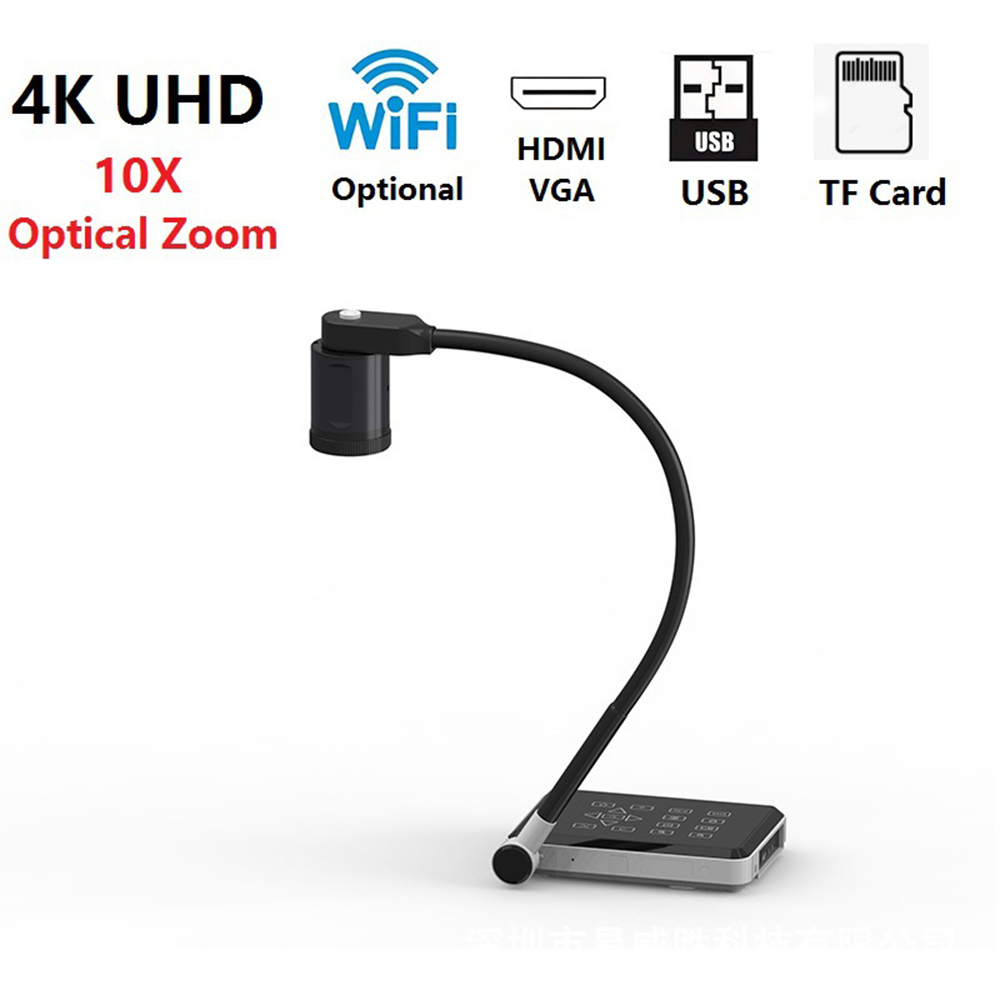
WG133AF-HV V508 VGA/HDMI/USB Three Mode 13MP Document Camera for Teachers, Mac, Windows
- 13MP
- VGA/HDMI/USB
- Mac/Windows
A three-mode document camera for classrooms and training rooms that still use projectors, interactive whiteboards or hybrid meeting displays.
Best for: Osaka universities, cram schools and corporate training rooms.
View product details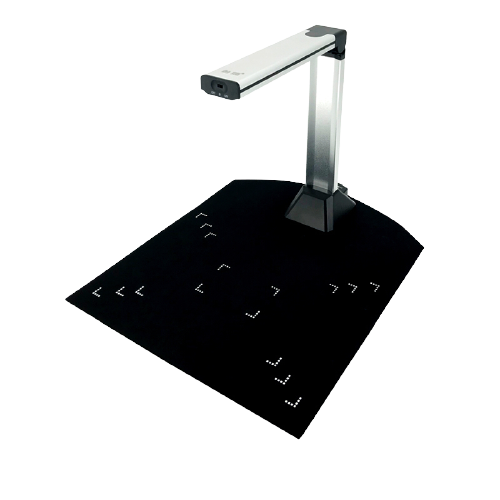
Portable OEM 8MP Document Camera Visual Presenter for Education Equipment Camera Scanner
- 8MP
- Portable
- Education
A compact visual presenter for teachers who move between classrooms and need a simple, reliable A4 teaching camera with low deployment friction.
Best for: primary schools, tutoring centres and mobile teaching teams.
View product details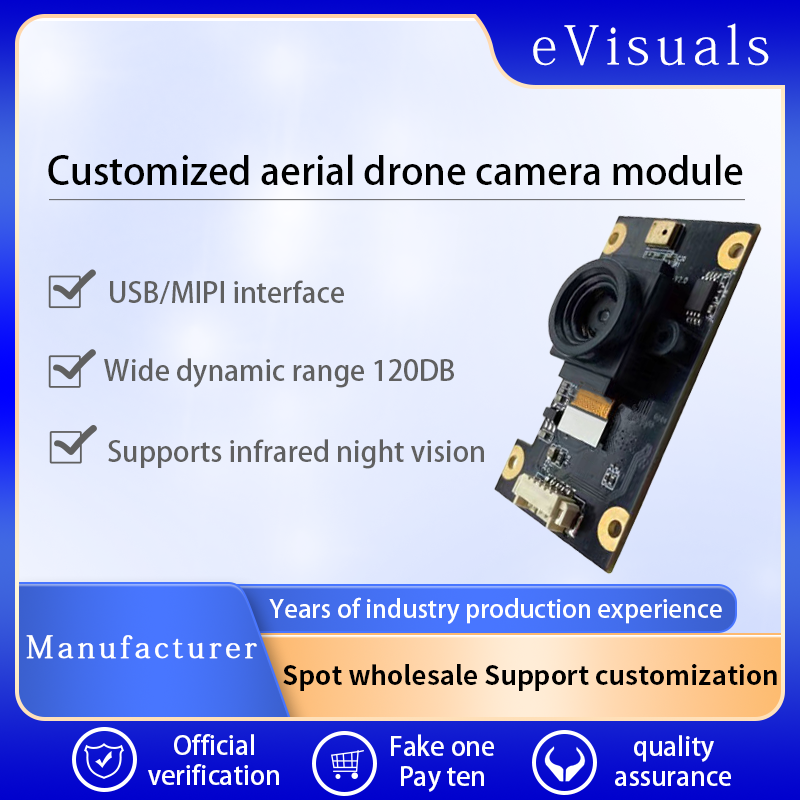
Factory Customized 1080p 4K Drone Wireless Video Transmission HD Aerial Photography Camera Module
- 1080p/4K
- Wireless video
- Custom
A custom camera module for Osaka hardware brands, robotics teams and integrators developing wireless imaging products beyond standard document camera formats.
Best for: OEM projects, embedded vision and specialised imaging hardware.
View product details
OEM USB 5MP 8MP 13MP Document Camera Visualizer for Education Camera Scanner or Office Document Scanner
- 5/8/13MP
- USB
- OEM/ODM
A practical platform for wholesalers and private-label brands that need multiple resolution tiers under one housing and firmware strategy.
Best for: Osaka wholesalers, catalogue ranges and tender-specific configurations.
View product details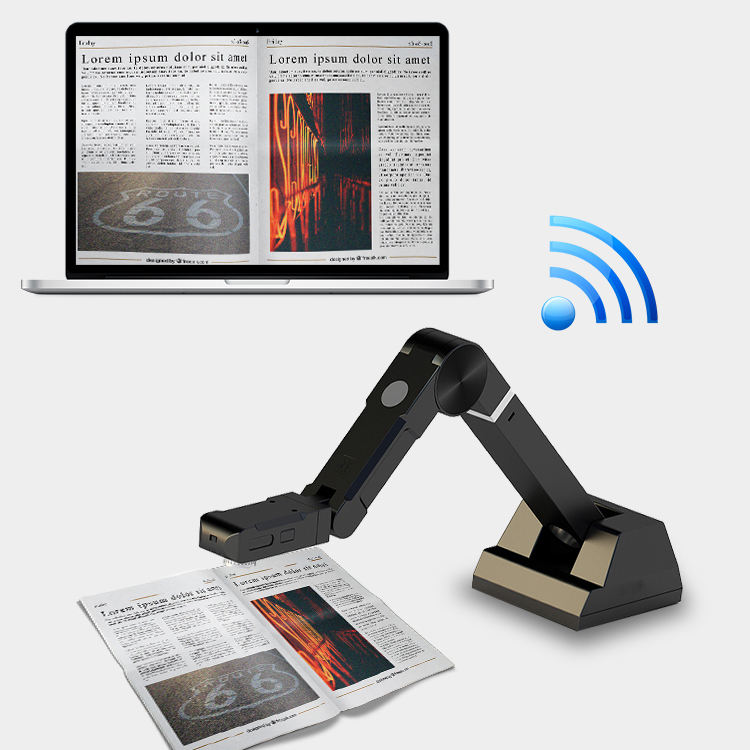
Visualized Handheld HD USB A4 Book Scanner – A3 Automatic Management Document Scanner Camera
- HD USB
- A4/A3
- Archive
Designed for bound books, contracts and records that cannot be fed through automatic document feeders, with live preview for quick quality checks.
Best for: Osaka libraries, publishers, legal offices and records rooms.
View product details
Document Camera Scanner 48MP USB3.0 Autofocus A3 A4 Office Scanning and Classroom Visualizer
- 48MP
- USB 3.0
- Autofocus
High-resolution capture for fine print, engineering drawings, forms and archive scans where detail must remain legible after cropping or zooming.
Best for: Osaka engineering firms, municipal archives and high-detail classroom use.
View product details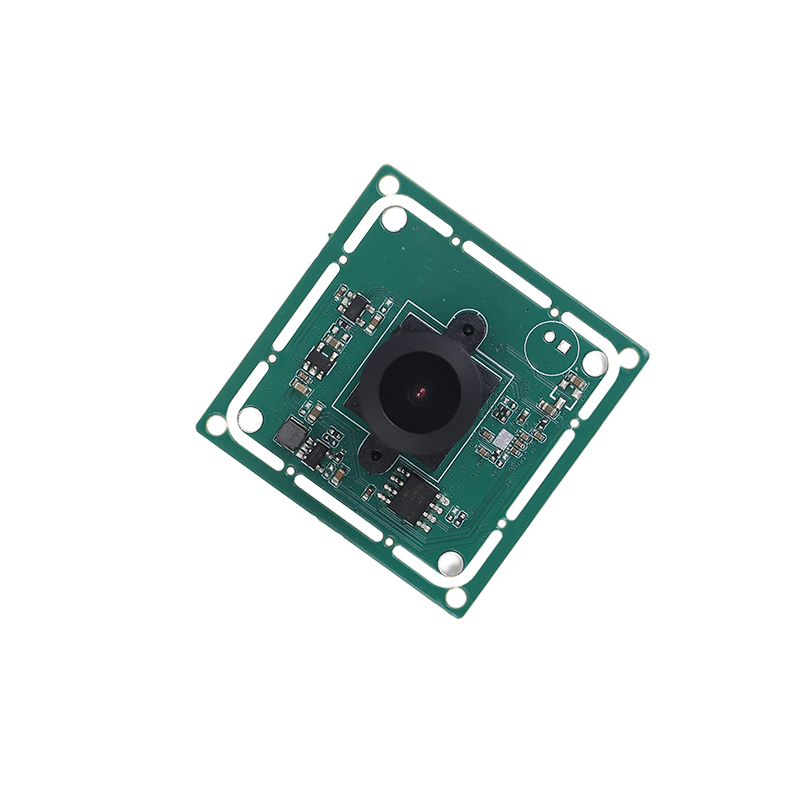
1080P 30FPS USB HD Portrait Shooting Camera Module with Macro Recognition, Fixed Focus and Optional Auto Focus
- 1080P
- Macro
- USB module
A compact camera module for counter-top identity checks, secondary document views, kiosks and embedded systems that need a fixed or auto-focus USB camera.
Best for: Osaka kiosk makers, ID verification terminals and OEM integrations.
View product detailsWhich Document Camera Fits Your Osaka Project?
Use this quick matrix to match a procurement brief to the right camera class before requesting samples or a bulk quotation.
| Osaka Buyer / Workflow | Capture Need | Recommended Product Type | Why It Fits |
|---|---|---|---|
| Municipal primary schools | A4 worksheets, textbooks, handwriting demonstration | 8MP portable visual presenter or 5MP/8MP USB document camera | Simple plug-and-play operation, low training burden and practical A4 clarity. |
| Secondary STEM and design schools | A3 drawings, graphs, apparatus demonstrations | 13MP VGA/HDMI/USB document camera or 48MP USB 3.0 scanner | Higher resolution preserves fine lines and annotations on large sheets. |
| Universities and training centres | Hybrid lectures, projector input, Mac and Windows laptops | 13MP three-mode document camera | VGA, HDMI and USB outputs reduce adapter risk in mixed AV environments. |
| Libraries and publishers | Bound books, maps, archive pages | A4/A3 book scanner document camera | Overhead capture avoids spine damage and supports live image review. |
| Ward offices and service counters | Forms, certificates, ID-adjacent documents | 48MP autofocus USB 3.0 scanner plus 1080P USB camera module | High-detail document capture and an optional secondary portrait view. |
| Wholesalers and private-label brands | Stable catalogue range with OEM options | OEM USB 5MP/8MP/13MP document camera platform | Resolution tiers, logo, packaging and firmware options can be planned around one supply source. |
Document Camera Use Cases in Osaka and the Kansai Region
Osaka buyers rarely purchase document cameras as generic office equipment. The device usually sits inside an established workflow, so the supplier must understand the room, the user and the compliance context.
Osaka schools and GIGA learning environments
Teachers need a fast way to place a worksheet, textbook page or science demonstration under a camera and show it on a classroom display. USB-powered visualizers are attractive because they avoid complex installation, while 13MP models help when A3 materials and fine annotations are part of daily teaching.
Universities, cram schools and vocational training
Institutions across Osaka and Kansai often teach in rooms with mixed AV equipment. A document camera with HDMI, VGA and USB outputs gives lecturers a fallback path when a room has not yet moved fully to USB-C or wireless casting. This is especially valuable for mathematics, engineering and design courses.
Umeda, Nakanoshima and Honmachi boardrooms
Osaka corporate users increasingly hold hybrid meetings with partners in Tokyo, Singapore and Europe. A visualizer lets a team show contracts, product samples or printed slides without sending files in advance. Models with HDMI output and clear low-light performance are easier to integrate with existing room systems.
Ward offices, public counters and identity checks
Public-service counters need traceable document images, not artistic photography. A 48MP autofocus document camera can capture forms and certificates in one frame, while a compact USB portrait module can provide a secondary view when a kiosk or verification terminal needs both document and user context.
Libraries, publishers and records rooms
Bound materials cannot always be placed in a sheet-fed scanner. Overhead book scanners reduce handling risk and allow operators to check focus, glare and page curvature in real time. For Osaka libraries, universities and publishing offices, the key buying criteria are stable lighting, usable software and a repeatable capture height.
Osaka monozukuri, quality control and engineering
Osaka’s manufacturing base includes many small and mid-sized firms that inspect drawings, labels and small parts. A high-resolution document camera can support training and remote troubleshooting, while macro-focus USB camera modules are suitable for fixture-based inspection and machine integration.
Localized Trends Shaping Document Camera Demand in Osaka
Demand is moving from standalone “visual presenters” toward connected, compliance-ready capture devices that fit education, municipal DX and private-label hardware programmes.
Post-Expo digital legacy
Osaka’s international profile and event infrastructure are accelerating investment in digital presentation, multilingual services and hybrid meeting rooms. Buyers expect cameras that work immediately with common conferencing and classroom software.
Paperless administration
Municipal offices and regulated businesses continue to digitize paper forms, certificates and customer records. Overhead capture is often faster than flatbed scanning when documents are bound, fragile or need annotation during a meeting.
Hybrid teaching normalization
Schools no longer treat document cameras as emergency remote-teaching tools. They are becoming standard classroom equipment for showing handwriting, textbook pages, experiments and student work to both in-room and remote learners.
Compliance-led procurement
Japanese buyers increasingly ask for PSE-compliant power supplies, Radio Law certification for wireless models, VCCI-related EMC evidence, RoHS/REACH documentation and Japanese manuals before approving a pilot order.
Illustrative Osaka Buyer Priorities
Based on typical B2B inquiry patterns for document cameras, visualizers and OEM camera modules. Use as a planning reference, not as a market statistic.Why Eshuni Supports Osaka Wholesalers and Project Buyers
Shenzhen Eshuni Technology Co., Ltd. has manufactured information-capture and identity-verification hardware since 2012. Our role is not limited to assembling products; we help buyers define the right configuration, prepare documentation and protect quality across repeat orders.

Engineering depth, OEM flexibility and export experience
Our product portfolio covers document cameras, book scanners, visualizers, webcams, ID document scanners, identity-verification terminals and camera modules. That breadth matters to Osaka buyers because a single supplier can support a school tender, a corporate AV project and a private-label product line without splitting the order across unrelated vendors.
We provide three levels of technical support: product design, project design and on-site project application support. For OEM and private-label customers, this includes housing and packaging adaptation, firmware configuration, accessory selection and documentation planning for the destination market.
14+ years of product experience
Since 2012, our team has worked on information-collection hardware for education, finance, insurance, telecommunications, government and enterprise scenarios.
In-house R&D and patents
Our hardware and software are developed in-house and protected by national patents. This helps OEM buyers avoid disconnected design, firmware and supply-chain ownership.
ERP-driven production and QC
ERP-supported production and supply-chain management help keep quality consistent across repeat orders, while incoming inspection and aging checks reduce field failures.
OEM, ODM and private label
We support buyer-label production, product design services, packaging customisation and project-specific accessory kits for Osaka wholesalers and installers.
Export terms aligned with Kansai logistics
We accept FOB, EXW and DDP delivery terms and regularly ship to North America, South America, Western Europe, South Asia and Africa. For Osaka, shipments can be coordinated via Kansai International Airport or the Port of Osaka/Kobe depending on volume and urgency.
Documentation and project support
Our team can prepare product data, packing lists, spare-parts recommendations and Japanese-market labelling inputs so importers can move from sample approval to tender delivery with fewer surprises.
Osaka Procurement Checklist for Imported Document Cameras
CE and FCC are useful international baselines, but they do not automatically satisfy Japanese import requirements. Confirm the exact configuration with your Japanese importer, certification body or customs broker before ordering.
PSE / DENAN
If the product is supplied with an AC adapter or charger for the Japanese market, confirm PSE compliance and the correct marking. USB bus-powered configurations may reduce adapter complexity, but bundled accessories still need review.
Radio Law / Giteki
Wireless models using WiFi, 5.8GHz-class transmission or Bluetooth require careful Radio Law review for Japan. For faster deployment, offer wired USB or HDMI variants while the wireless certification route is confirmed.
EMC, RoHS and REACH
VCCI-related EMC evidence, RoHS and REACH declarations, material information and model-level test reports are commonly requested by Japanese resellers and public-sector buyers. Keep documents aligned with the exact SKU.
Japanese documentation
Japanese quick-start guides, warning labels, packaging text, warranty terms and importer information reduce support calls. Private-label buyers should agree on artwork and manual ownership before mass production.
E-E-A-T note: This checklist reflects common B2B procurement questions, not legal advice. Certification scope depends on the exact model, adapter, wireless module and packaging configuration. Confirm requirements with a qualified Japanese certification body or customs broker.
Frequently Asked Questions from Osaka Importers and Project Buyers
These answers address the commercial, technical and local-market questions that typically arise before samples, tenders or private-label orders.
Can you ship document cameras to Osaka and support DDP delivery?
What certifications should an Osaka buyer request for a document camera?
Do you support Japanese manuals, packaging and private-label branding?
Should I choose 8MP, 13MP or 48MP for an Osaka classroom or office?
Are your document cameras compatible with Windows, macOS and common teaching software?
What is the difference between a USB document camera and a wireless visualizer?
How do you control quality for repeat wholesale orders?
Can you recommend a model for a mixed Osaka education and office tender?
Planning an Osaka Tender, Wholesale Range or OEM Project?
Share your application, target resolution, quantity, certification requirements and delivery preference. Our team will recommend the right document camera, visualizer or camera module configuration and prepare a quotation for the Osaka market.