Top China USB Book Scanner Factory & Wholesalers serving the Düsseldorf market
Factory-direct sourcing intelligence for Düsseldorf schools, universities, insurers, law firms, public offices, archives, system integrators and wholesale buyers comparing USB book scanners, document cameras and visualizers from China.
Eight products for Düsseldorf book-scanning and visual-presenting projects
This shortlist combines USB book scanners, A3/A4 document cameras, portable visual presenters and adjacent imaging hardware supplied by Shenzhen Eshuni Technology Co., Ltd. Product links and images are preserved so buyers can evaluate specifications, request samples and compare OEM options.
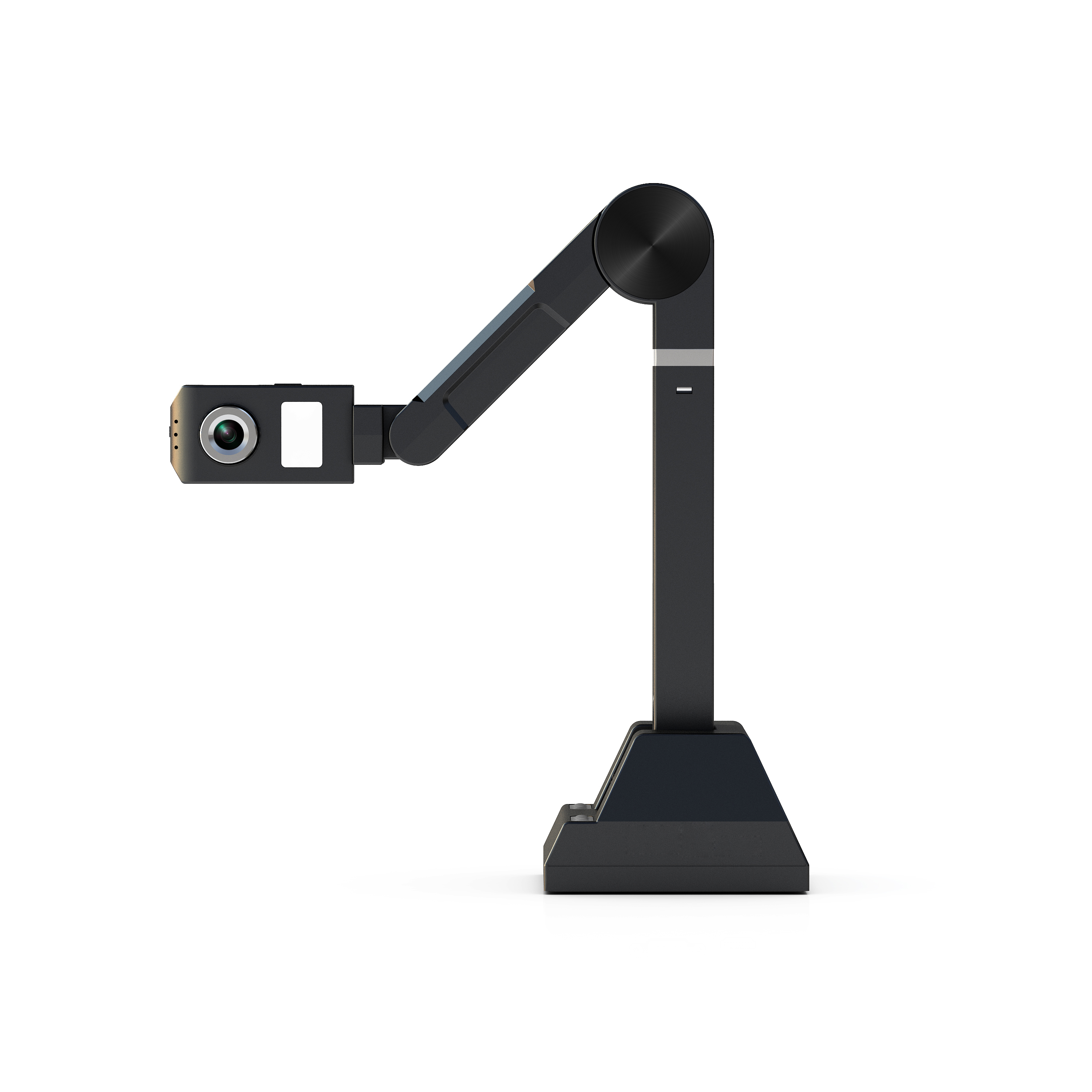
New design HD Camera 8MP 13MP auto focus Document Camera Scanner online educational equipment
For Düsseldorf tutors, schools and training teams that need an overhead visualizer with flexible zoom and clear textbook capture.
Review product
Document Camera Scanner 48MP Usb3.0 Autofocus A3 A4 Office Scanning and Classroom Visualizer
Recommended for high-detail archives, engineering drawings, insurance files and any Düsseldorf workflow where fine print must remain legible.
Review product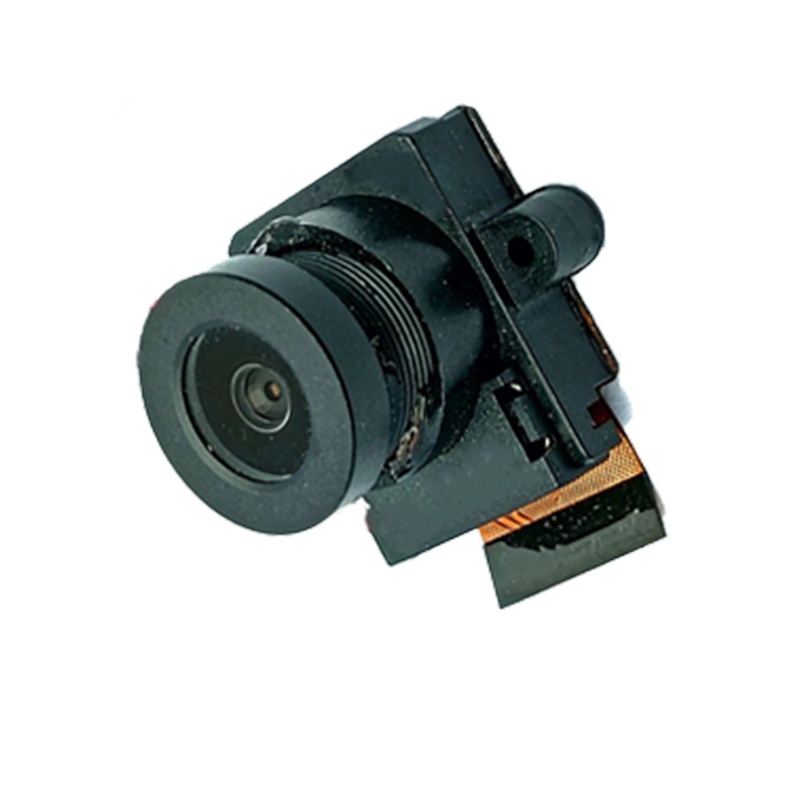
Factory hot-selling 1080p CMOS sensor body camera with HD video/audio recording and night vision
An adjacent imaging option for event venues, security teams, field inspection and documentation where wearable video evidence is required.
Review product
OEM Document Camera A3 Portable Wireless 13mp Visualizer Document Camera
Suited to Düsseldorf training rooms, mobile teaching, sales presentations and wholesale programmes needing private-label packaging.
Review product
Wireless Robotic Frame Book Scanner Document Camera A3 A4 Size Management Document Scanner for Online Class
A strong fit for libraries, notaries, law offices and administrative teams that capture bound volumes without damaging the spine.
Review product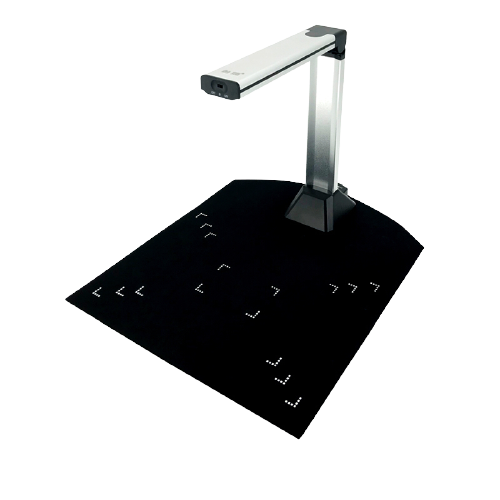
Portable OEM 8MP document camera Visual presenter for education equipment camera scanner
For wholesalers and resellers who need a lightweight, cost-controlled visual presenter for schools, meeting rooms and service counters.
Review product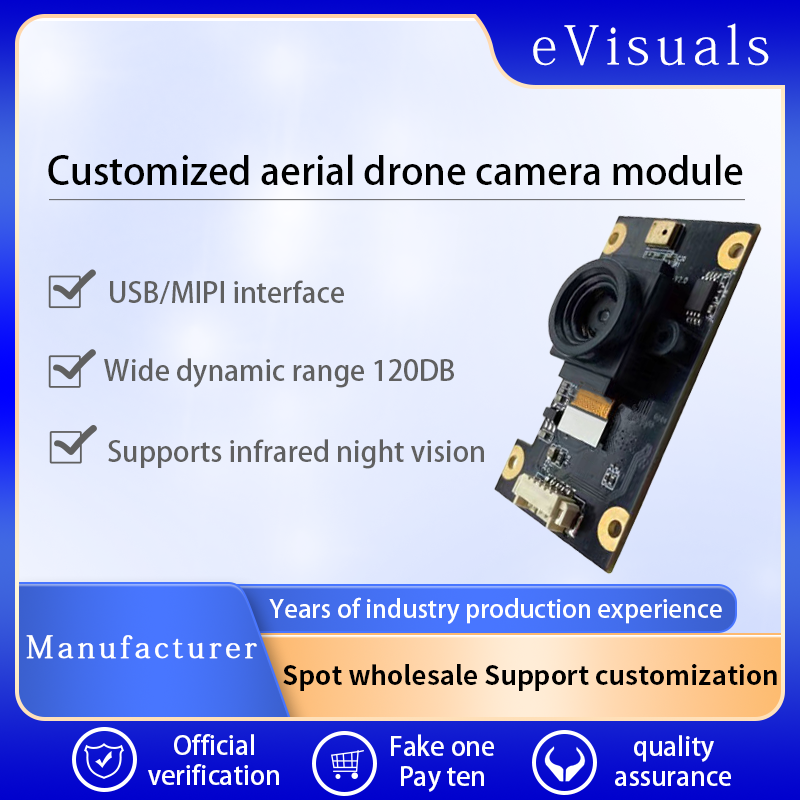
Factory customized 1080p 4K drone wireless video transmission HD aerial photography face recognition camera module
An OEM/ODM hardware option for integrators developing inspection, event documentation or infrastructure-monitoring imaging systems.
Review product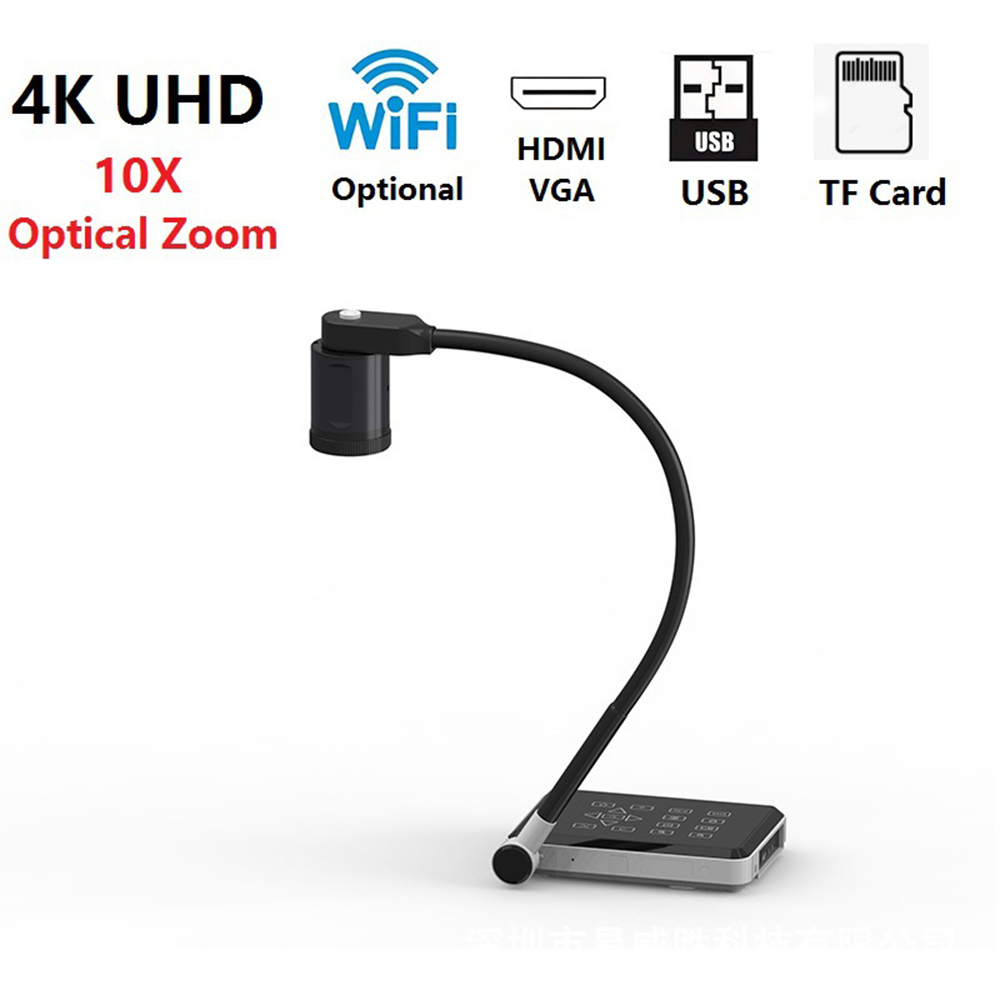
Visualized Handheld Hd Usb A4 Book Scanner A3 Automatic Management Document Camera Scanner
A practical USB-centric choice for paper-to-digital workflows in administration, consulting, accounting and small Düsseldorf offices.
Review productWhat Düsseldorf buyers should optimize for when sourcing USB book scanners from China
The Düsseldorf opportunity is not only a price comparison. It is a workflow-fit decision involving image quality, software compatibility, German-language documentation, EU compliance evidence, and a supplier’s ability to support OEM or wholesale programmes.
The search phrase “Top China USB Book Scanner Factory & Wholesalers serving the Düsseldorf market” combines several different buyer intents. A school in Düsseltal may be looking for a visualizer for hybrid lessons. A law firm near the Rhine may need an overhead book scanner that handles bound contracts. An insurance group in North Rhine-Westphalia may be evaluating a USB camera for file digitization and OCR. A wholesale distributor may be searching for a Chinese OEM factory that can supply private-label A3/A4 book scanners with CE documentation. These are related needs, but they require different product configurations and different proof points.
The most reliable sourcing strategy is therefore to separate application from hardware specification and commercial model. Application means the documents, users and physical environment. Hardware specification means sensor resolution, lens, autofocus, lighting, USB bandwidth and mounting. Commercial model means factory-direct purchase, wholesale distribution, OEM branding or ODM customization. When these three layers are aligned, a USB book scanner becomes a measurable productivity asset rather than another peripheral.
Search-intent map: the four queries hidden inside one Düsseldorf search
Google’s semantic understanding of this topic rarely treats “China USB book scanner factory” as a single keyword. The query set usually breaks into four commercial investigations. First, product selection: “Which USB book scanner is best for A4/A3 books, textbooks, contracts or drawings?” Second, factory verification: “Is this Chinese supplier a manufacturer or a trading company, and what certifications does it hold?” Third, local application fit: “Can the device be used in German schools, public offices, banks or insurance workflows?” Fourth, transaction terms: “Can the supplier ship DDP to Düsseldorf, support OEM branding and document CE/RoHS compliance?”
A useful supplier page must answer all four. That is why this guide combines product cards, technical comparison, Düsseldorf-specific scenarios, procurement checklists and factory evidence instead of relying on a generic product description.
Qualitative decision weights for a typical Düsseldorf deployment
The following weights are planning aids, not statistical market research. They reflect the trade-offs that typically appear when a Düsseldorf buyer compares a classroom visualizer, a book scanner for office digitization and a wholesale OEM programme.
Why USB book scanners remain relevant in Düsseldorf’s digital-first economy
Düsseldorf is the state capital of North Rhine-Westphalia and part of one of Europe’s densest business regions. Its mix of public administration, education, insurance, legal services, media, trade fairs, logistics and professional consulting creates a durable demand for controlled paper-to-digital capture.
Düsseldorf’s economy is often described through its international trade fairs, corporate headquarters, advertising and fashion clusters, financial services and Rhine-based logistics. Beneath those high-level sectors sits a practical document reality: schools still review printed materials, insurers process signed forms, legal teams handle bound files, public offices manage case documentation, and notaries must preserve the integrity of source documents. A USB book scanner does not compete with a production sheet-fed scanner. It solves a different problem: fast, low-friction capture of books, binders, drawings, passports, receipts and irregular documents while keeping the original intact.
For Düsseldorf buyers, the most compelling use case is not merely “scanning a page.” It is capturing a visual explanation in a live lesson, a signed document at a service counter, a bound volume in an archive, or a technical drawing during a customer consultation. That is why document cameras and USB book scanners remain relevant in an economy that is otherwise highly digital: they shorten the distance between physical information and digital workflow.
Factory or wholesaler? A practical China sourcing model for the Düsseldorf market
Buyers often use “wholesaler” and “factory” interchangeably, but the distinction affects pricing, customization, quality evidence and after-sales response. A China-based factory such as Shenzhen Eshuni Technology Co., Ltd. controls product design, firmware development, assembly, testing and OEM/ODM configuration. A wholesaler may offer faster product aggregation, mixed-model ordering or local-language sales support, but may not control the manufacturing process. For a Düsseldorf school authority or insurer, the stronger model is usually a factory-direct relationship supported by documented quality controls and a clear customization brief. For a small reseller testing demand, a wholesaler or mixed-container approach may be more practical at the beginning.
Eshuni operates as a manufacturer and solution provider for information collection and identity verification. Its stated capabilities include high-speed document scanners, video booths, book scanners, identity verification terminals, webcams and camera modules. The company reports an in-house R&D team, national patents on hardware and software, an ISO9001 quality management system, and product certifications including CE, FCC, RoHS and China 3C. These are important trust signals, but they should still be matched to the exact model, order specification and destination requirements before purchase.
In-house R&D
Document camera, visualizer and imaging-hardware development supports OEM projects rather than catalogue-only resale.
Certified quality system
ISO9001 management, CE, FCC, RoHS and 3C product evidence can support a German buyer’s compliance file.
OEM / ODM flexibility
Buyer-label production, product design support, project design and on-site project application guidance.
Export-ready delivery
FOB, EXW and DDP terms; regular shipments to North America, South America, Western Europe, South Asia and Africa.

What this means for a Düsseldorf importer
A Düsseldorf importer is not only buying a camera. The buyer is assembling a chain of evidence: model datasheet, EU conformity documentation, packaging artwork, firmware version, OCR workflow, warranty process and spare-parts plan. A factory relationship makes that chain easier to control because changes to resolution, housing, interface, labelling or packaging can be discussed at the source.
At the same time, German buyers should keep a clear division between supplier claims and local obligations. CE and RoHS evidence supports product compliance, while WEEE registration, packaging licensing, GDPR/DSGVO processing and DMS integration responsibilities must be validated for the specific importer and deployment. This is not a reason to avoid China sourcing; it is a reason to conduct sourcing with documentation discipline.
8MP, 13MP, 48MP, USB 3.0 and wireless configurations explained
Resolution is only one variable. For Düsseldorf buyers, the better question is: which configuration preserves legibility, throughput and software compatibility for the actual document set?
| Configuration | Typical strength | Düsseldorf use case | Commercial note |
|---|---|---|---|
| 8MP portable visual presenter | Balanced clarity, compact form factor, cost-controlled rollout | Primary schools, tutoring, meeting-room presenting, service counters | Good starting point for wholesale ranges and pilot deployments |
| 8MP/13MP auto-focus document camera | Autofocus, flexible zoom, live demonstration | Hybrid teaching, training, product demonstrations, customer consultations | Useful where teachers or staff move between materials |
| 13MP wireless A3 portable visualizer | Higher detail and cable-free placement | Training rooms, mobile teaching, showroom presentations, wholesale OEM | Confirm wireless environment and software compatibility before tender |
| 48MP USB 3.0 document camera scanner | High-detail capture for fine print and large sheets | Engineering drawings, insurance files, archives, quality documentation | Recommended where OCR accuracy and zoom legibility matter |
| Wireless robotic frame book scanner | Bound-volume capture and overhead workflow | Libraries, law offices, notaries, municipal records, research collections | Evaluate operator ergonomics and page-curvature handling |
| USB A4/A3 handheld book scanner | Plug-and-play USB workflow | Office digitization, accounting, consulting, reception desks | Strong fit for standardised office deployment and simple training |
| 1080p body camera | Wearable video and audio evidence | Event security, field inspection, facility documentation | Adjacent imaging category; verify policy and data-handling requirements |
| Custom 1080p/4K wireless camera module | Embedded imaging for specialist systems | Infrastructure inspection, event documentation, prototype development | Best treated as an ODM project rather than a catalogue purchase |
Specifications must be confirmed against the final quotation, sample and destination compliance file. This table is a sourcing orientation, not a substitute for technical due diligence.
Where USB book scanners and document cameras fit Düsseldorf workflows
The strongest proof of relevance is not a generic feature list. It is the way a device fits the daily rhythm of a Düsseldorf school, office, counter, archive or wholesale channel.
Schools and universities
Düsseldorf schools, adult education providers and universities can use visualizers for textbook demonstrations, experiment capture, art review and hybrid teaching. A USB model is simple for fixed classrooms; a wireless A3 model is better when teachers move between rooms.
Public administration and records
Case files, forms, identity documents and archival material often need quick digital capture without removing pages. Overhead capture reduces handling risk and supports faster routing into document-management systems.
Insurance and finance
Düsseldorf’s insurance, banking and advisory firms handle signed applications, policy documents and client evidence. A 13MP or 48MP scanner can help preserve fine print for review, OCR and internal audit trails.
Legal, notary and compliance teams
Bound contracts, notarised files and reference volumes require careful handling. A book scanner with overhead framing helps capture pages while preserving the physical source and supporting internal documentation standards.
Logistics, manufacturing and inspection
Industrial and logistics teams can document delivery notes, technical drawings, damaged goods and inspection records. USB 3.0 models are preferable when high-resolution files must be captured quickly at a workstation.
Trade fairs, showrooms and events
Düsseldorf’s Messe and showroom ecosystem rewards live visual demonstration. A portable document camera can present product details, printed materials or samples on a large screen without distributing physical copies.
Düsseldorf procurement trends shaping USB book scanner demand in 2025–2026
The local market is moving toward workflow integration, evidence-based compliance and channel-ready customization. These trends change what a “good” China supplier looks like.
1. DMS-first buying
Düsseldorf buyers increasingly evaluate scanners by how easily the captured image enters a document-management, OCR or cloud workflow. Image quality matters, but export format, driver stability and file naming matter just as much.
2. DSGVO-aware sourcing
If documents contain personal data, the buyer must consider GDPR/DSGVO obligations, access control, retention and software data flows. A supplier can provide hardware evidence, but the importer remains responsible for local processing rules.
3. A3 capture for engineering and design
North Rhine-Westphalia’s engineering, industrial and design sectors create demand for A3-capable overhead capture. Higher megapixel models reduce the need to re-scan fine drawings at multiple zoom levels.
4. Hybrid teaching normalisation
Schools and training providers no longer treat visualizers as emergency equipment. They compare ease of use, autofocus, lighting stability and compatibility with classroom displays and video-conferencing tools.
5. Wholesale demand for private label
Distributors serving Germany and neighbouring EU markets look for OEM packaging, buyer-label manuals, stable model families and repeatable firmware. Factory-direct communication reduces the risk of specification drift between orders.
6. Documentation as a competitive advantage
For public tenders and enterprise procurement, a clean compliance file can matter more than a small price difference. Buyers want traceability: model number, certification, test evidence, packaging details and warranty terms.
Technical variables that change USB book scanner performance
Two scanners can both be described as “HD” or “13MP” and still perform very differently. Düsseldorf buyers should look beyond the headline resolution.
Sensor, lens and autofocus
A higher-resolution sensor captures more detail, but the lens and image-processing pipeline determine whether that detail remains usable at the edges of an A3 page. Autofocus is valuable for books of different thickness, packaging samples and documents that are not perfectly flat. For OCR-heavy workflows, consistent focus and even illumination often matter more than a dramatic megapixel increase.
Lighting and page curvature
Bound books rarely lie flat. Overhead illumination can create glare near the spine, shadows at the edges and uneven exposure across the page. A scanner with adjustable lighting and a stable frame is easier to use for library, legal and archive work. Buyers should test the actual book thickness and paper finish they intend to scan.
USB bandwidth versus wireless convenience
USB 2.0 can be sufficient for many classroom and office workflows, especially when the required frame rate is modest. USB 3.0 becomes more relevant when capturing high-resolution stills, reducing transfer latency or supporting smoother live preview on a workstation. Wireless models offer placement freedom, but Düsseldorf buyers should evaluate interference, pairing method and enterprise network restrictions before committing to a multi-room rollout.
Software, OCR and DMS integration
The device is only one part of the capture chain. Buyers should confirm whether the scanner works with the intended operating system, whether it presents itself as a standard USB video device or requires proprietary software, and how images are exported to OCR or DMS tools. A supplier’s ability to provide English-language documentation, driver versions and stable firmware is part of the total cost of ownership.
Compliance and procurement checklist for Düsseldorf importers
The exact compliance route depends on the product, importer and use case. The following checklist is a practical starting point for a Düsseldorf-based procurement or wholesale team.
CE and RoHS evidence
Request the applicable declaration, test reports and model identification. Confirm that the documentation matches the exact variant being ordered, not only a generic catalogue page.
WEEE and packaging
Clarify who is the responsible economic operator in Germany and how electronic waste and packaging obligations are handled for the chosen distribution model.
GDPR / DSGVO review
Classify the data captured. If personal data, identity documents or client files are processed, define access, retention and transfer controls before deployment.
Software and driver validation
Test the intended laptop, operating system, document camera software, OCR tool and DMS connector with a sample unit. Confirm update and support expectations.
Incoterms and import costs
Compare FOB, EXW and DDP offers including freight, insurance, customs, VAT and handling. For a Düsseldorf buyer, DDP can simplify planning but should be documented clearly.
Warranty and spare parts
Agree on warranty duration, DOA handling, spare-part strategy and firmware support. A wholesale programme should also define packaging, manuals and labelling before production.
Why Shenzhen Eshuni Technology is relevant to Düsseldorf wholesale and OEM buyers
Eshuni combines manufacturer-side engineering, a documented quality system and export experience across multiple regions. These advantages matter when a Düsseldorf buyer needs repeatability rather than a one-off marketplace purchase.
Shenzhen Eshuni Technology Co., Ltd. has operated since 2012 as a manufacturer and solution provider for information collection and identity verification. Its product scope includes document cameras, visualizers, book scanners, webcams, ID card document scanners, identity verification terminals and camera modules. For a Düsseldorf market focused on education, administration, finance, insurance, telecom, government and enterprise workflows, this breadth is useful because a single supplier can support classroom capture, counter-based document capture and embedded imaging projects.
The company reports a 3,000+ m² factory floor, 100+ on-site employees and an in-house R&D team covering hardware and software. It also states that core hardware and software are its own intellectual property and are protected by national patents. Production and supply-chain management are described as ERP-driven, which supports consistent quality control and shorter lead-time planning. For wholesale buyers, these factors can reduce the risk of uncontrolled product changes between shipments. For OEM buyers, they create a clearer path from requirement definition to sample, pilot and production.
Eshuni’s technical support is structured around three levels: product design, project design and on-site project application. In practice, this means a Düsseldorf integrator can discuss sensor selection and housing, a school authority can review classroom placement and software requirements, and a wholesale distributor can plan packaging, manual and model-range strategy. Trade terms include FOB, EXW and DDP, with regular shipments to North America, South America, Western Europe, South Asia and Africa. Certifications and system claims include ISO9001, CE, FCC, RoHS and China 3C, while the exact certification file for a specific order should always be verified during quotation.
Product design support
Discuss resolution, interface, housing, packaging and buyer-label requirements before committing to a wholesale range.
Project design support
Align device selection with classroom, counter, archive or inspection workflows, including software and deployment constraints.
Application guidance
On-site project application support is part of the stated service model, subject to project scope and commercial agreement.
Quality documentation
ISO9001, CE, FCC, RoHS and 3C references can support a Düsseldorf buyer’s internal vendor and compliance review.
Common questions from local importers, schools, wholesalers and integrators
These answers address the practical points that usually arise after a Düsseldorf buyer has shortlisted a China USB book scanner factory or wholesale supplier.
Can a China USB book scanner be shipped DDP to Düsseldorf?
Are the products suitable for German schools and public offices?
Which model is best for A3 drawings, contracts or bound books?
Can Düsseldorf wholesalers request OEM branding or private-label packaging?
How should we evaluate USB versus wireless document cameras?
What documentation should a Düsseldorf buyer request before ordering?
Is Eshuni a factory or a trading company?
What is the fastest route to a Düsseldorf-specific quotation?
Request a Düsseldorf-specific USB book scanner recommendation
Tell us whether you are equipping a school, public office, insurance counter, legal team, archive or wholesale range. Share your A3/A4 requirements, image-resolution target, software environment, OEM needs and delivery expectations for Düsseldorf. Our team can then help match the right document camera, USB book scanner or visualizer configuration.
Contact UsFactory-direct support for Düsseldorf importers, integrators and wholesale buyers. FOB, EXW and DDP options can be discussed against the confirmed quotation.